Home
» Today
»
El Niño 2026: How U.S. Homes and Businesses Can Prepare for Severe Weather — November 16 Update
El Niño 2026: How U.S. Homes and Businesses Can Prepare for Severe Weather — November 16 Update
Information checked: November 16, 2026, 09:08 UTC (4:08 a.m. Eastern Standard Time, UTC−05:00, in New York). NOAA's latest El Niño advisory, issued November 12, reports that the climate pattern continues to strengthen. The Climate Prediction Center assigns a greater than 79% chance of strong-to-very strong El Niño conditions during January–March 2027. That is a forecast about Pacific Ocean and atmospheric conditions, not a warning that a particular community will experience a severe storm. For U.S. households and businesses, the practical response is to reduce familiar risks—flooding, water intrusion, power outages, and interruptions to travel and operations—before a local alert is issued. Source: NOAA Climate Prediction Center ENSO discussion (November 12, 2026).
Some southern U.S. areas commonly experience cooler, wetter winters during El Niño, while parts of the northern tier may see warmer-than-average conditions. The pattern changes probabilities, however, and individual storms, droughts, and cold snaps can still depart substantially from seasonal averages. Use local National Weather Service forecasts for decisions about specific days and locations. Source: NOAA Climate.gov explanation of U.S. El Niño patterns.
Destaques
NOAA maintains an El Niño Advisory and expects a strong-to-very strong event to remain likely through the January–March 2027 period.
Check water drainage, roof condition, sump pumps, and vulnerable ground-floor storage before heavy rain.
Review flood insurance now: standard homeowners coverage generally excludes flooding, and most National Flood Insurance Program policies have a 30-day waiting period, with exceptions.
Businesses should identify critical services, back up records, establish staff communications, and test a realistic interruption plan.
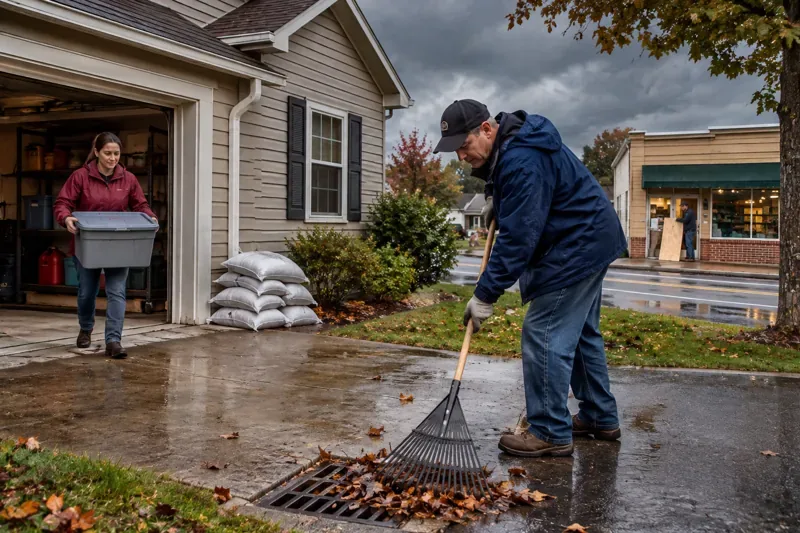
Illustration generated for this guide: A neighborhood preparing homes and a storefront for wet weather. This is not a photograph of a specific El Niño storm or emergency.
What does NOAA's latest El Niño update mean for the United States?
NOAA's November 12 diagnostic discussion identifies an ongoing El Niño, with the agency's El Niño Advisory still in effect. Its outlook indicates that the event may strengthen before beginning to weaken in early 2027. The advisory describes a greater than 79% chance of strong-to-very strong conditions through January–March 2027 and emphasizes that even a powerful event does not guarantee typical effects in every region. The next scheduled monthly diagnostic discussion is December 10, 2026. See NOAA Climate Prediction Center ENSO discussion (November 12, 2026) and NOAA official ENSO probabilities.
During El Niño, unusually warm water in the central and eastern equatorial Pacific affects atmospheric circulation and can shift winter storm tracks. NOAA describes a tendency toward wetter and cooler conditions across the southern tier of the contiguous United States, and warmer winter conditions in some northern areas. These are historical tendencies, not localized forecasts. An El Niño advisory should trigger a review of readiness, not an assumption that every property is about to flood.
How can homeowners prepare for potential storms and flooding?
Start with water pathways, roofs, and equipment
Walk around the property before the next forecast heavy rain. Clear accessible gutters, downspouts, yard drains, and debris that could channel water toward the foundation. Confirm downspouts discharge away from the building without sending water onto a neighbor's property. From a safe vantage point, look for damaged shingles, loose flashing, or branches that could strike the roof; have licensed professionals handle unsafe heights, electrical work, and tree removal.
Test a sump pump and any battery backup according to the manufacturer's instructions. Ask a qualified plumber whether a backflow valve makes sense for drains in a flood-exposed property. Keep appliances, stored documents, inventory, and valuables above known water-entry points where feasible. Sandbags or temporary barriers may reduce minor surface runoff when properly placed, but they cannot guarantee protection against deep or fast-moving water. The National Weather Service: Before a Flood provides practical steps for assessing flood risk and protecting a building.
Build a usable household emergency plan
Keep at least three days of drinking water, nonperishable food, essential medication, flashlights, batteries, a first-aid kit, and a battery-powered or hand-crank weather radio. Add supplies for infants, older adults, people with disabilities, and pets. Agree on two meeting locations, one nearby and one outside the neighborhood, and designate an out-of-area contact who can relay messages if local communications fail.
Store digital copies of insurance policies, identification, prescriptions, and photographs of important possessions in a protected location that can be accessed remotely. Know multiple evacuation routes and identify higher ground, especially if usual roads cross creeks or low-water crossings. During flood conditions, follow official evacuation directions immediately; never walk or drive into floodwater. See National Weather Service: During a Flood.
Does homeowners insurance cover El Niño-related flooding?
El Niño itself is not an insurance claim category. Coverage depends on the actual cause of the damage and the policy's terms. Standard homeowners policies generally do not cover flooding from rising surface water. The National Flood Insurance Program states that purchased flood insurance usually takes effect after a 30-day waiting period, although specified exceptions apply. Some private policies have different rules. Check both building and contents limits, deductibles, exclusions, and how business property is treated. Request written clarification from the insurer rather than assuming wind-driven rain, sewer backup, and flooding are covered in the same way. See National Flood Insurance Program: Buying a Policy.
Take dated photos of the building and valuable contents before severe weather and store receipts and an inventory securely. A renter should check contents coverage and consider whether separate flood insurance is appropriate. Business owners should ask specifically about the coverage available for commercial property and income losses; the existence of property coverage does not automatically mean interruption losses are covered.
What should small businesses do before severe weather arrives?
Start with a brief continuity exercise: identify the functions that must continue within the first 24, 48, and 72 hours of an outage. For a restaurant that might mean refrigeration and food safety; for a retailer, point-of-sale access and deliveries; for a professional firm, customer contacts, secure records, and remote access. Assign a primary and backup decision-maker, maintain a current staff contact list, and decide who communicates closures or reopening information to customers.
Protect the building: Check roof drains, door seals, loading docks, basement entrances, and nearby drains. Move inventory and critical electronics above likely water levels.
Protect data: Back up accounting, payroll, customer and supplier files in secure off-site or cloud storage. Test restoration rather than simply assuming backups work.
Protect operations: Keep an alternate supplier list, document payment and shipment procedures, and set a method for communicating if internet or power fails.
Protect workers: Specify conditions for suspending travel, working remotely, or closing a site, and ensure staff know not to cross flooded roads or enter electrically hazardous buildings.
Protect finances: Review insurance, emergency cash needs, contract commitments, and the likely cost of temporary relocation or downtime.
Business owners in coastal, riverine, or flash-flood-prone areas should consult local floodplain maps and emergency management guidance. Plans should reflect the premises, employees' transportation constraints, and actual insurance terms, not a single nationwide El Niño forecast.
When should you act on a weather watch or warning?
Seasonal climate outlooks are useful for preparation weeks or months ahead. A National Weather Service watch means conditions are favorable for a hazard and it is time to review actions and monitor updates. A warning means dangerous weather is occurring, imminent, or highly likely and immediate protective action may be needed. These terms apply to specific hazards and locations; see the National Weather Service flood watches and warnings for the definitions.
Check the National Weather Service forecast and local emergency management alerts for your address, not only statewide headlines. If a flood warning or evacuation order affects your location, prioritize safety over property protection. Never enter a flooded basement where electrical equipment or outlets may be submerged, and never operate a generator indoors or near openings where exhaust could enter the building.
What could happen next during the 2026–27 winter?
The November outlook supports preparing for a winter influenced by a strengthening El Niño, but it does not establish the timing, location, or severity of any particular U.S. storm. Local rainfall totals, winter temperatures, and flood impacts will depend on shorter-term atmospheric patterns, geography, drainage, and antecedent conditions. Review updated seasonal forecasts periodically and switch to local watches and warnings as an event approaches. The most valuable immediate task is to address known weaknesses now, before contractors, insurance agents, and emergency supplies become harder to access during a widespread storm.
Frequently Asked Questions
Does a strong El Niño mean my house will flood?
No. El Niño changes the odds of some seasonal weather patterns, but flooding depends on local rainfall, terrain, drainage, and other factors. Review your property's flood exposure and local forecasts.
How soon should I buy flood insurance?
Before a storm is forecast. National Flood Insurance Program coverage generally begins after a 30-day waiting period, subject to exceptions; verify the timing and coverage with your insurer.
What's the first preparation step for a small business?
Identify essential operations and the people responsible for them, then test how staff will communicate, protect records, and continue or safely suspend operations during a utility or transportation disruption.