Home
» Today
»
Extreme Heat Watch: What It Means and How to Prepare
Extreme Heat Watch: What It Means and How to Prepare
An Extreme Heat Watch means dangerous heat is possible in your area, but the National Weather Service (NWS) is not yet certain that it will occur or exactly when. Treat the Watch as time to make a plan while there is still room to adjust work, travel, child care, and cooling arrangements. It is not a forecast guarantee, and it does not mean every person will become ill.
Checking local alerts early gives you time to adjust plans before extreme heat arrives.
NWS alert wording and local criteria can vary by forecast office and region. Read the alert issued for your location and check updated forecasts; do not assume that a Watch means the same temperatures or duration everywhere. This guide reflects official NWS and CDC materials checked October 1, 2026. It is general information, not a personal medical assessment.
What an Extreme Heat Watch means
The NWS uses an Extreme Heat Watch when conditions are favorable for an extreme heat event, but its occurrence or timing is uncertain. The practical message is be prepared: identify where you can cool off and consider which outdoor plans you would pause if the forecast becomes more certain. A Watch can be updated, extended, or replaced as forecasts change.
Alert
What it signals
Useful response
Extreme Heat Watch
Extreme heat is possible; timing or occurrence is uncertain.
Make a cooling plan, monitor updates, and prepare to change outdoor plans.
Extreme Heat Warning
Extremely dangerous heat is expected or occurring.
Take action: stay in air conditioning as much as possible, avoid outdoor exertion, and check on others.
Heat Advisory
Dangerous heat is expected but is not forecast to reach local warning criteria.
Reduce exposure and use the protective steps in the local alert.
These products are issued when local conditions warrant. The NWS notes that what counts as unusual or dangerous heat depends partly on regional conditions and preparedness. A heat index or heat-risk forecast can add context, but it does not replace the alert text or local instructions. The current NWS descriptions are on the National Weather Service heat alerts page.
Use the Watch period to make a workable plan
1. Track the forecast that applies to you
Turn on local weather alerts and check the forecast for your town or ZIP code, including evening and overnight conditions.
Note the expected start and end, hottest hours, humidity or heat index, and whether a Warning or local emergency notice is issued later.
Choose one reliable source, such as your local NWS forecast office, and recheck it as the event approaches. Forecast details may change.
Knowing which nearby public building is open and cool can make a no-air-conditioning plan more practical.
2. Pick a cool place before you need one
If your home does not have working air conditioning, decide where you could spend the hottest hours or overnight: a relative's or friend's air-conditioned home, a library, or a community cooling center if one is open to the public. In many U.S. communities, dialing 211 can help locate cooling resources. Confirm hours, eligibility, transportation, and whether the site is operating before leaving. Ask your local health department or emergency management office about area-specific options.
Plan how you will get there if you do not drive, and identify a backup destination. If you care for a child, older adult, person with a disability, or pet, check the destination's access and pet rules in advance. Do not wait for a power outage or a symptom to start figuring out transportation.
3. Make the home cooler and prepare for interruptions
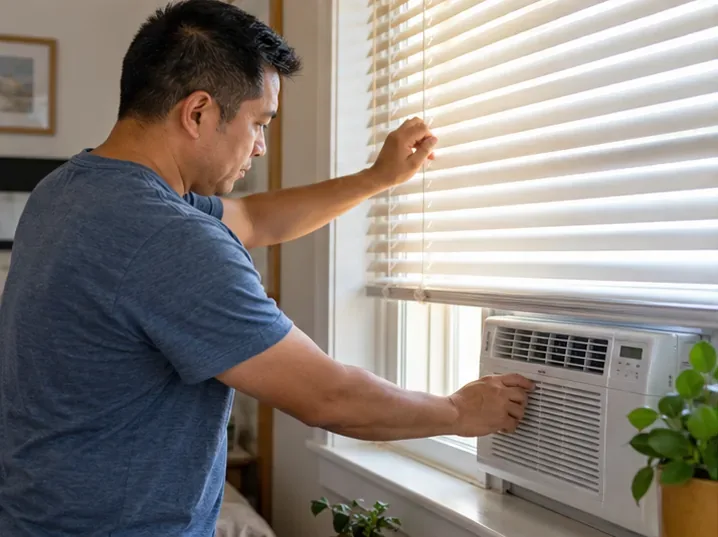
Closing sun-facing blinds and checking cooling equipment are useful steps to take before peak heat.
Test the air conditioner or cooling system now; arrange repair if it is not working.
Close blinds or curtains on sun-facing windows during the day. Limit oven use and other activities that add heat indoors.
Keep drinking water accessible and charge phones, battery packs, and medical devices that need power. If someone relies on powered medical equipment, discuss a power-loss plan with the care team or utility before an outage.
Use fans as an added comfort measure only when indoor temperatures are below 90°F. CDC guidance cautions that fans alone may not protect people when a room is hotter than that.
Medication and fluid needs vary. Some medicines can affect heat tolerance or have specific storage instructions, but do not skip or change a dose because of hot weather without advice from a clinician or pharmacist. If you have a condition that requires fluid limits, follow your care plan rather than using generic advice to drink a set amount.
4. Adjust activities and check on people
Move strenuous exercise, yard work, and errands out of the hottest part of the day when possible. If an outdoor task cannot be postponed, shorten it, take frequent breaks in shade or air conditioning, wear light loose clothing, and drink regularly. Workers should follow their workplace heat-safety procedures and speak up if breaks, water, or cooling are not available.
Heat can affect anyone, and some people face greater risk, including infants and young children, older adults, people with chronic illness or disabilities, people who work or exercise outdoors, and people without reliable cooling or social support. Check on a neighbor or relative who lives alone by phone or in person, and agree on another check-in time. Never leave a child, dependent adult, or pet in a parked car, even briefly.
A planned check-in can help identify whether someone has access to a cool place and needed supplies.
When the Watch becomes a Warning
If a Warning is issued, switch from preparing to protecting: follow the local alert, stay in an air-conditioned place as much as possible, and avoid strenuous outdoor activity, especially during the hottest hours. Keep checking for updates and local directions. If your home becomes too hot, use the destination and transportation plan you made during the Watch. An overnight low that stays high can make it harder for the body and home to cool down, so include night-time arrangements in your plan.
Heat illness: common discomfort and emergency signs
Feeling thirsty, sweaty, tired, or uncomfortable can happen in hot conditions; those sensations alone do not tell you whether someone has a heat illness. Pay attention to a cluster of symptoms, whether they worsen, and whether the person improves after moving to a cooler place. Heat exhaustion may include headache, nausea, dizziness, weakness, irritability, heavy sweating, thirst, elevated temperature, or reduced urination. Stop activity, move the person to a cooler place, remove unnecessary outer clothing, and cool the skin with cool wet cloths. If fully alert and not vomiting, frequent small sips of cool water may be appropriate. Seek medical evaluation, especially if symptoms persist or worsen.
Confusion, altered mental status, slurred speech, fainting or loss of consciousness, seizures, or a very high body temperature are emergency warning signs. Heat stroke is life-threatening, and sweating can still be present. Call 911, stay with the person, move them to a cool or shaded place, remove outer clothing, and begin rapid cooling with cool water or wet cloths while help is coming. Do not give fluids to someone who is confused, unconscious, or unable to swallow safely. Follow the dispatcher’s instructions. The CDC/NIOSH heat-illness guidance lists symptoms and first aid; the CDC extreme heat guidance also covers cooling and prevention.
Quick readiness checklist
I can receive local weather alerts and know where to check for updates.
I have a cool destination, a way to get there, and a backup option.
Home cooling works; I have considered what to do if power fails.
Outdoor work, exercise, and errands can be moved or shortened.
I have arranged check-ins for people who may need help, and I know how to reach local cooling resources.
I know the emergency signs that mean call 911.
Cooling-center services, opening hours, alert thresholds, and emergency arrangements differ by community. Use the information from your local NWS office and local public-health or emergency-management agency for decisions about where you live.