Desk Decorating Ideas for a Spooky Office Cubicle
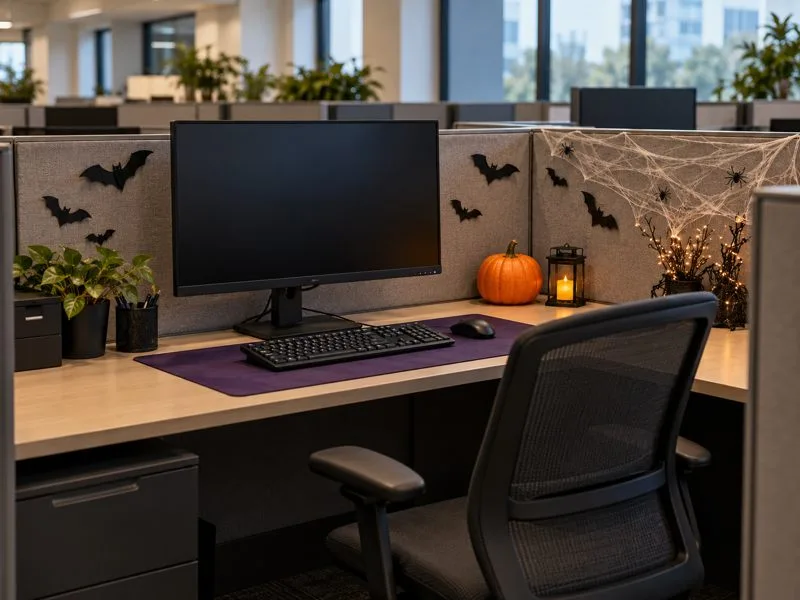
Create a spooky office cubicle with Halloween desk decor ideas that keep your workspace usable, tidy, and mindful of workplace safety.
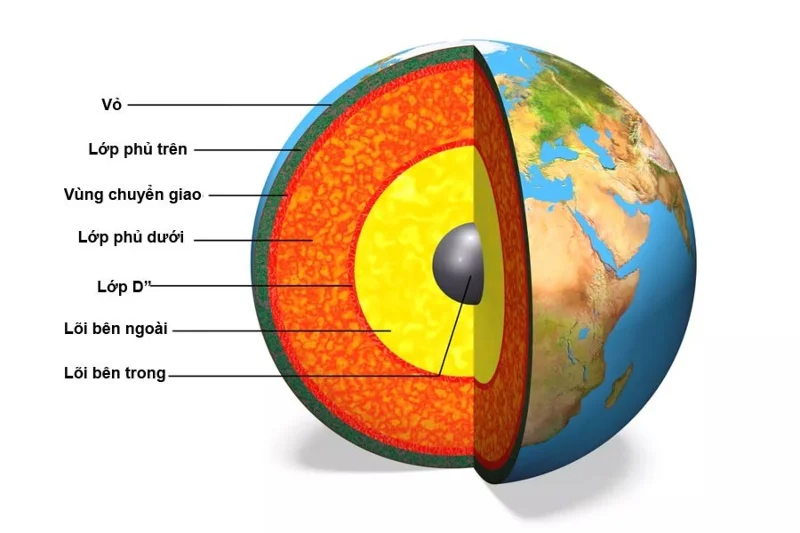
The Earth's mantle is the thick layer of hot, solid rock that lies between the Earth's crust and its molten iron core. It makes up the bulk of the Earth, accounting for two-thirds of the planet's mass. The mantle begins about 30 kilometers deep and is about 2,900 kilometers thick.
Interesting facts about geology
Earth has the same composition of elements as the Sun and other planets (excluding hydrogen and helium, which have escaped Earth's gravity). Subtracting the iron in the core, we can calculate that the mantle is a mixture of magnesium, silicon, iron, and oxygen, which is roughly the same composition as garnet.
But exactly what mineral mix is present at a given depth is a complex question that has not yet been definitively answered. It is helpful that we have samples from the mantle, rocks that have been brought up in some volcanic eruptions, from depths of 300 km or more. These samples show that the top of the mantle is composed of peridotite and eclogite. But the most interesting thing we get from the mantle is diamonds.
The top of the mantle is slowly stirred up by the plate movements that occur above it. This is due to two types of activity. First, there is the downward movement of subducting plates sliding under each other. Second, there is the upward movement of mantle rocks that occurs as the two tectonic plates separate and spread apart. However, all this activity does not thoroughly mix the upper mantle, and geochemists regard the upper mantle as a rocky version of marble cake.
The world's volcanic patterns mirror the activity of plate tectonics, except for a few areas of the planet known as hotspots. Hotspots may be clues to the rise and fall of material much deeper in the mantle, perhaps from the very bottom of it. Or maybe not.
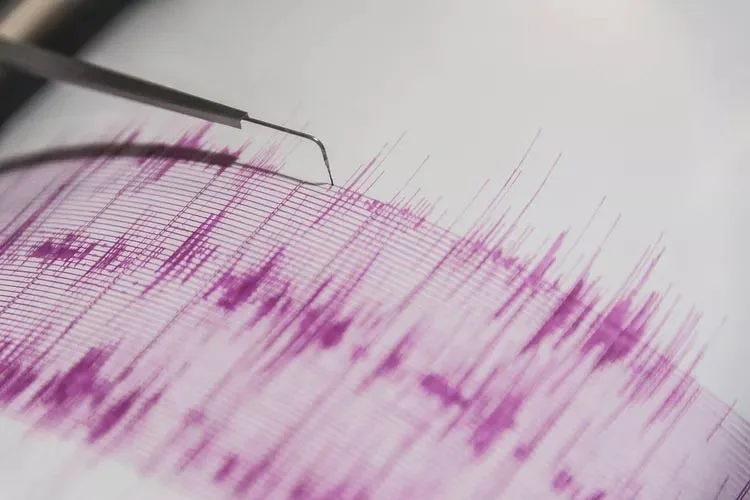
The most powerful technique currently used to explore the mantle is to monitor seismic waves from earthquakes around the world. Two different types of seismic waves, P waves (similar to sound waves) and S waves (like waves in a vibrating string), respond to the physical properties of the rocks they pass through. These waves reflect off some types of surfaces and refract (bend) when they hit other types of surfaces. This effect is used to map the Earth’s interior.
Minerals and rocks change under high pressure. For example, the common mineral olivine in the mantle changes into different crystal forms at a depth of about 410 km and again at a depth of 660 km.
Scientists study the behavior of minerals in mantle conditions using two methods: computer models based on geophysical equations and laboratory experiments. Modern mantle studies are therefore conducted by seismologists, computer programmers, and laboratory researchers who can now recreate conditions anywhere in the mantle using high-pressure laboratory equipment such as diamond-anvil cells.
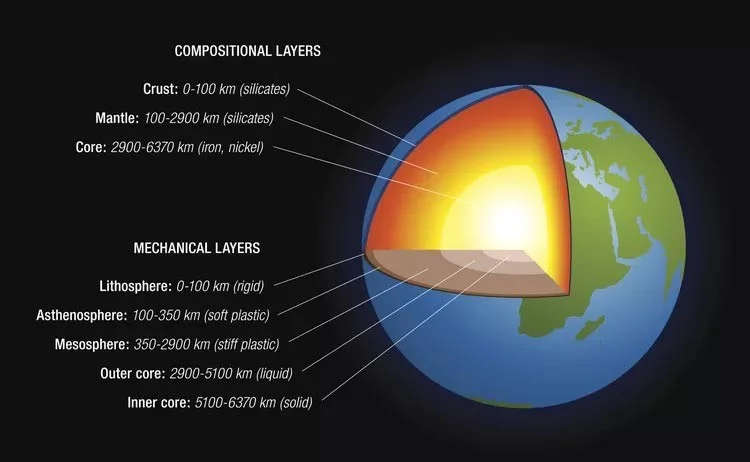
A century of research has helped us fill in some of the gaps in the mantle. The mantle has three main layers. The upper mantle extends from the base of the crust (Moho) down to a depth of 660 km. The transition zone lies between 410 and 660 km, at which depths major physical changes occur in the minerals.
The lower mantle extends from 660 km down to about 2,700 km. At this point, seismic waves are so strongly affected that most researchers believe the rocks below have different chemical compositions, not just crystallographic ones. This controversial layer at the bottom of the mantle, about 200 km thick, has the strange name “D-double-prime.”
Create a spooky office cubicle with Halloween desk decor ideas that keep your workspace usable, tidy, and mindful of workplace safety.
Plan a recognizable Halloween 2026 look with pop culture costumes inspired by Spider-Man, Supergirl, Toy Story 5, Moana, Mario, and Wednesday.
Sort leftover Halloween candy safely, share or repurpose sealed treats, and choose food use or compost for pumpkins based on their condition.
Compare workplace Halloween costume choices by respect, dress code, mobility, and safety—and learn when a subtle accessory or a policy check is the better option.
Find a couples costume that fits your style, budget, and comfort level, from Addams Family classics to original inside-joke duos.
Need a last-minute high school Halloween costume? Compare 10 easy closet-based ideas by prep time, comfort, school-day practicality, and simple safety checks.
Use a simple 2026 Halloween decorating timeline for indoor décor, outdoor displays, and fresh pumpkins, with practical adjustments for weather and events.
Mix five vivid, approachable Halloween cocktails with measured recipes, simple prep tips, and an alcohol-free option for your party guests.
Find 15 office-friendly Halloween costume ideas for 2026, with practical checks for dress codes, respectful themes, comfort, and workplace safety.
Plan a fun elementary school Halloween party with easy crafts, games, inclusive treats, costume tips, and a sample 75-minute classroom schedule.