
How to Use Your Remaining FSA Dollars Before They Expire in 2026
Follow these 4 steps to check your 2026 FSA deadline, find eligible expenses, and submit claims on time so you can use your balance wisely.
Flying home for Christmas or taking a New Year’s vacation in the United States? Build your trip around likely December crowds, verify your identification, and pack for TSA screening before you leave. This six-step holiday travel survival guide helps families, occasional flyers, and frequent travelers reduce avoidable delays without relying on a guaranteed quiet airport day.
Research date: November 28, 2026. Christmas Day falls on Friday, December 25, 2026, and New Year’s Day falls on Friday, January 1, 2027. A nationwide TSA forecast specifically for the upcoming Christmas season was not located during this review. The dates below are planning estimates, not confirmed 2026 traffic rankings or checkpoint wait times.
| Requirement | What you need |
|---|---|
| Documents | Accepted photo ID for adult domestic travelers; passport and applicable entry documents for international travel. |
| Equipment | Phone or printed itinerary, carry-on bag, clear quart-size liquids bag, charging cable, and a protected portable charger. |
| Planning time | Allow roughly 30–60 minutes to review your booking and packing, excluding ID renewal or enrollment appointments. |
| Difficulty | Easy; allow extra preparation for international connections, accessibility needs, or missing identification. |
Start by comparing your intended departure and return dates. TSA’s December 2025 holiday announcement anticipated particularly heavy traffic around December 19–21 and 27–29 and identified December 27, 2024, as that prior season’s busiest day, with approximately 2.85 million screenings. The historical checkpoint data compiled by Passenger Index show approximately 2.92 million screenings on December 28, 2025, compared with 2.07 million on Christmas Day. These figures measure nationwide security screenings, not individual flights or security wait times.
| 2026–27 travel dates | Planning outlook | Suggested action |
|---|---|---|
| December 18–20 | Likely busy pre-holiday weekend | Compare earlier departures or build in extra terminal time. |
| December 21–23 | Potentially busy final departure window | Compare nonstop options and avoid tight connections. |
| December 24–25 | Potentially lighter nationwide | Check reduced service and holiday transport schedules. |
| December 26–30 | Elevated return and New Year travel risk; especially Sunday, December 27 | Consider flexible dates and earlier flights. |
| December 31–January 1 | Potentially lighter, not guaranteed | Verify ground transportation and arrival arrangements. |
| January 2–3, 2027 | Possible post-holiday return surge | Compare return alternatives before booking. |
These are calendar-based judgments informed by past travel patterns. Local demand can differ substantially. Check your airport and airline again in December rather than treating the table as a live forecast. A nonstop morning flight can reduce exposure to missed connections and disruptions earlier in the aircraft’s schedule, but it cannot eliminate weather delays. If your dates are fixed, prioritize a manageable itinerary over a marginally cheaper ticket.
Adults flying domestically should carry a REAL ID-compliant state license or an accepted alternative, such as a U.S. passport or passport card. REAL ID enforcement began May 7, 2025. A temporary driver’s license is not accepted as identification. Check that your reservation name matches your document, and verify international passport, visa, and transit requirements separately.
For travelers without acceptable identification, TSA’s optional ConfirmID process began February 1, 2026. It costs $45 per eligible adult for a ten-day period beginning on the entered travel date. It is an attempt to establish identity, not a guarantee of admission through security. If necessary, use the official Pay.gov ConfirmID form, verify all entries, and save your receipt offline. Review the TSA identification announcement for accepted alternatives. Do not pay if you already have an acceptable ID.
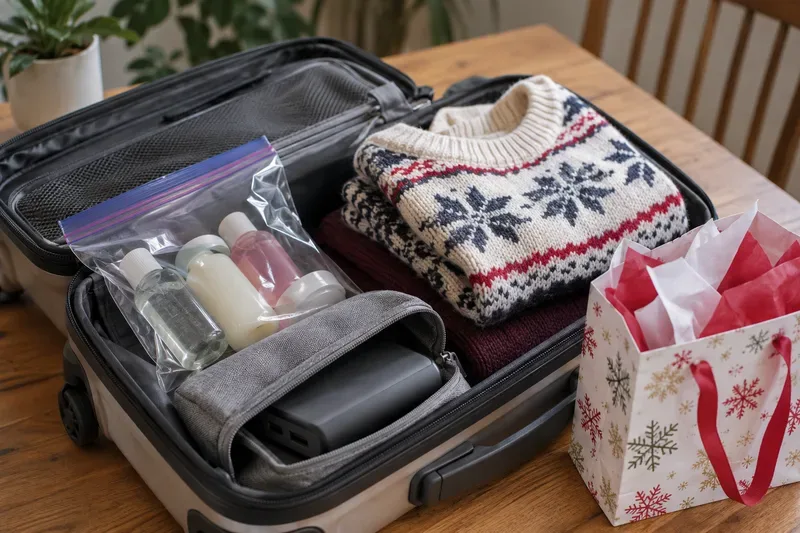
Use the standard 3-1-1 liquids rule: containers of up to 3.4 fluid ounces (100 mL), together in one clear quart-size bag, with one bag per traveler. A half-empty oversized shampoo bottle still exceeds the container limit. Put larger ordinary toiletries in checked baggage when permitted. Medically necessary liquids and infant feeding supplies can qualify for exceptions and may need separate screening; tell the officer about them.
Keep essential medication, documents, valuables, and a change of clothes in your personal item. Leave gifts easy to open because security officers may need to inspect them. Check unusual gifts and food in the official TSA permitted-items directory before packing.
Power banks and spare lithium batteries must remain in cabin baggage. Protect their terminals from contact with metal, and remove them if your carry-on is gate-checked. The FAA lithium battery guidance generally limits rechargeable batteries to 100 watt-hours without airline approval; some airlines impose tighter limits.
As a baseline, aim to reach the terminal at least two hours before a domestic departure and three hours before an international departure. These are recommendations, not guarantees; follow any longer guidance from your airline or airport. The Port of Seattle holiday travel guidance recommends those arrival buffers. Include extra time for a crowded parking garage, bag drop, mobility assistance, and walking to the gate.
For example, for a domestic flight departing Chicago O’Hare at 9 a.m. Central Standard Time (CST, UTC−06:00) on December 27, aim for terminal arrival by 7 a.m. CST or earlier. If your ride takes 45 minutes and you allow another 30 minutes for road delays, leave by 5:45 a.m. CST. This is an illustrative schedule, not a reported airport wait time.
Check in as soon as your airline permits, save the boarding pass, and confirm the terminal. If enrolled in TSA PreCheck, an expedited screening program for eligible travelers, confirm the designation appears on the boarding pass. Do not assume enrollment or a travel companion’s status grants access. Consult your airport’s checkpoint hours and accessibility information. If you need assistance with screening, contact TSA Cares in advance; the SEA security screening guide suggests contacting the service 72 hours before departure.
Keep ID accessible and empty pockets before screening. TSA ended the routine shoe-removal requirement at domestic airports in 2025, according to its holiday announcement, but additional screening may still be requested. Follow the officer’s directions about electronics, liquids, and outerwear because equipment and procedures can vary by lane. Once cleared, check your gate and boarding deadline again.
Enable airline notifications, save your booking reference, and review winter weather at departure, connecting, and destination airports. If a travel waiver appears, compare its eligible dates and terms before changing your reservation. Keep a list of possible alternative flights and leave time between arrival and important family commitments.
If your flight is canceled or significantly changed and you decide not to travel or accept an alternative, U.S. Department of Transportation rules generally entitle you to a refund. Review the DOT refund guidance before accepting a voucher. Meals, hotels, and other expenses are separate issues; weather disruptions do not automatically qualify for those benefits.
Look for an accepted alternative first. If none is available, review ConfirmID and allow additional time for verification. Do not rely on a payment receipt alone as proof that you will be cleared. Contact your airline promptly if you may miss boarding.
Ask airport staff which open checkpoints serve your gate and whether your screening status is eligible there. Do not leave a line without checking the alternative. Notify the airline if boarding is approaching, and never assume a delayed departure means the bag-drop deadline has moved.
Open your airline’s app, look for a rebooking offer, and contact customer service if it does not suit your trip. Keep notifications and receipts. If you bought the ticket through an agency, identify the merchant that charged you when pursuing an eligible refund. Avoid canceling the rest of your itinerary yourself without understanding the consequences.
Sunday, December 27, is a plausible high-demand return date, and December 18–23 deserves extra planning. The actual busiest day cannot yet be established; check TSA announcements closer to Christmas.
It can be. Historical nationwide screenings suggest lighter demand on Christmas Day than on nearby peak days, but individual airports, available flights, weather, and holiday ground transportation can change the experience. Compare the complete trip, not just the airfare.
Generally, permitted gifts can travel in your bags, but officers may need to open them for inspection. A gift bag or wrapping after arrival is a practical choice. Liquids and batteries inside gifts must still comply with applicable rules.
Final check: Confirm ID, flight status, bag contents, terminal arrival time, and backup plans the night before departure. Repeat the flight and weather checks before leaving home.
Follow these 4 steps to check your 2026 FSA deadline, find eligible expenses, and submit claims on time so you can use your balance wisely.
Execute 6 essential year-end tax moves before December 31, 2026 to maximize retirement savings, harvest investment losses, and lower your 2026 tax bill.

Plan 25 cozy December family activities in 5 easy steps, from winter crafts and outdoor fun to budget-friendly traditions, with or without snow.

Watch the 2026 Rockefeller Center Christmas Tree Lighting in 5 steps. Find the Dec. 2 start time, NBC and Peacock options, and NYC viewing tips.

Use this five-step guide to match thoughtful Christmas gifts under $50 to each person, compare current price examples, and stay on budget.

Master AI factories and physical AI in 5 proven steps to deploy digital twins, train robotics, and drive American industrial innovation.

Master Miami Art Week with this 5-step guide to ticketing, satellite fairs, transport, and installations for an optimal contemporary art experience.

Follow this 4-step tutorial to audit holiday budgets, verify charities, and mobilize community support to counteract seasonal consumerism.

Follow this 5-step guide to explore the history, technical feats, and visiting tips for the Rockefeller Center Christmas Tree to plan a seamless holiday trip.