Home
» Wiki
»
How does the process of drilling through the Earth happen?
How does the process of drilling through the Earth happen?
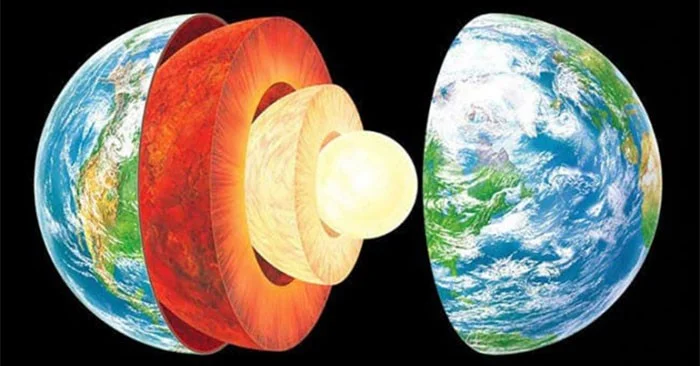
Scientists have made some predictions about the process of drilling into the Earth, which has so far been impossible for humans. The predictions are based on data from other drilling projects. To drill through the Earth, which is 12,756 km in diameter, would require giant drills and decades of work.
Simulation of the layers of the Earth. Photo: Museum Victoria
The Earth’s crust, about 100 km thick, is the first layer to be drilled through. As the drill goes deeper underground, atmospheric pressure increases, with about 1 atmosphere of pressure for every 3 metres of rock.
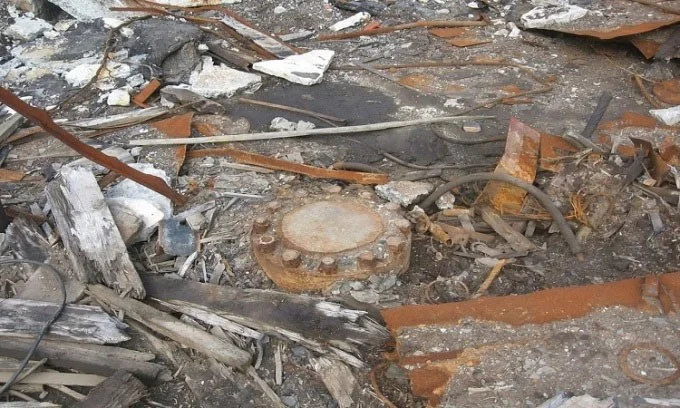
The Kola Superdeep Borehole in Russia, at 12.2 kilometers deep, is the deepest man-made hole ever made and took nearly 20 years to reach. The pressure at the bottom of the hole is 4,000 times greater than the pressure at sea level. It is still more than 80 kilometers from the bottom of the hole to the next layer of the Earth, the mantle, the 2,800-kilometer-thick, dense, dark rock that governs the tectonic plates.
A sealed borehole in Kola in 2012. Photo: Wikimedia
In the 1950s and 1960s, scientists attempted to drill into the deep sea to reach the boundary between the mantle and the Earth's crust known as the "Moho", but failed.
Another major problem is that the hole created by drilling through the Earth will collapse unless drilling fluid is continuously pumped to help equalize the pressure inside the hole with the pressure of the surrounding rock. The fluid used in oil well and deep sea drilling is a mud mixture of heavy minerals.
Drilling fluid also cleans the drill bit to prevent sand and gravel from sticking to the machinery, and helps to reduce temperatures, although this is not possible in the innermost layers of the Earth. For example, temperatures in the mantle reach 1,410 degrees Celsius, so stainless steel drill bits would melt, so expensive specialist alloys such as titanium are needed.
The Earth's core is about 2,900 km deep, the outer core is made mainly of nickel and liquid iron, extremely hot with a temperature of 4,000 - 5,000 degrees Celsius. Therefore, drilling through this molten mixture will cause a series of problems such as super hot temperatures melting the drill bit.
After drilling for 5,000 km, the drill bit will reach the inner core, where the pressure is so strong that it is 350 million times atmospheric pressure, the drill bit will have to withstand a pressure of about 350 gigapascals.
The drill bit will be pulled down into the core by the Earth's gravity throughout the entire process. At the core, because the pull of the Earth's mass will be equal in all directions, the gravitational force will be similar to that in orbit, resulting in a state of weightlessness.
If the drill makes it to the middle, it still has a long way to go to the other side. Gravity will change relative to the drill’s position as it continues toward the other side of the planet, pulling it back toward the core. Conversely, as it descends, the drill will have to fight gravity as it heads toward the surface, toward the outer core, mantle, and crust.