NSW Thunderstorm Update: Warning Cancelled, Storm Risk Remains | Nov. 25
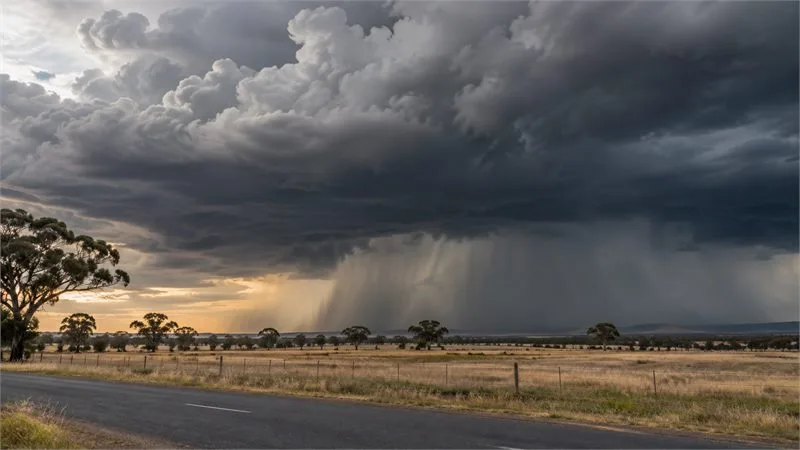
The Bureau of Meteorology’s latest NSW summary lists a cancelled severe thunderstorm warning. Storms remain possible in parts of northern and western NSW.
Verified & Updated: November 25, 2026, 09:30 UTC (London, GMT / UTC+00:00)
The Office of Gas and Electricity Markets (Ofgem) has officially announced the energy price cap rates for the upcoming winter quarter covering January 1 to March 31, 2027. Under the new determination, the benchmark annual energy bill for a typical dual-fuel household paying by monthly direct debit will jump to £2,166—a 26% surge from the current £1,723 cap set for October 1 through December 31, 2026. This significant increase reflects ongoing wholesale gas market volatility and heightened regional pipeline supply constraints heading into the peak heating season across England, Scotland, and Wales.
Introduced by Parliament under the Domestic Gas and Electricity (Tariff Cap) Act 2018, the energy price cap is a statutory mechanism administered by Ofgem. It restricts the maximum unit rate and daily standing charge that licensed domestic energy suppliers can levy on customers on default tariffs—commonly known as standard variable tariffs (SVTs). It protects around 29 million households across Great Britain (England, Scotland, and Wales). Northern Ireland operates under a distinct regulatory regime managed by the Utility Regulator.
It is vital for billpayers to understand a common misconception: the price cap is not a cap on the overall sum you pay. The headline figure published by Ofgem (such as £2,166 or £1,723) represents an illustrative annual cost benchmark based on Typical Domestic Consumption Values (TDCVs). Currently, Ofgem defines a median household's typical consumption as 2,700 kWh of electricity and 11,500 kWh of gas per year. If a home consumes more than these average thresholds, its annual energy expenditure will exceed the headline figure; homes consuming less will pay less.
The price cap is reviewed every three months to mirror fluctuations in underlying supply costs. The rates for households paying by direct debit break down as follows across Great Britain:
| Fuel Type & Charge | Current Cap (Oct 1 – Dec 31, 2026) | New Cap (Jan 1 – Mar 31, 2027) |
|---|---|---|
| Electricity Unit Rate | 26.32p per kWh | 32.69p per kWh |
| Electricity Standing Charge | 54.83p per day | 54.77p per day |
| Gas Unit Rate | 7.97p per kWh (incl. 5% VAT) | 10.96p per kWh (incl. 5% VAT) |
| Gas Standing Charge | 29.68p per day (incl. 5% VAT) | 29.65p per day (incl. 5% VAT) |
| Typical Dual-Fuel Annual Total | £1,723 / year | £2,166 / year |
Note: Under emergency cost-of-living legislation, the UK government suspended standard 5% VAT on domestic electricity between October 1, 2026, and June 30, 2027. Gas rates continue to reflect 5% VAT. Prepayment meter rates are marginally lower due to regulatory equalisation, whereas customers paying upon receipt of paper bills (standard credit) pay a premium of approximately £130 per year to cover additional supplier handling costs.
To audit an electricity or gas invoice, consumers must look at the two distinct pricing components specified by their supplier: the variable unit rate and the fixed daily standing charge.
The standing charge is a mandatory flat fee levied every calendar day regardless of whether any energy is consumed. It covers the maintenance of national power grids, local distribution wires, gas pipes, customer service overheads, and government environmental and social scheme levies. To calculate your fixed charge for a quarterly billing cycle (e.g., 90 days):
Fixed Electricity Charge = 90 days × 54.77p = 4,929.3p = £49.29
Fixed Gas Charge = 90 days × 29.65p = 2,668.5p = £26.69
The unit rate represents the price per kilowatt-hour (kWh) of power or thermal energy drawn from the grid. While electricity meters measure kWh directly, standard domestic gas meters measure volume in cubic meters (m³) or hundreds of cubic feet (ft³). For gas, suppliers use an official conversion formula established by the Gas (Calculation of Thermal Energy) Regulations:
Gas kWh = Units Consumed (m³) × Volume Correction Factor (1.02264) × Calorific Value (approx. 40.0) ÷ 3.6
Once converted into kWh, the total usage is multiplied by the applicable unit rate. For instance, using 1,200 kWh of electricity in Q1 2027 would cost 1,200 × 32.69p = £392.28.
Your total invoice for each fuel type combines both elements:
Total Energy Cost = (Total kWh Consumed × Unit Rate) + (Number of Days × Daily Standing Charge) + Applicable VAT
Ofgem evaluates several granular cost drivers before publishing each quarter's maximum rates:
While Ofgem publishes headline GB averages, actual capped rates vary across 14 electricity regions and 8 gas regions. Areas with lower population density or higher transmission distances—such as Northern Scotland and North Wales—generally have higher standing charges or unit rates than densely populated urban regions like London. Additionally, households on prepayment meters receive a small discount via government-directed tariff equalisation, whereas customers paying upon receipt of bill incur administrative surcharges.
No. The price cap sets a maximum ceiling only on the price per unit of energy (in pence per kWh) and the daily standing charge (in pence per day). Your total monthly or quarterly bill depends entirely on how many units of electricity and gas your household uses. Consuming double the average volume will double the variable portion of your bill.
The 26% increase announced for January 1 through March 31, 2027, was primarily triggered by sharp increases in European wholesale natural gas benchmarks during autumn hedging periods, compounded by infrastructure maintenance in key export corridors and elevated winter heating demand.
Yes. If you sign a competitive fixed-term tariff, your supplier locks in your unit rates and standing charges for 12 to 24 months, exempting you from quarterly price cap shifts. However, early exit fees may apply if market wholesale rates decrease later and you decide to terminate the contract early.
The Bureau of Meteorology’s latest NSW summary lists a cancelled severe thunderstorm warning. Storms remain possible in parts of northern and western NSW.
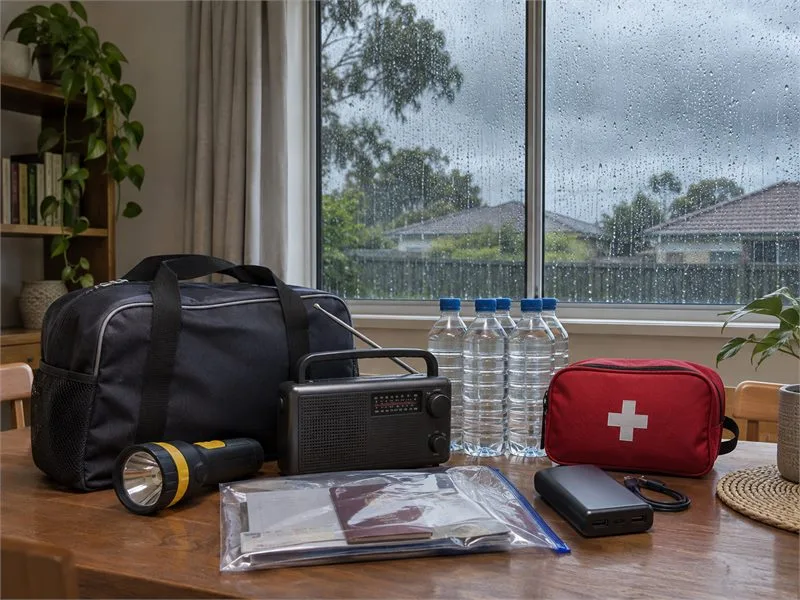
Prepare for severe storms in NSW with a practical home and family checklist, warning guidance, and the right emergency contacts: 000 and SES 132 500.
Nintendo’s Ver. 1.9.0 update adds eight remixed courses, two Knockout Tour rallies, automatic race and battle replays, and gameplay fixes to Mario Kart World.
Dough Balls Pizza Place Pty Ltd entered creditors’ voluntary liquidation on 20 November. Here’s what the liquidator’s appointment and reported restaurant closures mean.
Dough Balls Pizza Place entered liquidation on Nov. 20. Learn what its closure means for gift cards, deposits, orders, and employee entitlements in Australia.
Check Microsoft 365 and Azure service health, identify whether an outage affects your business, and protect essential operations with practical continuity steps.
Understand how cloud failures spread, what “Code Red” signals, and how Australian businesses can verify an outage, limit downtime and prepare for recovery.
Nintendo’s Mario Kart World 1.9.0 update adds eight course variants, two Knockout Tour rallies and race replays, alongside gameplay fixes. See the verified patch notes.
Gatwick’s third-party AutoPay service remains unavailable after unauthorized access. See what data may be involved, what remains unknown, and what drivers can do.
NOAA warns of Thanksgiving storm risks across the East and wet weather in the West. Learn how weather can affect flights, connections and your travel plans.