Home
» Wiki
»
How to backup browser: Bookmarks, extensions, passwords, etc.
How to backup browser: Bookmarks, extensions, passwords, etc.
Losing all your bookmarks, saved passwords, and extensions is incredibly frustrating. So whether you're switching browsers permanently or just want to reduce the chances of losing data, you should back up your browser periodically - it will save you a lot of time and effort later!
Why should you backup your browser?
Whether you use Google Chrome or one of the many great Chrome alternatives, you're probably aware of how much data the browser stores. From all the sites you've bookmarked to passwords, autofill details, and extensions, browsers store important data that makes your browsing sessions faster and more personalized.
With that said, backing up your browser is not something you should put off. Without a backup, a sudden system crash, loss/stolen primary device, or accidental deletion of data like bookmarks or browsing history can leave you in a state of confusion.
Unfortunately, it's easy to delete years of information in a matter of seconds, but once it's gone, it's not always possible to recover all that data. Backing up your browser ensures that you can recover important data if something goes wrong. The good news is that backing up your browser isn't difficult. You can choose to perform regular manual backups or enable automatic syncing so your data is easily accessible across multiple devices.
How to use automatic sync to backup your browser
One of the quickest and easiest ways to make sure you never lose access to important data in your browser is to enable automatic sync. Most browsers, including Chrome, Firefox, and Brave, offer built-in sync. When enabled, this feature automatically syncs your bookmarks, extensions, passwords, and more across all the devices you use.
If Google Chrome is your primary browser, setting up automatic sync will help you access your passwords, bookmarks, and other data on a new device after you sign in. This way, you won't lose any data even if you change devices. Follow these steps to enable sync in Chrome:
Open Chrome.
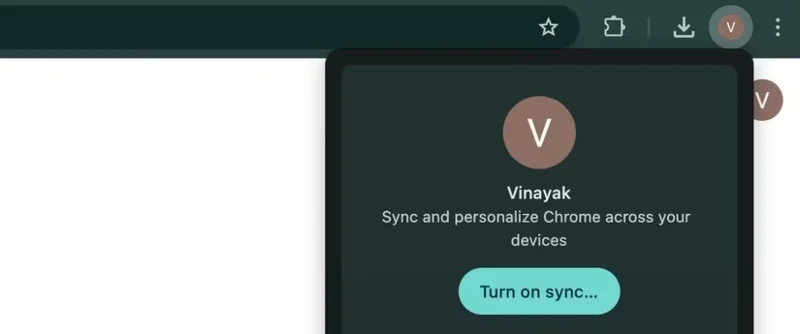
Select your profile in the upper right corner of the window.
Select Turn on sync from the options that appear. If you are not signed in to your Google account at this point, you will be prompted to do so.
Enable automatic sync on Chrome
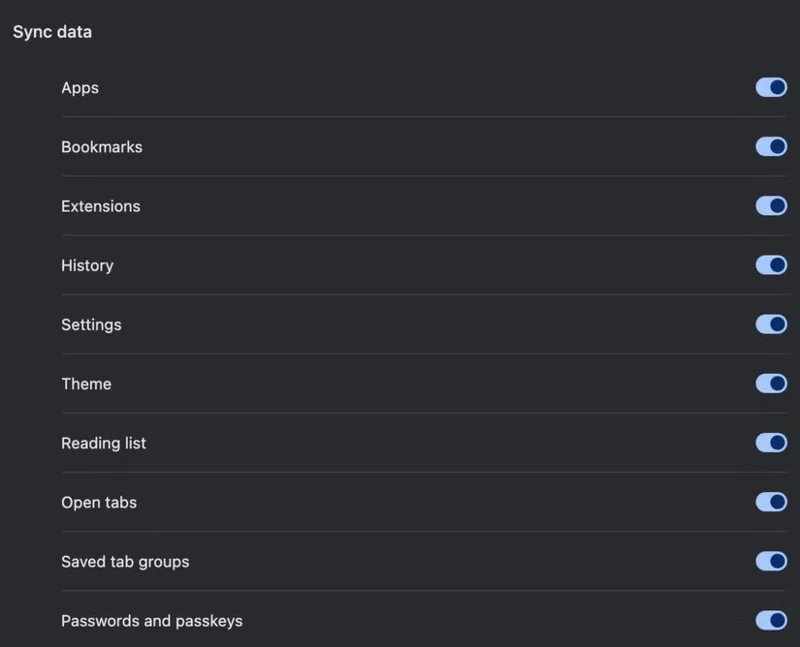
Once you're signed in, select Yes, I'm in . To customize what gets synced, select your profile icon in the upper-right corner again and click Sync is on . Now, select Manage what you sync and click Customize sync . You can now choose toggles for the different types of data you want to sync. Once you're done, you can access your data on any device where you're signed in to Chrome.
Chrome's automatic sync feature lets you customize what you want
Other browsers like Mozilla Firefox have a similar sync feature that also requires you to log in. Once logged in, you can manage your sync settings and choose which data to sync. Brave has a similar feature, but requires you to create a sync string using a QR code or entering a 24-word code.
How to perform manual backup
Even if you have auto-sync enabled in your browser and are sure you can access your data on other devices, it's not a bad idea to keep a local copy of it. On Chrome, you can easily do this through Google Takeout .
Export Chrome data via Google Takeout
Here's what you need to do:
Navigate to the Google Takeout page.
By default, all of your data will be selected for export. Narrow this down by clicking Deselect all .
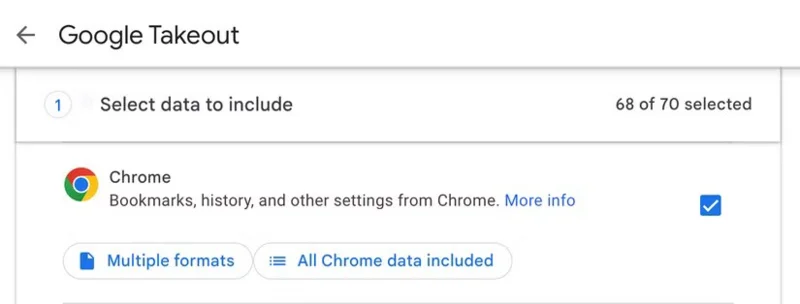
Scroll down until you find Chrome and check the box next to it.
Select All Chrome data included .
Select the type of data you want to export and click OK .
Scroll down and select Next step .
You can now choose your preferred delivery method, file type, and export frequency. Click Create export to start the export process. Google will prepare your archive. When it's ready, you'll receive a notification that the export file is available for download.
Google Takeout has prepared a copy of the data for export.
If you use other browsers, like Firefox or Edge, the steps will be slightly different. However, you can still back up important data like bookmarks, passwords, etc., through whichever browser you use.
While exporting your browser data can help you quickly recover important information in an emergency, make sure you keep those files safe. If your files contain sensitive details, such as passwords and contact information, that information could be mishandled if it falls into the wrong hands. You also shouldn’t rely on a single method of backing up your data, as you could lose all your files if something goes wrong.