
How to Host a Budget-Friendly Halloween Party This Year

Host an affordable Halloween party with a clear spending cap, DIY decorations, simple food, free games, and practical safety tips.
Ever wondered if your Microsoft Teams is running the latest version? 👆 Whether you're an IT admin troubleshooting compatibility or a power user ensuring smooth collaboration, knowing your exact Microsoft Teams version is crucial. PowerShell makes it lightning-fast—no digging through settings or About menus!
In this guide, you'll master how to check your Microsoft Teams version using PowerShell. We'll cover foolproof scripts, pro tips, and troubleshooting to keep your Teams humming. Ready to dive in? Let's power up! ⭐
Recent updates to Teams (like the shift to the new Teams client) make version checks essential for features like AI copilot integration. Stay compliant and optimized! 😊

We'll use registry queries and WMI for comprehensive coverage. Copy-paste these scripts directly!
This grabs the version from the uninstall registry—works for MSI and new per-machine installs.
Get-ItemProperty "HKLM:\SOFTWARE\Microsoft\Windows\CurrentVersion\Uninstall\*" |
Where-Object { $_.DisplayName -like "*Teams*" } |
Select-Object DisplayName, DisplayVersion, Publisher |
Format-Table -AutoSize
Expected Output:
| DisplayName | DisplayVersion | Publisher |
|---|---|---|
| Microsoft Teams | 24124.240.3788.1120 | Microsoft Corporation |
Pro Tip: Pipe to Export-Csv for reports: | Export-Csv -Path "C:\TeamsVersions.csv" -NoTypeInformation. Boom—audit-ready! 👏
For per-user installs (common in new Teams):
Get-ItemProperty "HKCU:\SOFTWARE\Microsoft\Windows\CurrentVersion\Uninstall\*" |
Where-Object { $_.DisplayName -like "*Teams*" } |
Select-Object DisplayName, DisplayVersionScans all software installs reliably:
Get-CimInstance -ClassName Win32_Product |
Where-Object { $_.Name -like "*Teams*" } |
Select-Object Name, Version
Or for faster non-enumerating WMI:
Get-WmiObject -Class Win32_Product | Where { $_.Name -match "Teams" } | ft Name,Version -aThe redesigned Teams uses app paths. Check here:
$teamsPath = "${env:LOCALAPPDATA}\Microsoft\Teams\current\Teams.exe"
if (Test-Path $teamsPath) {
    (Get-Item $teamsPath).VersionInfo.ProductVersion
} else {
    Write-Output "Teams not found in user profile."
}
Feeling empowered? These methods cover 99% of setups. But what if it fails? Keep reading! 😎
| Issue | Solution |
|---|---|
| No output? | Run as Admin or check both HKLM/HKCU. |
| Multiple versions? | Uninstall old ones via Get-Package *Teams* | Uninstall-Package. |
| New Teams not detected? | Use winget list --id Microsoft.Teams (PowerShell-integrated). |
| Remote check? | Invoke-Command on remote PSRemoting: Invoke-Command -ComputerName PC01 -ScriptBlock { ... }. |
Stuck? Verify with official docs: Microsoft Teams Client Info.
Supercharge your workflow:
function Get-TeamsVersion {
    param([switch]$AllUsers)
    if ($AllUsers) {
        Get-ItemProperty "HKLM:\SOFTWARE\Microsoft\Windows\CurrentVersion\Uninstall\*", "HKCU:\SOFTWARE\Microsoft\Windows\CurrentVersion\Uninstall\*" |
        Where-Object { $_.DisplayName -like "*Teams*" } |
        Select-Object DisplayName, DisplayVersion
    } else {
        # Default single check
    }
}
Get-TeamsVersion -AllUsers
Save as .ps1 and run anywhere. IT dream! 🌟
winget list Microsoft.Teams (built-in package manager).But nothing beats PowerShell's depth. Why settle for less?
Congrats—you've unlocked how to check your Microsoft Teams version using PowerShell like a boss. Implement these today to avoid update headaches and boost productivity. Got a twist on these scripts? Drop it in the comments below—we love hearing your hacks!
Stay tuned for our next guide on automating Teams updates. What's your biggest Teams challenge? 👇
Host an affordable Halloween party with a clear spending cap, DIY decorations, simple food, free games, and practical safety tips.
Choose Halloween party games by group size, experience, and mood, with simple ways to make tarot and mahjong welcoming for every guest.
Compare 2026 dog Halloween costume trends by search interest, fit, comfort, and mobility—from hot dog and shark looks to simple bandanas.
Learn how the Gravity Falls-inspired summer Halloween works, choose a date and celebration style, and plan a low-stress Summerween party.
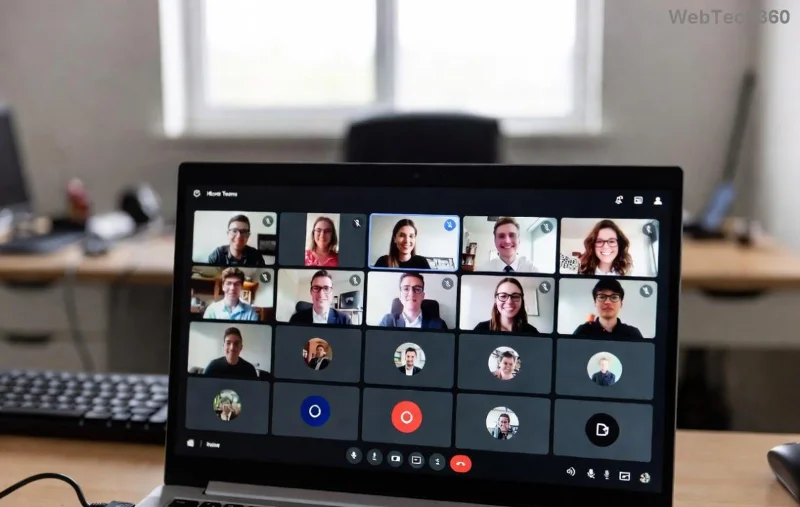
Plan an inclusive virtual Halloween party for remote teams with time-zone-friendly scheduling, simple games, accessible options, and a practical hosting checklist.
Explore seven Halloween team building games for the workplace, with quick rules, hybrid-friendly options, accessibility tips, and practical safety guidance.
Mix a glossy prop-only fake blood batch, choose safer products for skin and costumes, and test cleanup before Halloween night.
Create a gentle Halloween look with pastel colors, friendly ghosts, easy no-carve accents, and practical safety tips for your home.
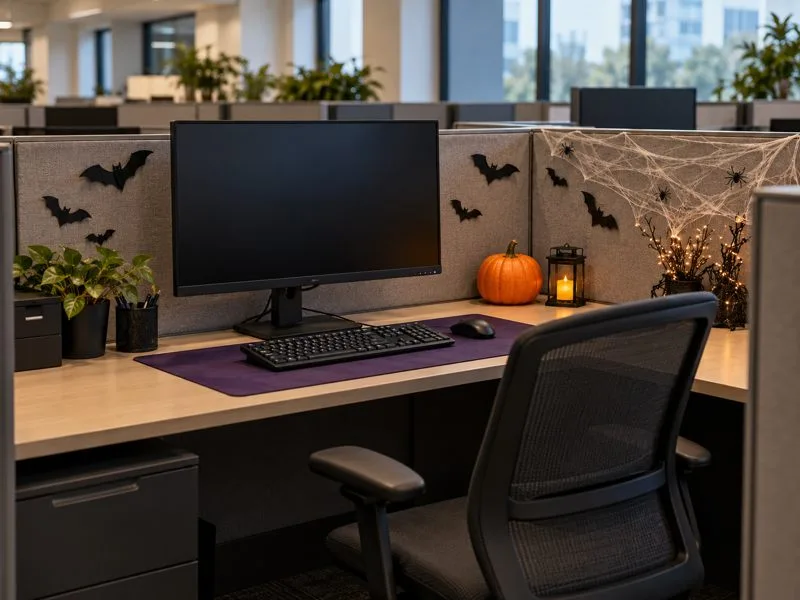
Create a spooky office cubicle with Halloween desk decor ideas that keep your workspace usable, tidy, and mindful of workplace safety.
Plan a recognizable Halloween 2026 look with pop culture costumes inspired by Spider-Man, Supergirl, Toy Story 5, Moana, Mario, and Wednesday.