
Desk Decorating Ideas for a Spooky Office Cubicle
Create a spooky office cubicle with Halloween desk decor ideas that keep your workspace usable, tidy, and mindful of workplace safety.
iOS 18 has provided the feature of locking and hiding apps using Face ID or Touch ID for users to set up. This feature will lock and hide the app in a folder and requires authentication to unlock and access that app. Thus, users do not need other intermediate methods to hide or lock apps on iPhone like previous iOS versions. Below are instructions for locking and hiding apps on iOS 18.
How to hide apps on iOS 18 using FaceID
Step 1:
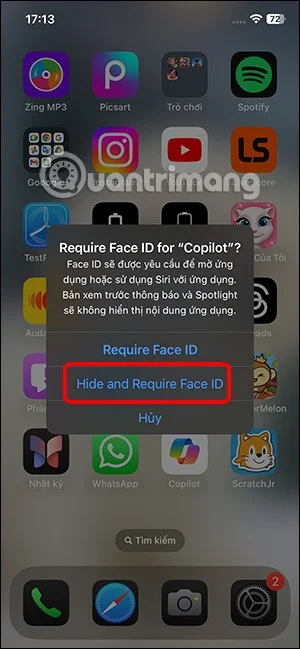
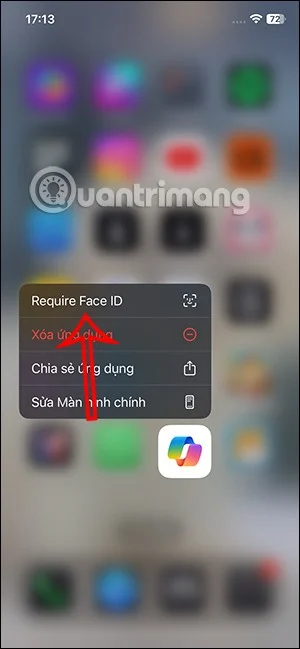
We press and hold on an application you want to lock and hide, then display the options. You press Require Face ID to use.
Step 2:
Now you will see 2 different options including Require Face ID to lock the application on iPhone using Face ID or select Hide and Require Face ID to hide the application using Face ID.
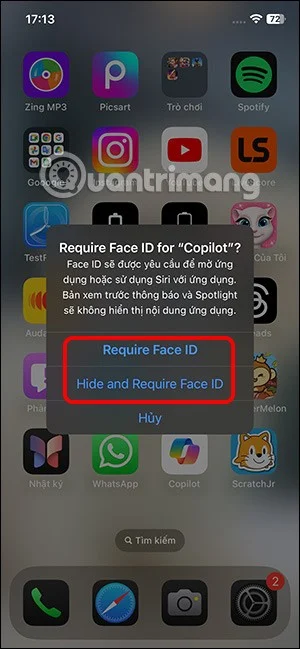
Immediately after that you are asked to authenticate Face ID so we can lock the application on iPhone .

When you lock an app with Face ID on iOS 18, the app information will not appear in notifications, search, or Spotlight. So no one can see any of the app's information, making the content more secure. But you need to authenticate with Face ID when you want to display content from this app in another app.
We just need to scan our face to open the application .

Step 3:
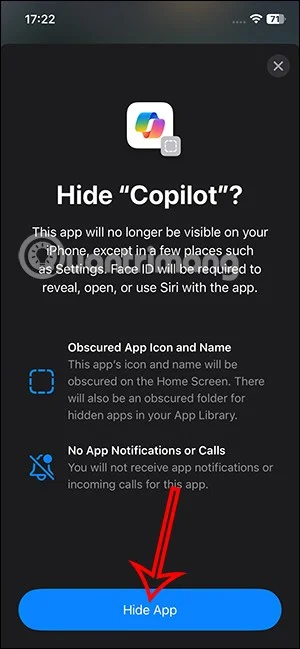
If you choose Hide and Require Face ID to hide the app , the app will be saved in a hidden folder in the app library on your iPhone. A notification will appear as shown, click Hide App to hide the app.
The app will not appear on the Home screen or App Library and will only be accessible from a hidden folder.
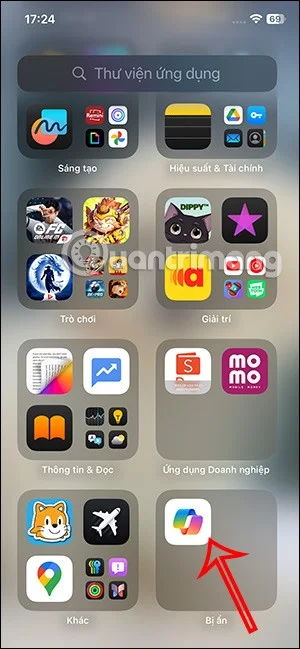
You access the App Library and scroll down to see the hidden application folder as shown below. To access this hidden folder, you also need to authenticate with Face ID .
How to unlock and hide apps on iOS 18
Step 1:
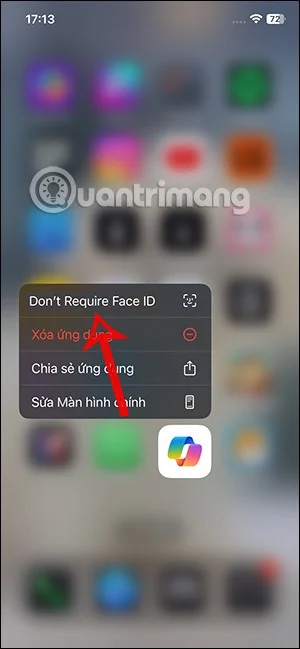
If we only lock the application on iPhone with Face ID, you press and hold on that application on the home screen and select Don't require Face ID . Then you also need to authenticate your face to unlock the application .
Step 2:
If we want to unhide the application on iPhone , you open the hidden application folder with your face to see the application inside. Then you also tap on the application to display the options.
We will click Add to Home Screen to unhide the application and add it back to the home screen.
Step 3:
You will then be asked if you want to show the app on the home screen again, tap Unhide App and authenticate your face to show the app again.
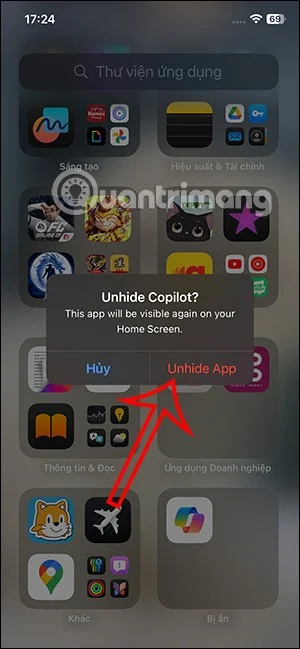
Finally you will see the app showing up on the home screen and unlocked.
Create a spooky office cubicle with Halloween desk decor ideas that keep your workspace usable, tidy, and mindful of workplace safety.
Plan a recognizable Halloween 2026 look with pop culture costumes inspired by Spider-Man, Supergirl, Toy Story 5, Moana, Mario, and Wednesday.
Sort leftover Halloween candy safely, share or repurpose sealed treats, and choose food use or compost for pumpkins based on their condition.
Compare workplace Halloween costume choices by respect, dress code, mobility, and safety—and learn when a subtle accessory or a policy check is the better option.
Find a couples costume that fits your style, budget, and comfort level, from Addams Family classics to original inside-joke duos.
Need a last-minute high school Halloween costume? Compare 10 easy closet-based ideas by prep time, comfort, school-day practicality, and simple safety checks.
Use a simple 2026 Halloween decorating timeline for indoor décor, outdoor displays, and fresh pumpkins, with practical adjustments for weather and events.
Mix five vivid, approachable Halloween cocktails with measured recipes, simple prep tips, and an alcohol-free option for your party guests.
Find 15 office-friendly Halloween costume ideas for 2026, with practical checks for dress codes, respectful themes, comfort, and workplace safety.
Plan a fun elementary school Halloween party with easy crafts, games, inclusive treats, costume tips, and a sample 75-minute classroom schedule.