Internet Download Manager (IDM) is a great download support tool and is the number one choice for users. In addition to the basic features that everyone knows, there are hidden things that users may not know about. One of them, is the timer feature to turn off the computer after the download is complete.
Features Timer shutdown computer after download completion of IDM are many options to use when you want to go to sleep, go out, not in front of the computer while downloading bad software, movie or application capacity big. But do you know how to do it?
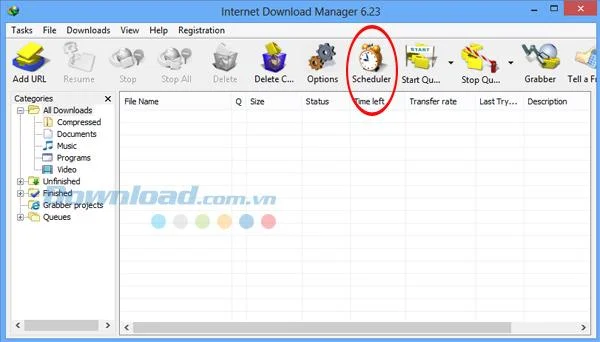
Step 1: Start Internet Download Manager. On the main interface, select the Scheduler tab (with the icon of a clock).
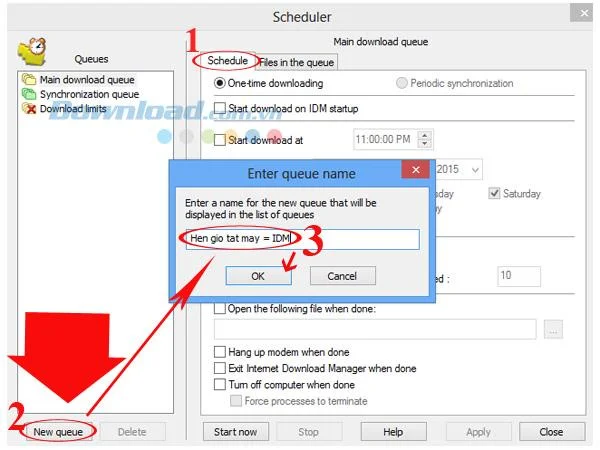
Step 2: The interface of the Scheduler appears, follow these steps:
- Click on the first tab, under Main download queue ( Scheduler tab ).
- Look at the bottom, left, click on the New queue box . When a small window called Enter queue name appears, enter the name for the queue in the empty box (any name, it is best to type unsigned, because IDM does not support Vietnamese display) . Here, Download.com.vn enter the example as "Sewing machine = IDM".
- Enter finished, press OK to confirm.

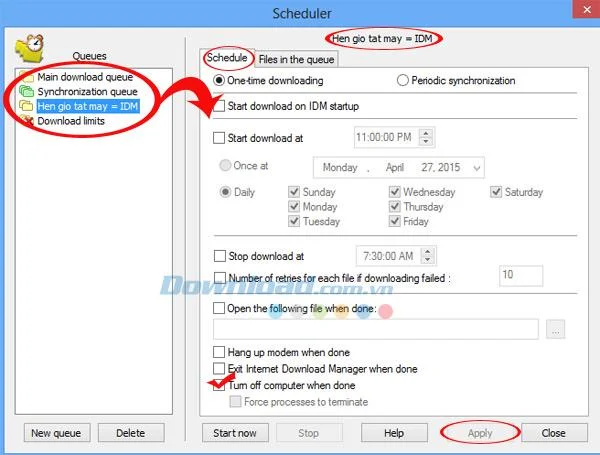
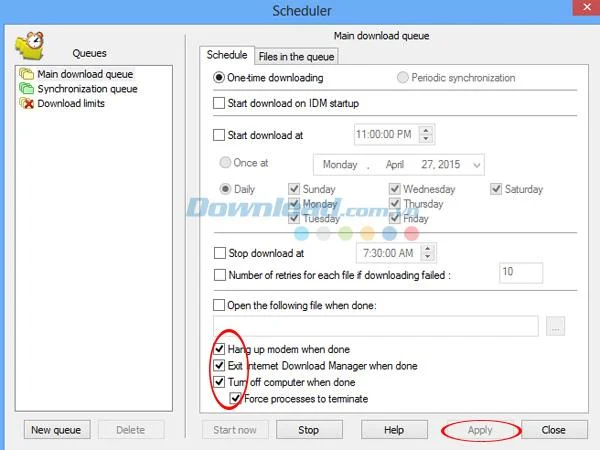
Step 3: In the left pane, tick the queue item you just created, then edit the corresponding information in the larger right pane. Specifically, tick the box Turn off computer when done , then click Apply to save the selected and Close to finish.

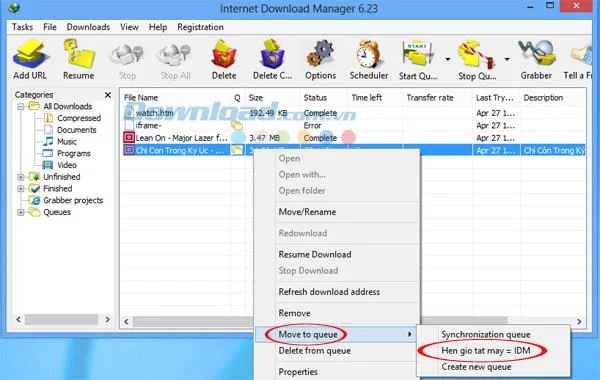
Step 4: Go back to the main interface of IDM , right-click on the line containing the file that is being downloaded, select Move to queue, and select the new queue item ( File IDM) just created above. to move the file into the timer. If you are downloading a lot of different files, you can add all those files to the queue you just created.

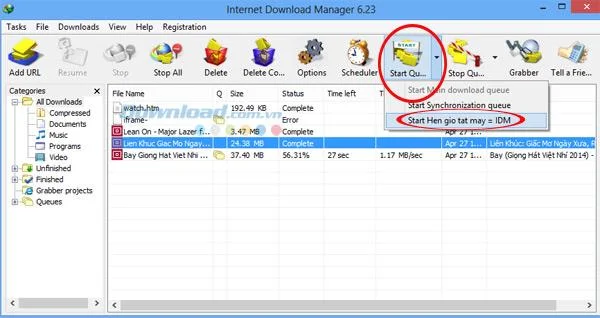
Step 5: Click the Start Schedule tab above the main interface and select "Start the queue name you have set" to start the timer. As the name given above, then you will click on "Start Start Now = IDM" . At this time, the computer will use the remaining download time to schedule the computer to turn off.

It is done! Now you can go out, go to work without worrying about shutting down your computer. After the file (or files) have downloaded, the computer will automatically shutdown without affecting the data.
In addition, you can also use the following:
Step 1: From the main interface, click the Scheduler tab .

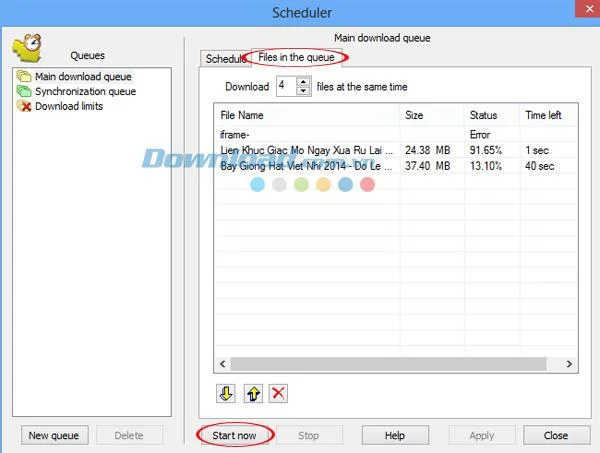
Step 2: Click on the Files in the queue tab . This will display the file is waiting to download . Right below is the window to adjust the number of files you want to download, Download ... files at the same time . The default is 4 files. Then click Start Now to start downloading the files in this list.

Step 3: Switch to the Schedule tab , and tick all the boxes below.
- One-time downloading: Download only once.
- Hang up modem when done: Turn off the modem when the download is completed.
- Exit Internet Download Manager when done: Exit IDM as soon as the download is finished.
- Turn off computer when done: Turn off the computer after downloading data.
- Force proesses to teminate: Disables the operation of IDM.
Then click Apply to complete.

I wish you successful implementation!