Home
» How to
»
How to view IP address on computer, view Win 10 IP address
How to view IP address on computer, view Win 10 IP address
An IP address (or Internet Protocol address) is used to identify computers on a network and devices on a network. When computers communicate with each other on the Internet or a local network, they send information to each other's IP addresses.
A computer is identified on the network by two types of addresses: a private IP address and a public IP address. You will need the IP address if you are hosting the server software, and clients will need your computer's IP address to connect to the server.
In this article, Quantrimang.com will guide you how to determine the IP address on your computer. Please follow along.
Command Prompt is a command-line interpreter application available in most Windows operating systems. It is used to execute entered commands. Most of these commands automate tasks through scripts and batch files, perform advanced administrative functions, and troubleshoot or resolve certain types of Windows issues.
Command Prompt is officially called Windows Command Processor, but it is sometimes referred to as command shell or cmd prompt, or even by its file name, cmd.exe.
Command Prompt is available on all Windows NT-based operating systems, including Windows 11, Windows 10, Windows 8, Windows 7, Windows Vista, Windows XP, and Windows 2000, as well as Windows Server 2012, 2008, and 2003.
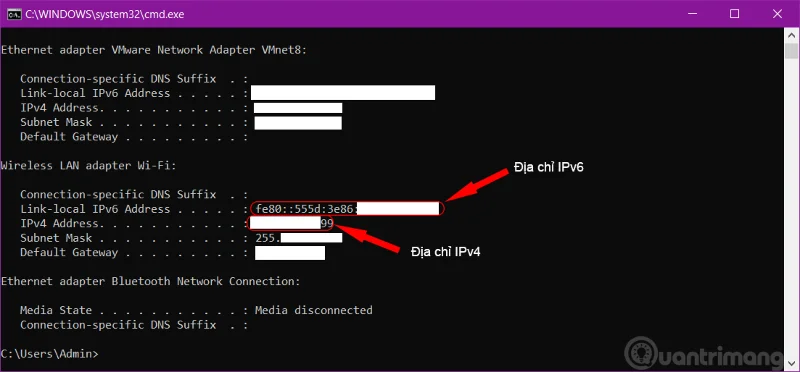
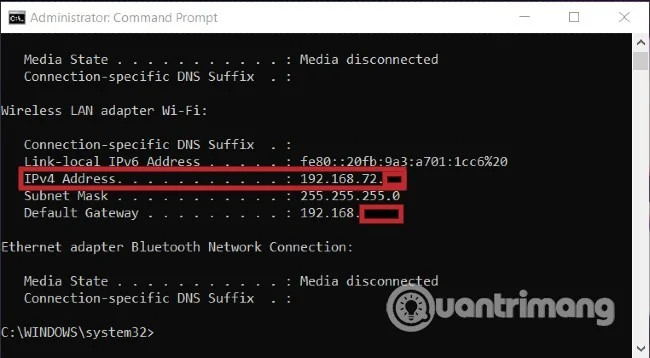
To determine the IP address using the CMD command , do the following:
Find the IPv4 Address or Link-local IPv6 Address under the connection name (wifi is Wireless LAN adapter Wi-Fi , wired network is Ethernet adapter Ethernet ) this is the IP address of the computer.
Method 2: View computer IP from taskbar
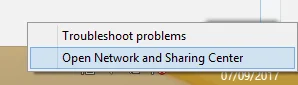
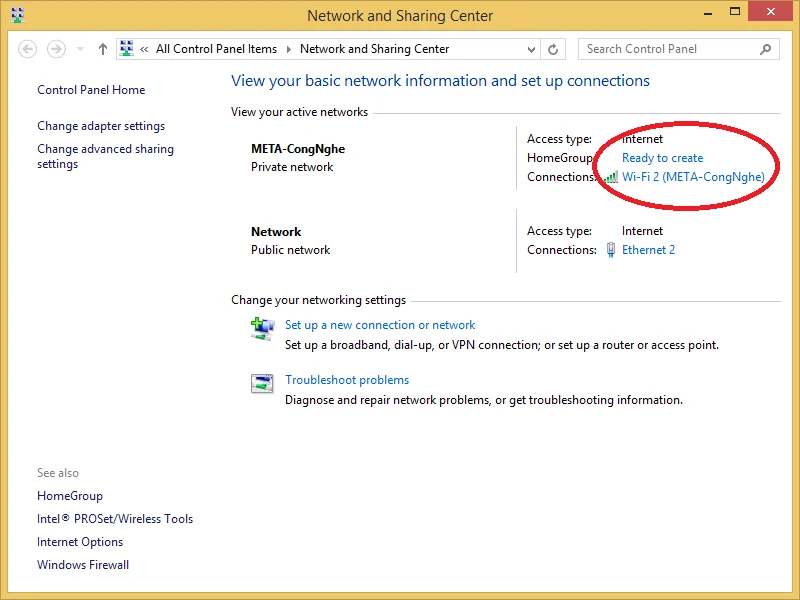
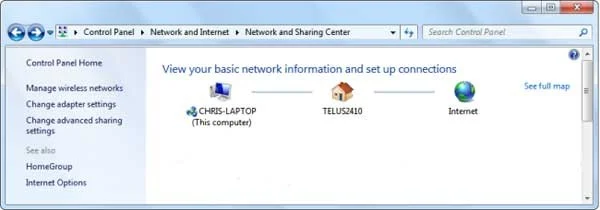
To view your computer's IP address on Windows, open Control Panel and select View network status and tasks, or right-click on the network icon on the taskbar > Open Network and Sharing Center
Click on the name of the Internet connection to see the connection status. If you want to see the IP address in the private network, click on the name of the network in the Connections section of the Private network. If you want to see the IP address of the machine in the Public network, click on the name of the network in the corresponding Connections section. Here I choose to see the IP in the Private network, do the same for the Public network.
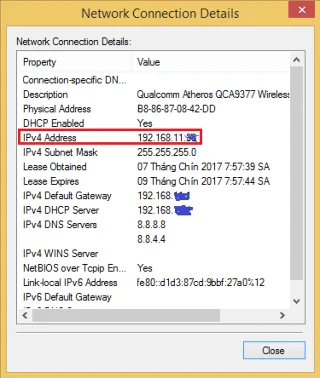
Click Details in the status window.
You should see an IP address listed in the connection details window. Look for the IPv4 Address field.
Method 3: View IP address on Windows 10/11
To view IP address on Windows 10/11 you can use the following methods:
Using Command Prompt
Press Windows + X to open Power User Menu
Select Command Prompt (Admin)
In the Command Prompt window that just opened ipconfig, type and press Enter
The ipconfig command will list your network information including IP address.
Using PowerShell
Press Windows + R to open Run
Type powershell into Run and press Enter
Or press Windows button then type powershell . Right click on the first search result and select Run as administrator
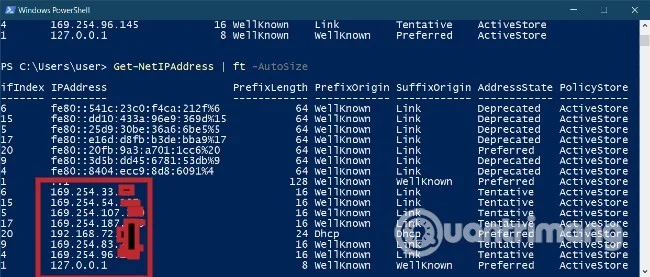
In the PowerShell window that opens, type the command ipconfig or Get-NetIPAddress | ft -AutoSize
You can also display only IPv4 or IPv6 addresses using the Get-NetIPAddress -AddressFamily IPv4 | ft -AutoSize and Get-NetIPAddress -AddressFamily IPv6 | ft -AutoSize commands, respectively .
View IP in Settings
A simpler way to see Win 10 IP address is to use the Settings app. You can follow these steps:
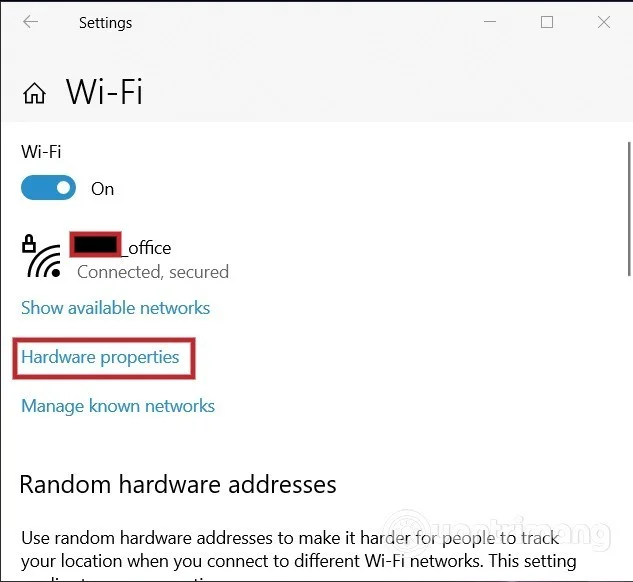
Right-click on the network icon on the Taskbar and select Open Network & Internet settings
Or press Windows + I to access Settings then click Network & Internet
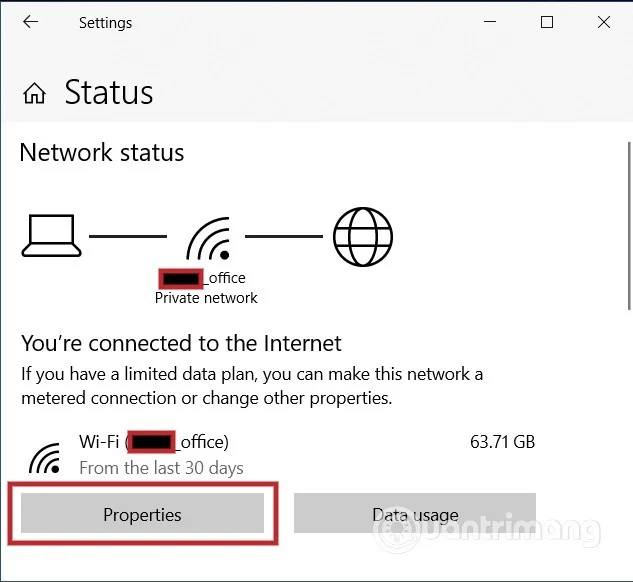
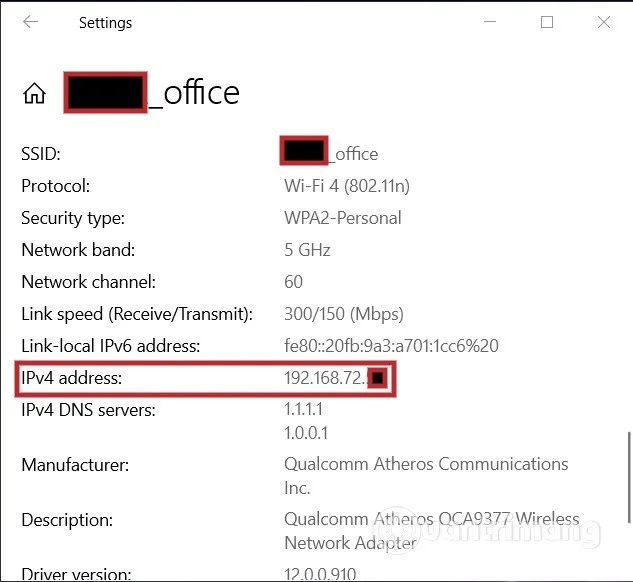
In the new window that appears, the network you are using will be displayed in the right-hand window/ You can click on the Properties button of the network to see information including the IP address.
If you have multiple networks including both wired and WiFi, select the corresponding network listed in the left-hand window and then select Hardware properties to view the IP address. This is also where you can find information such as the Router's Default Gateway IP address...
Method 4: Through router
Here are the default private IP addresses (also known as "local IP addresses") for popular router brands:
Linksys routers use the IP address 192.168.1.1
D-Link and NETGEAR routers have their private IP address set to 192.168.0.1
Cisco routers use the IP address 192.168.10.2, 192.168.1.254 or 192.168.1.1
Belkin and SMC routers typically use the address 192.168.2.1
Organizations that distribute IP addresses to the world reserve a pool of IP addresses for private networks.
192.168.0.0 - 192.168.255.255 (65,536 IP addresses)
172.16.0.0 - 172.31.255.255 (1,048,576 IP addresses)
10.0.0.0 - 10.255.255.255 (16,777,216 IP addresses)
Your simple home network, with a router at the center and the computers connected to it - wired or wireless - is classified as one of those networks.
Your router - once your device connects to the Internet through your Internet Service Provider - sends Internet activity to any computer connected to the router and is the basis of a networking innovation called Network Address Translation (NAT).
NAT is a process in which a router changes a private IP address to a public one so that it can send traffic across the Internet and track changes as it goes. When the information returns to the router, it reverses the change—from the real IP address to the private IP address—and forwards the traffic back to the computer.
Find public IP address
The easiest way to find your public IP address is to “ask” a website, since the website sees your computer under its public IP address and can tell you.
Below are some websites that give you the public IP address you are using.
1. https://www.whatismyip.com
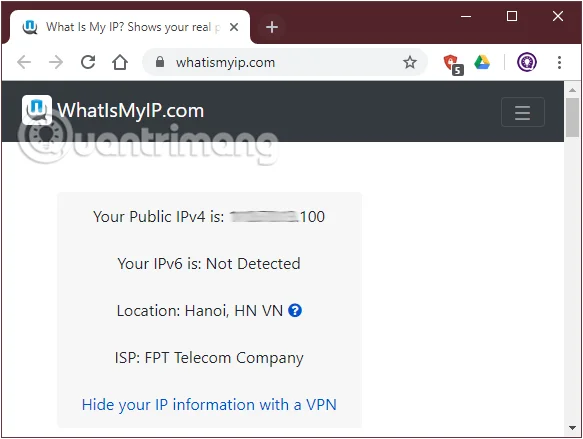
Find public IP address with whatismyip.com
WhatIsMyIP.com is the industry leader in providing IP address information. Knowing your public IP address is important for online gaming, using remote desktop connections, and connecting to your security camera DVR. The IP address assigned to your home network allows you to connect to the Internet. WhatIsMyIP.com can also help you locate a VPN if your goal is to protect your privacy or watch Netflix from another region.
WhatIsMyIP.com provides tools that allow users to perform IP location lookups, Whois IP lookups, Internet speed tests, proxy detection, etc.
2. https://www.myip.com
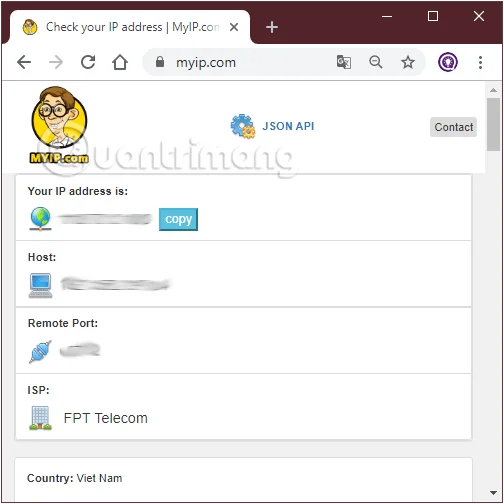
Find public IP address with myip.com
The Internet is a large network of connected devices, each of which has a unique address so that others can send information when they want to communicate. This unique identifier is called an IP address and is automatically assigned to you by your Internet Service Provider (ISP). MYIP.com is another tool that can provide you with this information. It also shows you the host information, remote port, and Internet Service Provider (ISP) name.
Some information about the browser (type, version, browser language) and computer hardware (operating system name, device type, screen size) you are using is also clearly stated by this tool. At the bottom of the page, there is a section of statistical information about IPv6 address usage over the years. The interface of this tool is quite simple, helping users to quickly grasp the information they need in just a glance.
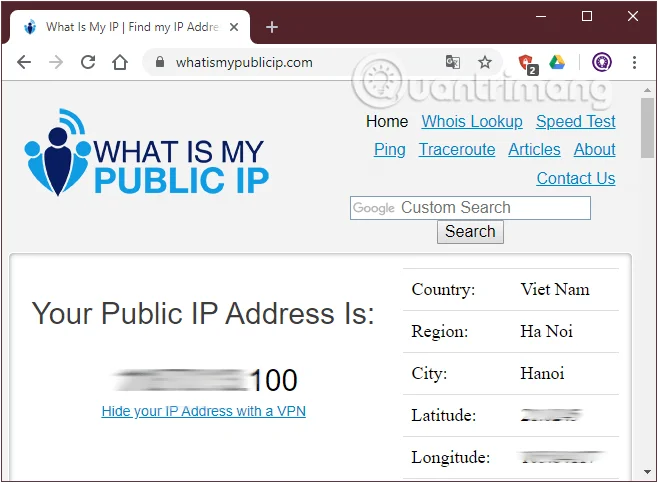
3. https://whatismypublicip.com
Find public IP address with whatismypublicip.com
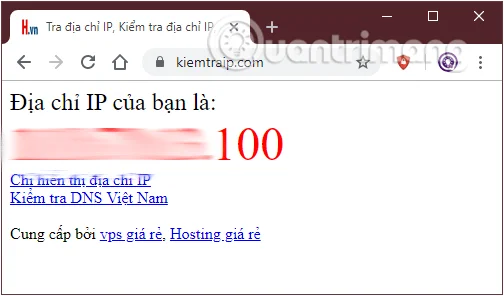
4. https://kiemtraip.com
Find public IP address with kiemtraip.com
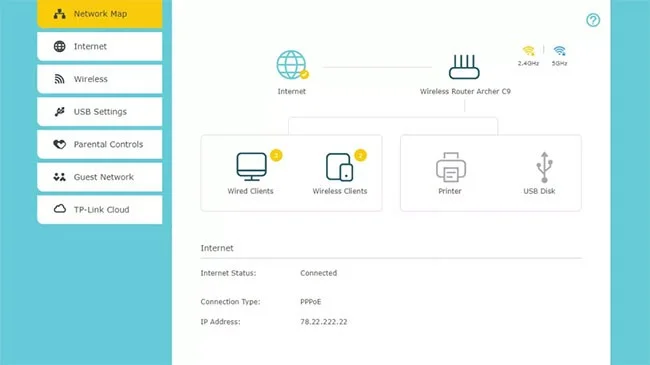
5. Public IP details are also available in the router
Failing the above online methods, another way to find out your public IP is to look through your router. Simply log in to your device (usually via http://192.168.0.1 in a web browser) and your public IP will usually be listed on the first details page of your router's interface or in the settings (the exact location will depend on your router model).
Public IP details are also available in the router
Unlike home addresses, IP addresses don't have to be permanent. Your Internet service provider can periodically assign you a new IP address, just as your router can periodically assign a new IP address to a device.
Public IP address and private IP address
IP addresses can be public or private. A public IP address is an address that is available on the Internet, while a private address is not. For example, in a typical home network, the router has a public IP address that is available on the Internet. Computers, smartphones, gaming consoles, and other devices connected to the router all have their own private IP addresses. The router acts as an intermediary, forwarding traffic to the internal IP addresses requested by the device. All devices on the home network connect to the Internet through a single public IP address.
Assuming we are connecting to a router that uses network address translation (NAT), there are two IP addresses to consider. The computer's IP address is a private IP address, which can start with 192.168.xx. This is a range of IP addresses allocated exclusively for private networks. We also have a public IP address that we use to communicate with other computers on the Internet.
For example, if a user is hosting a server on his computer, everyone on the Internet will need the public IP address from the user's router to connect to the server. But, users on the same local network only need the local IP address from the destination machine to communicate.
If a computer is connected directly to the Internet without any intermediate router, its IP address is a public IP address.