
Desk Decorating Ideas for a Spooky Office Cubicle

Create a spooky office cubicle with Halloween desk decor ideas that keep your workspace usable, tidy, and mindful of workplace safety.
According to Bloomberg, Apple Intelligence features are likely to launch later than expected and will not appear on iOS 18 because the iPhone maker needs more time to fix system stability errors.
Table of Contents
According to several insiders, Apple plans to roll out Apple Intelligence to users in a software update in October. This means the new AI features won't appear in the official iOS 18 update in September, and it's likely that iPhone 16 buyers won't be able to use Apple Intelligence right away.
Many of Apple Intelligence’s features were unstable, and Apple needed developer support to work out software issues and test on a large scale. These factors forced the iPhone maker to delay the official launch to ensure a smooth release of Apple Intelligence to users.
Apple is expected to make Apple Intelligence available to software developers for the first time next week with the first betas of iOS 18.1 and iPadOS 18.1. This is quite unusual for Apple, as iOS 18 is still in beta testing and will not be officially released to users until September.
Even when Apple Intelligence launches with iOS 18.1, iPadOS 18.1, and macOS Sequoia 15.1, some aspects won’t arrive, like an improved version of Siri that uses on-device data to answer questions and understand what’s on your screen. These features aren’t expected to arrive until the first half of 2025.
Apple Intelligence (also abbreviated as AI) is an artificial intelligence (AI) system developed by Apple specifically for its devices including iPhone, iPad and Mac.
This is a combination of on-device and server-delivered AI models to match each user's usage context, while still ensuring data privacy and security. Deep integration into the platform allows AI to be used anywhere instead of having to access a separate application.
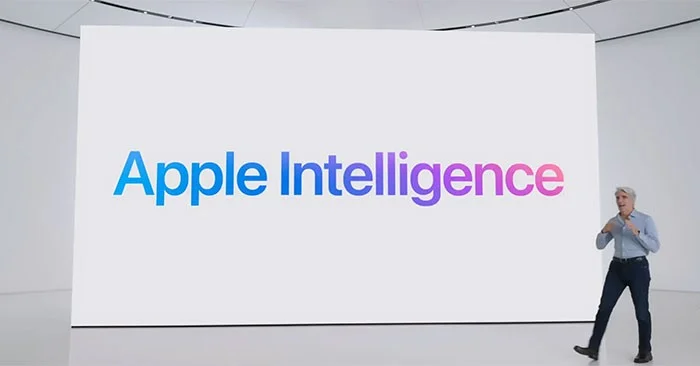
CEO Tim Cook said at WWDC that Apple Intelligence understands you and is based on your personal context. It is built with privacy in mind. It is personal intelligence and goes beyond artificial intelligence.
Apple Intelligence is deeply integrated into the iOS 18, iPadOS 18 and macOS Sequoia operating systems, supporting chips from A17 Pro and M Series chips.
Additionally, Apple also announced Private Cloud Compute, a server infrastructure system used to run more complex, powerful AI models that can process user data without giving up any privacy.
Apple Intelligence is coming to compatible iPhones, iPads, and Macs in a phased rollout. There are new features introduced in both iOS 18.1 and iOS 18.2. Now we know exactly how much storage space those additional features take up on your iPhone.
When the first wave of Apple Intelligence features arrived in iOS 18.1, Apple announced a number of requirements to use them, including 4GB of available storage on your iPhone.
This makes sense, since most of Apple's intelligence features run on-device by default. And to do that, your device needs to download AI models—which takes up storage space.
We always knew the 4GB requirement would increase over time as more AI features were released. And now it’s nearly doubled since the release of iOS 18.2. According to Apple’s website, Apple Intelligence now requires 7GB of free storage. The same 7GB figure applies whether you’re using an iPhone, iPad, or Mac.
But since each product has its own processing on the device, the requirements also increase when used across multiple devices. If you want to use AI features on all three devices, there is a total of 21GB of free space used by Apple Intelligence.
And unfortunately, if you're short on storage, there's no way to reduce requirements by disabling certain features.
iOS 18.2 introduced major new AI features, including:
Looking at this list, it’s easy to see why storage needs are going up. As more Apple Intelligence features roll out, the need for on-device storage will become more pressing than ever.
Looking ahead, so far Apple doesn't appear to be adding new AI features to iOS 18.3 — but new betas could change that.
There will be some big changes to Siri in the iOS 18.4 release in April. Siri upgrades will certainly push the 7GB requirement even higher. We could see the 10GB per device requirement in just a few months, before any new iOS 19 features are released.
The lesson is that it's probably time to start upgrading the standard storage plan you choose when you buy your next iPhone, iPad, or Mac.
Writing Tools : Helps users write, check, or change text anywhere, such as Mail, Notes, Pages, and third-party applications.
Image Playground : Create fun images in seconds in different styles to send messages or notes.
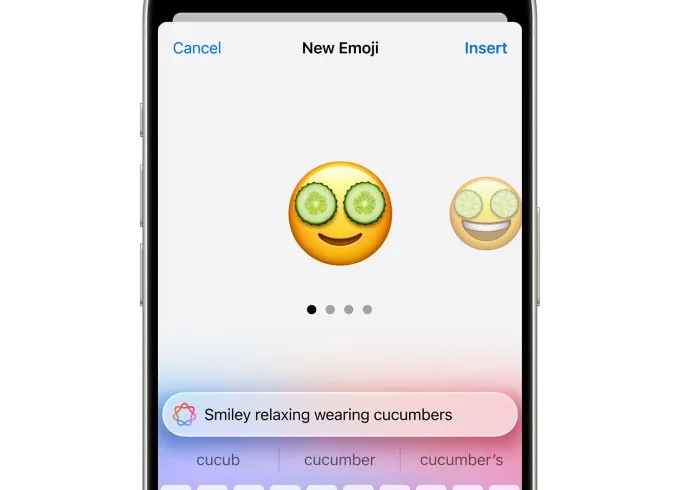
Genmoji : Helps users create unique emoticons to add to messages to express themselves.
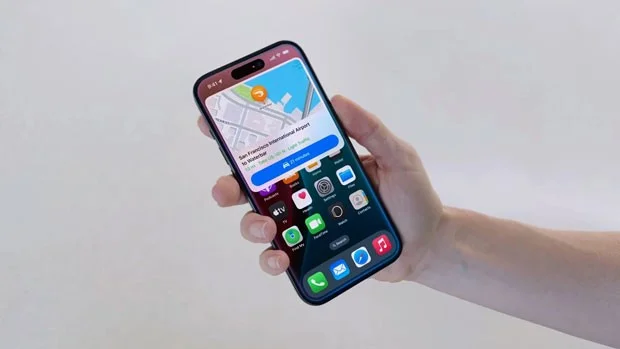
Apple Intelligence also brings the biggest update to Siri since its launch more than a decade ago. The Siri icon on iOS has been changed, with a glowing blue border around the home screen when in use. Siri is no longer just a voice interface, but also has the ability to type queries directly into the system to access generative AI-based artificial intelligence.
Apple also integrates ChatGPT into experiences within its operating systems including iOS 18, iPadOS 18, and macOS Sequoia, allowing users to use it to create content, images, and ask questions without switching multiple tools.
Unfortunately, Apple Intelligence isn't available for all devices that support iOS/iPadOS 18 and macOS Sequoia. But is your iPhone, iPad, or Mac on Apple's list of compatible devices? Find out below!
Apple is severely limiting which iPhone models support the various Apple Intelligence features announced at WWDC 2024. Unfortunately, you need an iPhone with at least an A17 Pro chip or later to use Apple Intelligence. Here are the only models eligible as of August 2024:
Even the standard iPhone 15 models don't support Apple Intelligence because they use the older A16 Bionic chip from the iPhone 14 Pro models.
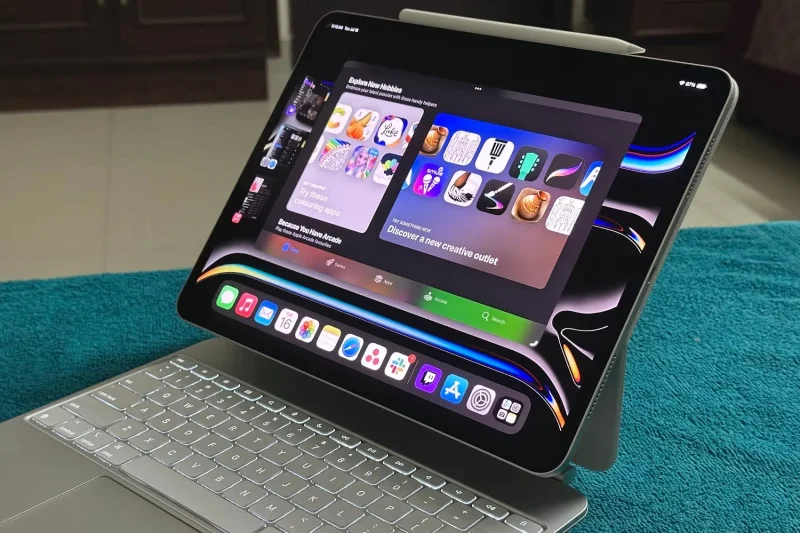
Unlike the iPhone, you don’t need the latest and greatest iPads to use Apple Intelligence when it launches in the fall of 2024. All you need is an iPad with an M1 chip or newer. Here’s the full list:
As you can see, if you bought a high-end iPad in the last 3 years, you don't have to worry about Apple Intelligence support.
Like the iPad, Apple limits Apple Intelligence to Mac models equipped with Apple silicon (M1 or later). If you’re not sure, you can quickly check whether your Mac has Intel or Apple silicon. Here are all the supported Macs:
Even though Apple started the transition to Apple silicon in 2020, it's surprising that even a 2020 Mac is fully capable of running Apple Intelligence, but an iPhone from 2023 can't do the same.
If your Apple devices make the list above, know that you don't have to wait for Apple to officially launch Apple Intelligence in the fall of 2024. You can try Apple Intelligence right now by installing iOS/iPadOS 18.1 or macOS Sequoia 15.1 beta.
However, keep in mind that not all Apple Intelligence features are available yet, and since these software builds are in early testing stages, you may encounter bugs and other issues more often than expected.
Apple Intelligence isn’t a complete product, so you may have turned it off to save space and battery. But Apple’s latest updates can turn it back on without you even realizing it.
Some users who received the macOS Sequoia 15.3.1 and iOS/iPadOS 18.3.1 updates earlier this week are reporting that despite having previously disabled Apple Intelligence, they are now seeing the feature re-enabled. According to MacRumors, this isn't happening on all devices. But if you see the Apple Intelligence "Welcome" screen after updating your Apple device, it's likely that the AI feature has been re-enabled.
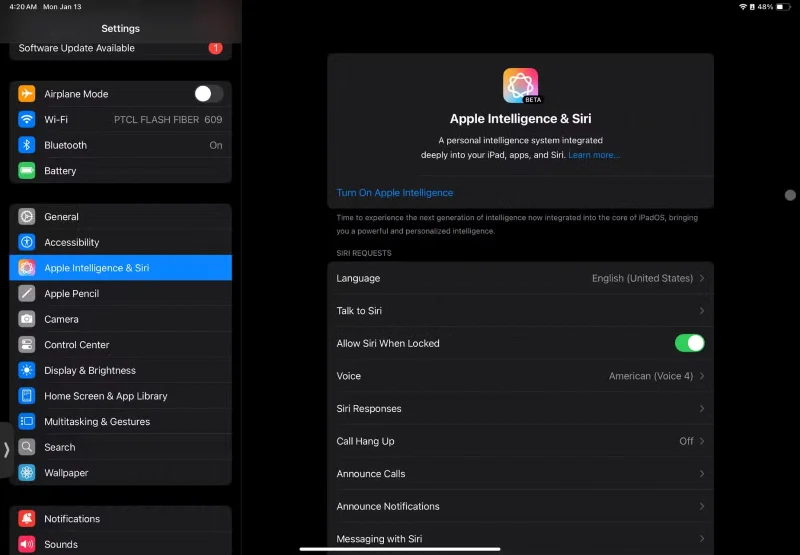
Checking to see if Apple Intelligence has been re-enabled on your device is pretty simple. Just go to Settings and go to Apple Intelligence & Siri to see if it’s been re-enabled. Having to go through this process again is annoying, though, and makes you feel like Apple doesn’t respect your choices.
Additionally, you may have missed or forgotten about the welcome screen, and thus may not even realize that Apple Intelligence has been turned back on. Aside from privacy concerns, Apple Intelligence has also been known to use up storage space (up to 7GB, according to some reports) and drain your iPhone's battery life. However, the "Reduce Interruptions" focus mode is a great AI feature and may be reason enough to turn on Apple Intelligence.
If you have an iPad Air or Pro running an Apple silicon chip, or an iPad Mini with an A17 Pro processor, you should check your settings to see if Apple Intelligence is turned on. The same is true for any MacBook, iMac, or Mac with Apple Silicon.
However, if you have an iPhone 14 or earlier (including the mini, Pro, and Max), you don’t need to worry about Apple Intelligence being turned on because those devices aren’t compatible. However, if you want to explore the AI features, you can install these apps on your older iPhone to get Apple Intelligence features.
Create a spooky office cubicle with Halloween desk decor ideas that keep your workspace usable, tidy, and mindful of workplace safety.
Plan a recognizable Halloween 2026 look with pop culture costumes inspired by Spider-Man, Supergirl, Toy Story 5, Moana, Mario, and Wednesday.
Sort leftover Halloween candy safely, share or repurpose sealed treats, and choose food use or compost for pumpkins based on their condition.
Compare workplace Halloween costume choices by respect, dress code, mobility, and safety—and learn when a subtle accessory or a policy check is the better option.
Find a couples costume that fits your style, budget, and comfort level, from Addams Family classics to original inside-joke duos.
Need a last-minute high school Halloween costume? Compare 10 easy closet-based ideas by prep time, comfort, school-day practicality, and simple safety checks.
Use a simple 2026 Halloween decorating timeline for indoor décor, outdoor displays, and fresh pumpkins, with practical adjustments for weather and events.
Mix five vivid, approachable Halloween cocktails with measured recipes, simple prep tips, and an alcohol-free option for your party guests.
Find 15 office-friendly Halloween costume ideas for 2026, with practical checks for dress codes, respectful themes, comfort, and workplace safety.
Plan a fun elementary school Halloween party with easy crafts, games, inclusive treats, costume tips, and a sample 75-minute classroom schedule.