Updated: November 14, 2026, 11:15 a.m. CST (New Orleans, UTC−06:00).
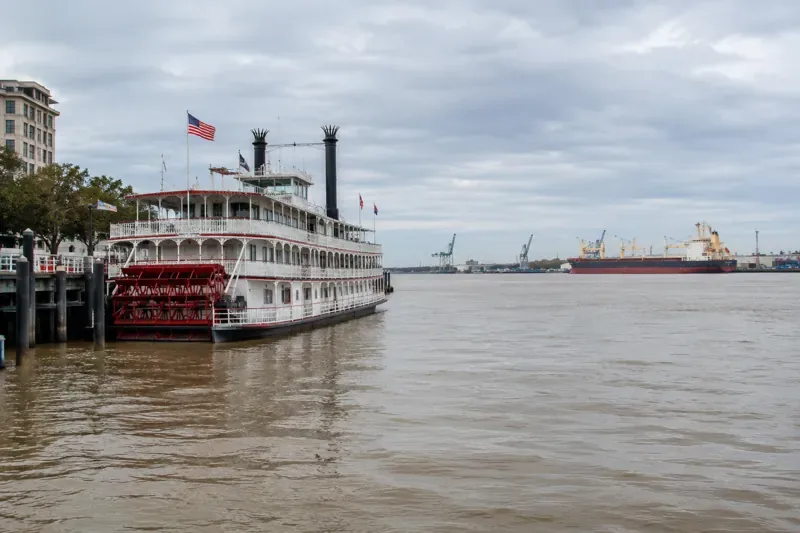
The American Heritage river cruise ship was docked at the Port of New Orleans on November 13 when the Atlantic Asphalt tanker struck it, causing the passenger vessel to capsize. New Orleans officials said everyone aboard was accounted for; 32 people were taken to hospital, with no critical injuries reported in the latest account reviewed. Investigators have not established why the tanker hit the ship, so any explanation of steering failure remains preliminary.
The collision occurred during the American Heritage’s arrival at the end of an eight-day Mississippi River itinerary, as passengers were disembarking. The immediate safety story is therefore about a vessel at the pier, an emergency response on a busy commercial waterway, and the steps passengers should take when an evacuation is ordered.
Destaques
- The American Heritage was docked when the tanker struck it near the Port of New Orleans.
- All passengers and crew were accounted for; 32 people were transported to hospital.
- The Coast Guard closed the river during the response; the cause remains under investigation.
- The ship normally operates Mississippi itineraries between New Orleans and destinations including Memphis.
Which river cruise ship was involved?
The passenger vessel was the American Heritage, operated by American Cruise Lines. The Port of New Orleans lists it as a 150-passenger vessel offering seven-night cruises and year-round service between New Orleans and Memphis. The ship was built in 2015, according to the Associated Press report reviewed for this article.
The other vessel was the Atlantic Asphalt, an asphalt and bitumen tanker. AP reported that it struck the docked cruise ship at about 12:30 p.m. on Friday, November 13. The Port’s location is at 1350 Port of New Orleans Place, on the Mississippi River near the Crescent City Connection. That identifies the port area, but does not establish the exact point of impact or the tanker’s full voyage track.
What route was the American Heritage following?
The reported trip was an eight-day cruise visiting destinations along the Mississippi in Louisiana and Mississippi, ending in New Orleans. Port NOLA’s itinerary information lists the ship’s broader service as New Orleans–Memphis, with round-trip and one-way options. The incident happened at the end of a cruise, while the ship was alongside and passengers were leaving—not while it was underway on its river route.
The distinction matters: a published itinerary describes the passenger service, not a minute-by-minute navigation track. The public reporting reviewed here does not provide the American Heritage’s precise sequence of calls or the tanker’s detailed approach. Those facts should come from verified voyage records or investigators, rather than assumptions based on the usual cruise route.
What caused the collision, and what is confirmed?
The cause was still unknown in the reporting available on November 14. Coast Guard Capt. Melanie Burnham told AP that the tanker appeared to have had some kind of steering loss, while stressing that the exact cause had not been determined. Treat that as an early observation, not a final finding. Investigators will need to assess vessel records, equipment, navigation data, communications and witness accounts before attributing fault or identifying a technical failure.
Authorities and first responders carried out rescues after the passenger ship began listing and capsized. Local officials said all people aboard were accounted for and 32 were taken to hospital. The Coast Guard closed the river during the response and worked on reopening the waterway. The Coast Guard and National Transportation Safety Board were expected to investigate, according to AP; a confirmed final report or causal determination was not available at the time of this update.
For travelers, a temporary closure can affect commercial traffic and scheduled vessel movements, but the information reviewed does not establish a continuing closure or specific cruise cancellations. The Coast Guard’s current port-conditions page lists Port of New Orleans operations as open; travelers should still check directly with their cruise line for a specific sailing, since port-wide status does not guarantee that an individual itinerary is unaffected.
What safety measures should river cruise passengers know?
Passenger safety depends on several layers: vessel design and maintenance, trained crews, emergency planning, navigation procedures and coordination with shore responders. This accident does not establish that any particular safeguard failed. The investigation will determine whether equipment, operations or other factors contributed.
Passengers can prepare by listening carefully to the safety briefing, learning where life jackets and exits are located, and keeping essential medication and a charged phone accessible when practical. During an emergency, follow crew instructions, move away from windows or exposed decks if directed, and use designated evacuation routes. Do not re-enter a vessel or retrieve belongings until authorities say it is safe. If separated from companions, follow the ship’s or port’s reunification instructions and provide contact details to responders.
For anyone booked on a Mississippi cruise, contact the operator about changes, refunds, replacement transport or lost property. Keep booking details and identification accessible. The American Cruise Lines itinerary and Port NOLA vessel listing provide background on the service, while official updates from responders are the right source for changing access restrictions or investigation announcements.
Frequently asked questions
Were there fatalities in the New Orleans river cruise collision?
Officials said everyone aboard was accounted for. AP reported that 32 people were taken to hospital and none had critical injuries in the latest account reviewed.
Was the American Heritage sailing when it was hit?
No. Reports say it was docked at the Port of New Orleans and passengers were disembarking when the tanker struck it.
Has the cause been confirmed?
No. A possible steering problem was mentioned as an early observation, but investigators had not determined the cause as of this update.
Sources: Associated Press report on the collision and response; Port of New Orleans cruise lines and itineraries; U.S. Coast Guard Sector New Orleans port conditions.