Verified and updated: November 14, 2026, at 10:03 a.m. Central Standard Time (New Orleans, UTC−06:00); 16:03 UTC.
Everyone aboard the American Heritage was accounted for after the river cruise vessel was struck by the tanker Atlantic Asphalt on the Mississippi River in New Orleans on Friday, November 13. New Orleans Mayor Helena Moreno said 32 people were taken to hospital and none had critical injuries. The cruise boat capsized and was left partly submerged; the cause remained undetermined in the latest reports reviewed for this update.
The collision happened at about 12:30 p.m. Central Standard Time (UTC−06:00), while the American Heritage was docked near the Port of New Orleans and passengers were beginning to disembark. The U.S. Coast Guard was responding, and the National Transportation Safety Board planned to investigate. Early comments that the tanker may have lost steering are not a confirmed finding.
Destaques
- All passengers and crew were reported accounted for after the rescue operation.
- Officials said 32 people were hospitalised, with no critical injuries reported.
- The Atlantic Asphalt struck the docked American Heritage at around 12:30 p.m. on November 13.
- Investigators had not publicly established why the collision occurred.
What happened in the New Orleans river cruise ship accident?
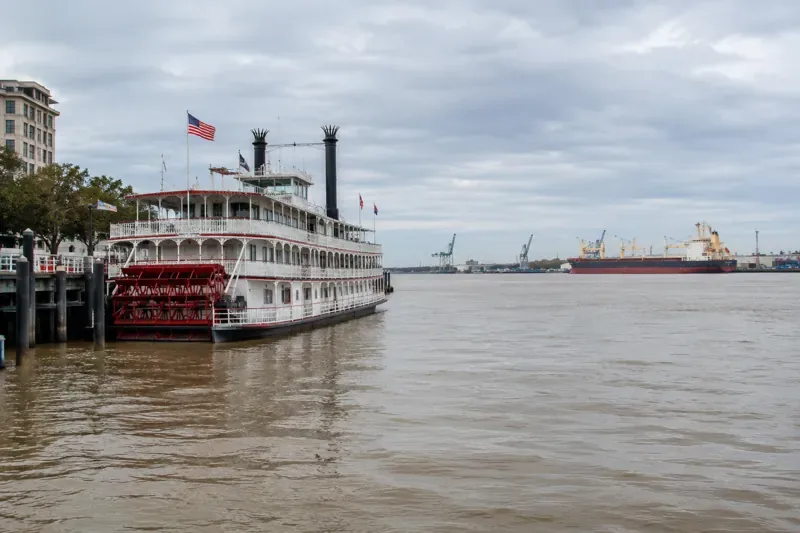
The Port of New Orleans said the Atlantic Asphalt collided with the American Cruise Lines vessel American Heritage while the passenger boat was docked outside 1350 Port of New Orleans Place. The riverboat had arrived roughly two hours earlier to begin disembarking passengers, according to local reporting that cited the port.
The impact caused the American Heritage to take on water and list. It later rolled onto its side as emergency crews and nearby mariners worked to get people off the vessel and out of the river. The Coast Guard, New Orleans Fire Department, police and other responders took part in the response. The rescue is reported complete, with no one aboard left unaccounted for.
Initial passenger counts varied as the response unfolded. The Port’s figures cited in local coverage identified about 129 passengers aboard, in addition to crew; subsequent reports described roughly 180 people aboard in total. The distinction matters: the higher figure includes crew, while early headlines often described passengers alone.
What caused the collision, and who is investigating?
The cause has not been established. Coast Guard Captain Melanie Burnham said the tanker appeared to have experienced some kind of steering loss, but that was an early observation, not a final determination. Investigators will need to examine vessel records, navigation and steering systems, communications, crew accounts, and the sequence of events before drawing conclusions.
The Coast Guard is responding, and the NTSB planned to investigate. A formal investigation can take time; investigators may gather evidence at the scene, interview crew and witnesses, and review electronic data. No finding of fault or confirmed mechanical failure was available in the latest reporting reviewed for this article.
For readers following the story, the distinction between a preliminary possibility and an investigative conclusion is important. At this stage, it is accurate to say authorities were examining the collision and that steering trouble was mentioned as a possible factor. It would be premature to state that loss of steering caused the crash.
What does the crash mean for Mississippi River travel?
The accident has immediate consequences for the passengers whose cruise ended abruptly, including medical care and help replacing belongings or arranging onward travel. Mayor Moreno said some people needed support with items such as identification, phone chargers, food, accommodation and transportation. American Cruise Lines’ arrangements for passengers and any effect on future sailings should be checked directly with the company.
Commercial river traffic can be restricted while authorities manage a major collision, assess the site and conduct response work. The latest sources reviewed here did not establish a current, continuing river closure or provide a confirmed schedule for vessel movements. Travellers should check with their cruise operator and the Port of New Orleans for current itinerary or departure information rather than assume all river services are affected.
The event also underscores a practical point for cruise passengers: follow crew instructions during an emergency, keep essential medication and contact information accessible, and confirm post-incident arrangements with the operator. These general steps do not indicate that other vessels or trips face a specific elevated risk; the investigation has not yet identified a cause.
For verified updates, see the Associated Press report on the rescue and investigation, the local reporting citing Port of New Orleans information, and the Port’s cruise information page.
Frequently asked questions
Did anyone die in the New Orleans river cruise ship accident?
Reports said everyone aboard was accounted for. The mayor said 32 people were hospitalised and none had critical injuries.
Which ships were involved?
The tanker Atlantic Asphalt struck the American Heritage, a river cruise vessel operated by American Cruise Lines.
Has the cause of the collision been confirmed?
No. Authorities had not determined the cause. Steering trouble was mentioned as a possibility, not a confirmed finding.