Home
» Today
»
On Football Boots Explained: What They Are, When They Launch, and How to Choose the Right Pair
On Football Boots Explained: What They Are, When They Launch, and How to Choose the Right Pair
If you are searching for On football boots right now, the most important fact is simple: On has entered football, but its first consumer football products are not yet broadly available. As of September 19, 2026, On says its football range is being co-created with Kylian Mbappé, Thierry Henry, and Sydney Schertenleib, with products planned for release in 2027. That means there is not yet a complete retail lineup of On football boots with final prices, stud configurations, sizing notes, or model-by-model comparisons.
So the useful way to approach the question today is not “Which On boot should I buy this weekend?” but “What has On actually confirmed, and what should I look for once the boots go on sale?” The answer starts with playing surface, then fit, then the kind of feel you want from the upper and soleplate.
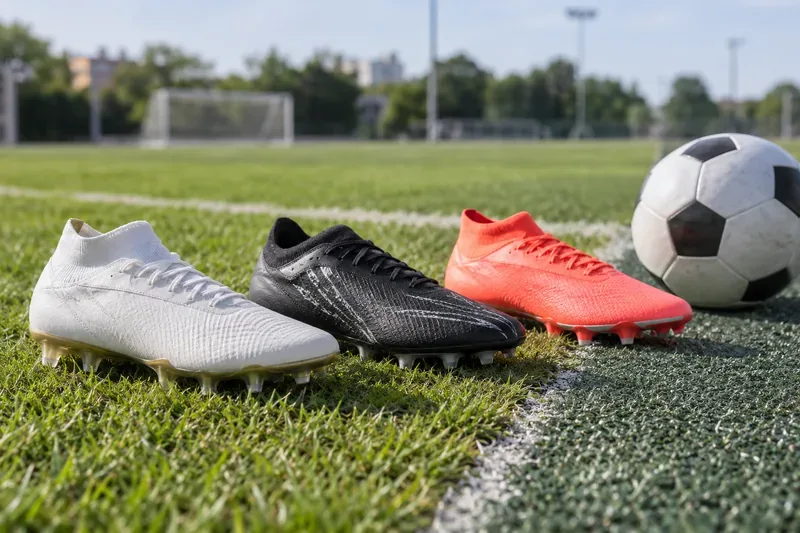
Different football boots can be built for different surfaces. The first buying decision should be where you actually play, not color, player endorsement, or marketing category.
What are On football boots?
On is the Swiss sportswear company best known for running shoes and, more recently, tennis footwear. On formally announced its move into football on September 18, 2026. In its own football materials, the company says it is applying its LightSpray technology and athlete input to football footwear, with the goal of creating a close-to-the-foot, “barefoot” feel.
On’s official football page says Mbappé, Henry, and Schertenleib are helping test and refine future products. The company’s football FAQ also says it is experimenting with both laced and laceless versions rather than confirming that the first retail boot will use one closure system. On has also said the women’s game will receive dedicated product development, with Schertenleib directly involved in feedback.
Not as a normal, finalized retail range yet. On states that its football products will be available in 2027. The company is currently describing development work and prototype testing rather than presenting a stable catalog of consumer models.
This distinction matters because product-search results can make an unreleased boot look more established than it is. Athlete testing, teaser imagery, prototype names, and early technology demonstrations are not the same thing as a retail shoe with a published size chart, outsole designation, warranty terms, and stock at stores.
If you need boots for a current season, tournament, or weekend league, choose from an available model designed for your field type rather than waiting for an unreleased product. If you specifically want On, the practical move is to follow the brand’s official football updates and wait for final retail specifications.
How should you choose the right pair once On launches them?
The best order is surface first, fit second, then feel and features. That hierarchy applies whether you eventually buy On or another brand. A premium boot with the wrong outsole can be a worse choice than a cheaper model designed for the field you actually use.
1. Match the outsole to your playing surface
Football boots are not all designed for the same ground. The exact abbreviations vary slightly by brand, but these categories are common:
Common label
Best suited to
What to watch for
FG / Firm Ground
Natural grass that is dry to slightly damp
Usually molded studs; not the first choice for muddy ground or every artificial surface
AG / Artificial Grass
Long-pile synthetic football turf
Typically shorter or more numerous studs designed to manage harder artificial surfaces
MG / Multi-Ground
Players who regularly move between compatible natural and artificial surfaces
A compromise option; still check the facility’s rules
TF / Turf
Short, carpet-like synthetic turf
Uses many small rubber lugs rather than longer field studs
IC / Indoor Court
Indoor hard courts
Flat rubber outsole; not a studded field boot
SG / Soft Ground
Wet, soft, muddy natural grass
Often uses longer or detachable studs; generally unsuitable for artificial turf
Nike’s current soccer shoe guide and adidas’ soccer cleat buying guide both emphasize surface as a primary selection factor. Their exact product systems are brand-specific, but the broader principle is useful: the soleplate should be built for the field under your feet.
For example, if you train three nights a week on artificial grass and only occasionally play on natural grass, an AG or suitable MG configuration may make more sense than buying an FG boot simply because it is the version worn by a professional player. Conversely, a player on well-maintained natural grass should not automatically choose turf shoes just because their smaller lugs look more comfortable.
2. Prioritize secure fit over your usual sneaker size
Football boots normally fit more closely than everyday running shoes. You want the heel held securely, the midfoot supported, and the toes close to the front without painful pressure, curling, or numbness. The exact amount of space depends on foot shape and upper construction, so a numerical size alone is not enough.
This is especially relevant to On because many people know the brand through Cloud running shoes. Do not assume your eventual On football-boot size will automatically match your On running-shoe size. Football lasts, uppers, heel counters, and intended fit can differ substantially from running models. Until On publishes final football sizing guidance, any precise size conversion would be guesswork.
When retail pairs become available, try them with the socks you actually play in. Walk, jog, make a few controlled cuts if the store allows it, and check for heel lift, lateral movement, pressure on the little toe, and excessive empty space at the front.
3. Decide whether you prefer a closer or more cushioned touch
On is currently talking about a close-to-the-foot, barefoot-like sensation, but “closer” does not automatically mean “better” for every player. A thin upper can make ball contact feel direct, while a slightly more padded construction may feel more forgiving and comfortable.
If you are a player who dislikes feeling every impact or you regularly play long recreational sessions, comfort may deserve more weight than minimal material. If you value a very direct touch and already know you enjoy lightweight speed-oriented boots, a thinner construction may suit you better. The right choice depends on your foot, your playing frequency, and your tolerance for a close fit.
4. Do not choose only by position
Boot companies often organize products around ideas such as speed, control, touch, or power. Those categories can be useful for understanding design intent, but they are not rules. A center back can wear a lightweight boot; a winger can prefer a padded upper; a goalkeeper can use the same outsole family as an outfield player if the surface and fit are right.
A better test is to ask what you actually notice during a match. Do you want a flexible forefoot? More heel structure? A roomier toe box? A highly responsive soleplate? More cushioning underfoot? Those preferences are more personal and actionable than buying a boot because it is marketed to your position.
Will On football boots be laced or laceless?
That has not been finalized publicly. On says LightSpray can support a seamless construction that may work without laces, but the company is currently testing both laced and non-laced options with athletes. Until final retail models are announced, it would be inaccurate to say On’s football line will definitely be laceless.
When the choice becomes available, laces generally offer more adjustability across different foot volumes. Laceless designs can feel cleaner over the instep and reduce lace interference, but they depend more heavily on the upper and internal structure to hold the foot securely. Neither is universally superior.
What about safety and league rules?
The Laws of the Game require players to wear footwear and prohibit dangerous equipment. The International Football Association Board’s Law 4 sets that general safety requirement. Local leagues, schools, artificial-turf facilities, and tournament organizers may add their own rules about stud types or metal components.
That means a boot can be sold legally and still be unsuitable for a particular venue. Before buying an SG boot with detachable studs, for example, confirm that your league and facility allow that configuration. The same check is worthwhile for artificial pitches, where operators may specify permitted sole types to protect the surface and players.
What should you ignore when comparing boots?
Three things deserve less weight than they often get: celebrity endorsement, tiny differences in listed weight, and the assumption that the most expensive tier is automatically the best fit. Mbappé’s involvement is important to On’s product development, but his preferences do not determine what will fit your foot or your weekly playing surface.
Likewise, a few grams of weight difference may be less meaningful than heel lockdown, pressure distribution, and stud compatibility. Elite-tier boots often use more advanced materials or lighter constructions, but a mid-tier model can be the better purchase if it fits you more securely and you play casually once or twice a week.
Who should wait for On football boots?
Waiting makes sense if you are specifically interested in On’s LightSpray approach, enjoy trying new football footwear, and do not need a new pair before the 2027 launch. It may also appeal to players who want to see how On develops dedicated products for both the men’s and women’s game.
You should probably not wait if your current boots are worn out, your outsole is wrong for your field, you have a tournament coming soon, or you need to solve a fit problem now. In those cases, an available boot that fits properly and matches your surface is the more practical choice.
Bottom line
On football boots are real as a development program, but the consumer range is still a 2027 product story. On has confirmed its entry into football, LightSpray-based development, athlete testing, and work on both laced and laceless concepts. It has not yet published the complete retail lineup, final specifications, broad pricing, or enough model-level information to rank individual On boots.
When the range arrives, choose in this order: surface compatibility, secure fit, comfort, then performance feel and secondary features. That approach will remain useful no matter how much attention the first On football boots receive when they launch.