Strictly Come Dancing Week 8: Songs, Dances and How to Vote — November 14
Your Week 8 guide to all nine Strictly Come Dancing routines, the partner change, BBC voting rules and the results show schedule.
Information checked: November 14, 2026, at 4:05 p.m. Bangkok, ICT (UTC+07:00); 9:05 a.m. UTC; 4:05 a.m. Washington, EST (UTC−05:00). The Pentagon's push to protect military bases from civilian power failures is real, but it is not a warning that the United States will lose electricity for 90 days. Its FORTRESS America initiative, announced September 30, centers on making military installations less dependent on outside electricity, supplies and communications. The much-shared 90-day figure describes a reported military endurance objective, not a scheduled nationwide blackout.
Recent federal and grid-reliability assessments do identify serious challenges, including fast-growing electricity demand, generating-capacity shortfalls under some scenarios, equipment and supply-chain constraints, cyber threats and damage from severe weather. Those are documented vulnerabilities, not evidence of an imminent coast-to-coast power failure. Readers should distinguish military contingency planning from a prediction about household electricity service.
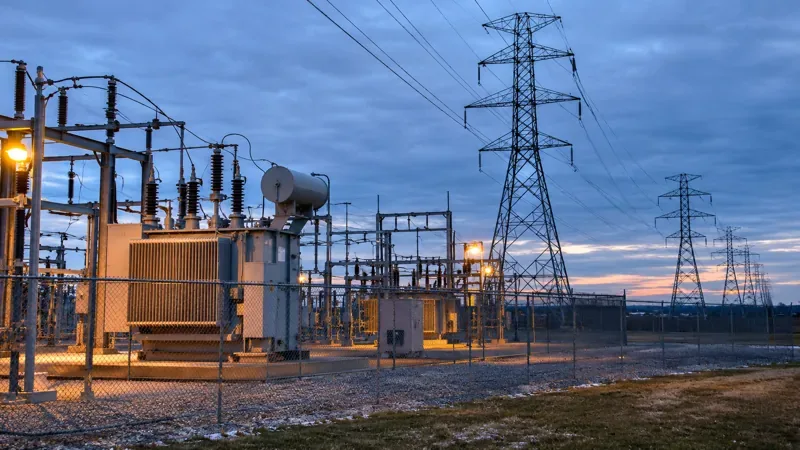
During a September 30, 2026 address at Marine Corps Base Quantico in Virginia, Defense Secretary Pete Hegseth unveiled FORTRESS America, a program intended to strengthen military operations against disruption. In the U.S. Army account of the September 30 address, the initiative includes making major bases able to generate their own power so essential missions can continue when the civilian grid fails. The program also addresses defense supply chains, strategic reserves, installation hardening and protection of communications systems.
This is a statement about preparedness for a possible disruption. It does not say such a disruption will occur on a specific date. The aim is to prevent a single vulnerable supply connection from stopping military operations. A base generating electricity independently does not, by itself, indicate anything has happened to the public grid serving neighboring homes and businesses.
Reports about FORTRESS America have described a goal for some military installations to sustain operations for at least 90 days without outside power, fuel, water or routine supply deliveries. The number should be attributed to reporting about the military planning objective, rather than presented as a separately verified Pentagon forecast of how long the U.S. grid could fail. The public September 30 announcement establishes the initiative and its mission; it does not announce a 90-day shutdown for civilians.
Federal findings cover distinct problems and time scales. The DOE grid reliability report announcement, released July 7, 2025, warned that under its modeled assumptions outages could rise sharply by 2030 if dependable generating capacity retires while replacement capacity and demand growth move out of balance. A modeling scenario projecting risk several years ahead is not a forecast that electricity will disappear everywhere for a fixed period.
The NERC long-term reliability assessment examines the adequacy of the North American bulk power system over a longer planning horizon. Its 2025 assessment pointed to rapidly increasing summer peak demand and delays in bringing generation and transmission projects online. The separate 2026 State of Reliability overview noted that most historical reliability indicators remained stable or improved, while some measures and future resource adequacy warranted continued attention. That combination matters: stressed regions and planning gaps can coexist with a system that continues operating.
DOE's DOE Office of Electricity strategic plan identifies five practical challenges: serving new loads, maintaining affordable electricity, modernizing equipment, improving reliability and resilience, and securing component supply chains. Cybersecurity is part of the risk picture, but a cyber vulnerability does not prove an adversary has gained control of the grid or triggered an outage.
Airfields, radar systems, communications centers, medical facilities and logistics hubs depend on continuous electricity. Even a localized failure could affect critical activities. Backup generators, fuel reserves, microgrids, storage and other distributed sources can reduce reliance on a single supply path, although each has limitations involving fuel, maintenance, cost and the equipment it can support.
The Pentagon's interest predates the online rumors. On August 27, 2026, the Army announced selections of five vendors and five initial locations under its Janus nuclear microreactor program, with up to $2.2 billion in awards. The Army microreactor announcement describes the effort as a way to provide reliable power directly to installations and reduce dependence on vulnerable external grids. Selection of vendors and locations does not mean those reactors are already operating.
A February 23, 2026 GAO military installation resilience report supplies another reality check. The Government Accountability Office said natural disasters have caused billions of dollars in damage to U.S. military installations and identified gaps in how resilience costs and planning were tracked. As of April 2025, DOD reported that 47 of more than 500 installations had completed a required resilience component of their master plans, while at least 130 others had work underway. These figures describe progress on that specific planning requirement at that date—not the readiness of every base to run off-grid for 90 days.
No official Pentagon, DOE, NERC or GAO material reviewed for this article announced such an event. The documents address a wide range of plausible threats, including extreme weather, insufficient power-generation capacity, physical sabotage and cyberattacks. They do not establish that all those risks will occur together, that every interconnected grid region will fail, or that restoration would take exactly 90 days.
The distinction is especially important because the United States has multiple grid regions, operators and utilities. A reliability assessment generally estimates conditions for particular areas and seasons. A military endurance requirement measures how long an installation hopes to function without outside help. Neither number can be converted into a national blackout date.
Further Pentagon announcements could clarify which installations will receive independent generation, how projects are funded, what resilience performance must be demonstrated and how long full deployment could take. That is a conditional outlook, not a confirmed completion schedule. Separately, NERC seasonal assessments and regional grid-operator notices will offer more specific evidence of capacity risks as weather and electricity demand change.
For readers assessing claims online, the useful question is whether a warning names an accountable agency, describes a documented threat or grid region, and provides an official notice with a clear date. A dramatic statement with no agency bulletin or utility notice should not be treated as an emergency alert. This article concerns what the reports establish; household preparedness guidance and detailed discussion of viral blackout videos are separate questions.
No. FORTRESS America is designed to keep military facilities functioning if outside infrastructure is disrupted. No such nationwide shutdown order appears in the official materials reviewed.
No. It is a reported duration for military self-sufficiency planning, not a prediction of when or how long civilian electricity service will fail.
Yes. Official energy and reliability agencies describe challenges from rising demand, infrastructure constraints, cyber and physical security risks, and severe weather. Their reports do not establish an imminent nationwide 90-day outage.
Primary sources reviewed: U.S. Army account of the September 30 address; DOE grid reliability report announcement; DOE Office of Electricity strategic plan; NERC long-term reliability assessment; GAO military installation resilience report; and the Army microreactor announcement. The Pentagon's program objectives and the independently modeled grid risks are reported separately to avoid confusing a contingency plan with a public emergency warning.
Your Week 8 guide to all nine Strictly Come Dancing routines, the partner change, BBC voting rules and the results show schedule.
UK frost and freezing fog preparation for November 14, 2026: check travel conditions, protect your home, drive safely and follow Met Office updates.
Strictly Week 8 airs on November 14, 2026. Here is what is confirmed before the live show, including the latest elimination, Jaime Winstone’s return and the result-show schedule.
Winter Fuel Payment 2026–27: Find out when November and December payments arrive, the January 27 follow-up date, claim deadlines, and Scotland's separate schedule.
The Met Office forecasts another frosty night for central and eastern England, rain and hill snow in the north on Sunday, and no UK weather warnings through November 20.
See how the UK Winter Fuel Payment could affect your 2026–27 heating budget, including payment amounts, the £35,000 recovery threshold, and practical steps to plan.
See who qualifies for the UK Winter Fuel Payment in 2026–27, how much it pays, whether you need to claim, and how income over £35,000 affects it.
The Pentagon’s FORTRESS America plan does not announce a 90-day U.S. blackout. Here is what military, DOE, NERC and GAO reports really establish.
The Pentagon’s 90-day planning figure concerns military base resilience, not an announced nationwide blackout. Here’s what is verified and how households can prepare.
Prepare for an extended power outage with a practical backup power plan, essential supplies, generator safety, and steps to protect food, medicine, and communications.