Kawaii Halloween Decor Without Gore or Jump Scares

Create a gentle Halloween look with pastel colors, friendly ghosts, easy no-carve accents, and practical safety tips for your home.
A Nobel Prize-winning economist has warned young people against focusing on Science, Technology, Engineering and Mathematics (STEM) subjects, arguing that “empathy” and creativity skills could thrive in a world dominated by artificial intelligence (AI ) .
Workers in certain IT jobs risk sowing the “seeds of their own destruction” by developing AI that could potentially take over similar jobs they do in the future, said Christopher Pissarides, professor of economics at the London School of Economics.

While Professor Pissarides is optimistic about the overall impact of AI on the job market, he does raise concerns for those studying STEM subjects in the hope of embracing technological advances. He says that while demand for STEM skills is growing rapidly, jobs that require more traditional face-to-face skills, such as those in hospitality and healthcare, will still dominate the job market.
“The skills needed now to collect, collate, develop and use data to develop the next stage of AI or beyond, enabling AI to take over these very jobs, will make the skills needed today obsolete in the future,” he said in an interview.
“While growth is certainly occurring, there will not be enough of it to fill the employment needs of all graduates. The demand for these new IT skills contains the seeds of their own destruction.”
The popularity of STEM subjects has exploded in recent years as students hope to become more employable.
The rapid development of AI could transform the skills needed for workers as it makes some tasks and roles obsolete.
However, in the long term, management, creativity and empathy skills, including communication, customer service and healthcare, are likely to remain in high demand as they are less likely to be replaced by technology, especially AI.
“When you say the majority of jobs are going to be things that involve personal care, communication, good social relationships, people might say, ‘Oh my God, is that what we have to expect in the future?’” says Professor Pissarides.
“We should not look down on these jobs. They are better than the jobs that new graduates used to do.”
Cyprus-born Professor Pissarides, along with Peter Diamond and Dale Mortensen, received the 2010 Nobel Prize in Economics for their work on the economics of labour markets, particularly the conflicts that lead to mismatches between job vacancies and unemployment patterns, including examining how wages and hiring are affected by regulations and policies.
Create a gentle Halloween look with pastel colors, friendly ghosts, easy no-carve accents, and practical safety tips for your home.
Create a spooky office cubicle with Halloween desk decor ideas that keep your workspace usable, tidy, and mindful of workplace safety.
Plan a recognizable Halloween 2026 look with pop culture costumes inspired by Spider-Man, Supergirl, Toy Story 5, Moana, Mario, and Wednesday.
Sort leftover Halloween candy safely, share or repurpose sealed treats, and choose food use or compost for pumpkins based on their condition.
Compare workplace Halloween costume choices by respect, dress code, mobility, and safety—and learn when a subtle accessory or a policy check is the better option.
Find a couples costume that fits your style, budget, and comfort level, from Addams Family classics to original inside-joke duos.
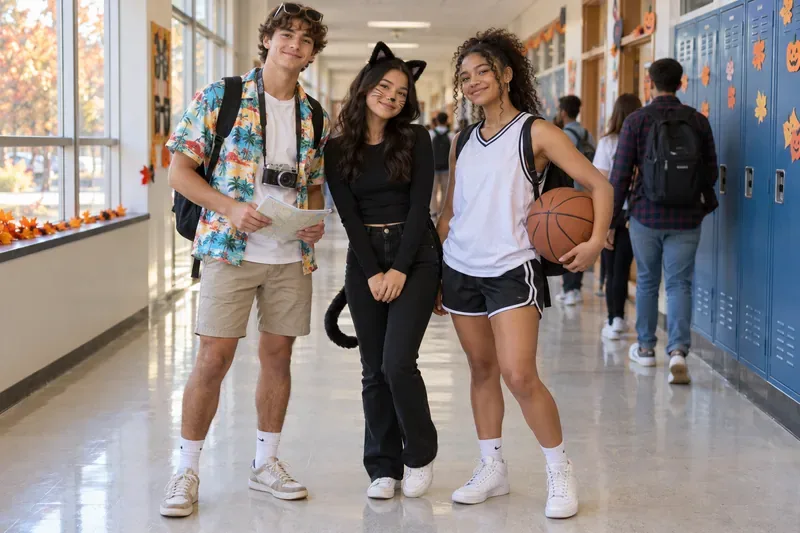
Need a last-minute high school Halloween costume? Compare 10 easy closet-based ideas by prep time, comfort, school-day practicality, and simple safety checks.
Use a simple 2026 Halloween decorating timeline for indoor décor, outdoor displays, and fresh pumpkins, with practical adjustments for weather and events.
Mix five vivid, approachable Halloween cocktails with measured recipes, simple prep tips, and an alcohol-free option for your party guests.
Find 15 office-friendly Halloween costume ideas for 2026, with practical checks for dress codes, respectful themes, comfort, and workplace safety.