Home
» Today
»
Ramsbottom Whistleblower Claims Put Pentagon Force Protection Under Scrutiny | Nov. 16, 2026
Ramsbottom Whistleblower Claims Put Pentagon Force Protection Under Scrutiny | Nov. 16, 2026
Last checked: November 16, 2026, 9:14 a.m. Eastern Standard Time (EST, UTC−05:00); 14:14 UTC.
Army Maj. Stephen Ramsbottom’s newly public whistleblower complaint is turning the March 1, 2026, drone strike at Port Shuaiba in Kuwait into an urgent test of congressional oversight of U.S. military force protection. Six U.S. service members were killed. Ramsbottom, who survived the attack, alleges that commanders failed to address warnings about drone vulnerability and insufficient medical preparation before the strike. His complaint, submitted to the House and Senate Armed Services Committees on November 13 and discussed in the November 15 60 Minutes investigation, raises questions that lawmakers can examine through records, classified briefings, and sworn testimony. The allegations are not findings of wrongdoing.
The immediate development is a congressional request for answers: Sen. Richard Blumenthal has sought a classified briefing and force-protection assessments for the site. CBS News says a Pentagon spokesperson declined to comment specifically on Ramsbottom’s allegations. The Army completed an investigation earlier this year and briefed families privately, but a complete public accounting of its findings was not established in the sources checked. This leaves a consequential distinction between a reported warning, an independently verified command decision, and any ultimate determination of responsibility.
Destaques
Ramsbottom alleges that troops at Port Shuaiba lacked dedicated protection against one-way attack drones despite warnings.
His complaint also questions medical readiness, including the reported absence of a physician and a fixed aid station.
Congressional scrutiny now includes a request for classified force-protection assessments; a public finding on the complaint has not been established.
Military whistleblower law protects qualifying communications with Congress and inspectors general from prohibited retaliation.
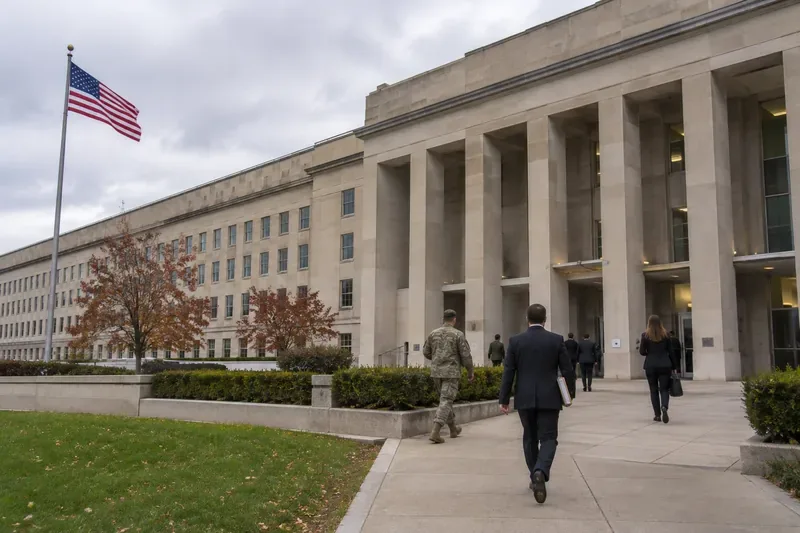
Illustrative, AI-generated scene representing U.S. defense oversight; not a photograph of the March 1 attack, Ramsbottom, or an actual congressional proceeding.
What does the Stephen Ramsbottom whistleblower complaint allege?
The complaint, as described by CBS News and its interview transcript, centers on the adequacy of defenses at a U.S. command post at Kuwait’s Port Shuaiba. Ramsbottom says the site had barriers suited to ground threats but not to an aerial attack. He also says the drone threat was discussed with leaders and that a counter-drone system was contemplated but never arrived. Separate soldiers interviewed by 60 Minutes said they saw intelligence identifying the port as a potential target. These accounts merit examination, but the existence, distribution, interpretation, and operational consequences of the cited intelligence have not all been verified publicly.
Ramsbottom additionally alleged that the site had no physician or fixed medical aid station and just one ambulance. Those details, if confirmed in official records, would put medical staffing, evacuation times, casualty planning, and the relationship between troop numbers and available care under scrutiny. They do not by themselves demonstrate that a particular death could have been prevented; any such conclusion would require medical and operational evidence.
The attack itself and the deaths are established events. The attribution of blame for any failure to anticipate or mitigate its effects remains contested. Defense Secretary Pete Hegseth previously described the attacked operations center as fortified. Other accounts collected by CBS challenged whether its physical defenses could mitigate one-way attack drones. The Pentagon has also previously maintained that substantial measures were taken to safeguard personnel. Investigators will need to distinguish differing definitions of “fortified” rather than assume that any one statement settles the question.
Why does the complaint matter for Pentagon oversight?
Congress oversees defense spending, military readiness, and the executive branch’s conduct of operations. The relevant question is not simply whether a military position was attacked during combat; it is whether known risks were evaluated, communicated, accepted, or left unresolved through decisions that can be reconstructed. An oversight review could examine when commanders received assessments, what countermeasures were requested, whether alternative locations were considered, and who had authority to approve or reject changes.
Crucially, a whistleblower submission does not automatically trigger a public hearing, establish criminal liability, or compel a specific disciplinary outcome. Congressional committees can seek documents and testimony and may use classified sessions to review operational information. Any later findings would depend on the evidence obtained and the applicable process.
What records would help Congress determine what happened?
Four categories could make a meaningful difference: dated force-protection and intelligence assessments; orders and correspondence about site selection, defensive equipment, and requests for counter-drone support; casualty-response plans, staffing rosters, and medical evacuation records; and the Army’s completed investigation, including its methodology and findings. These records would help establish a timeline of decisions and whether the resources available matched the risks and mission at that location.
The distinction between a warning being issued and a warning being ignored matters. A documented hazard may have been received by one office but never elevated to a particular commander, or mitigation may have been requested but unavailable. Those possibilities do not excuse or establish misconduct in advance; they are precisely why an evidence-based review matters. Sensitive operational details may need to remain classified, while Congress could still seek a public explanation of procedures, accountability, and improvements that does not expose current defenses.
What is already known about the Army investigation?
CBS reported in July that the Army had completed an internal investigation into the attack, and an Army spokesperson confirmed private briefings with families. The Army said it would not discuss the contents publicly out of respect for the families and the integrity of those discussions. Separate reporting described families requesting greater disclosure. The Ramsbottom complaint raises additional oversight questions, but it should not be represented as proof that the earlier investigation reached any particular conclusion.
There is also a difference between an operational investigation of the attack and an inspector-general investigation into retaliation against a whistleblower. The first examines decisions and circumstances surrounding a mission. The latter examines whether a protected disclosure led to an unlawful adverse personnel action. Both can be relevant, but neither should be presumed to be underway solely because a complaint was filed with Congress.
What protections apply to military whistleblowers?
Title 10, U.S. Code, Section 1034 prohibits restricting lawful communications by service members with members of Congress or inspectors general and bars specified retaliatory personnel actions for protected communications. The defense inspector general’s guidance describes how reprisal and restriction complaints may be evaluated. These protections do not establish the truth of every underlying allegation, and protections involving classified information still require appropriate authorized reporting channels.
In the near term, the most informative developments would be a response to the requested classified briefing, disclosure of additional portions of the Army review, committee announcements on further document requests or testimony, and a substantive Pentagon response to the specific allegations. None of those future actions should be treated as scheduled or guaranteed without an official announcement.
If records substantiate shortcomings in drone protection, command communication, or medical preparedness, potential responses could range from revised deployment and force-protection procedures to equipment procurement changes and personnel accountability reviews. If records instead show that precautions were considered and reasonable within operational constraints, the implications could differ. The evidence needed to distinguish those outcomes has not been made fully public.
For U.S. readers, the most useful oversight questions are concrete: What risks did commanders know about before March 1? What actions did they request, receive, or decline? What protection and medical capabilities were actually present? And when will families and lawmakers receive an appropriately detailed account? Answers to those questions can be assessed without prejudging individual leaders or compromising classified operational information.
Has the Pentagon confirmed Ramsbottom’s allegations?
No. In the reporting checked, the Pentagon declined to comment specifically on the complaint. Earlier defense statements disputed descriptions of inadequate protections.
Can Congress investigate the Port Shuaiba attack?
Yes. Congressional committees can seek records, receive briefings, and pursue oversight within their authorities. A request for records does not itself prove misconduct.
Are military whistleblowers protected from retaliation?
Federal law protects qualifying communications to Congress and inspectors general and prohibits specified reprisals. Whether a specific action violates those protections is a separate factual determination.