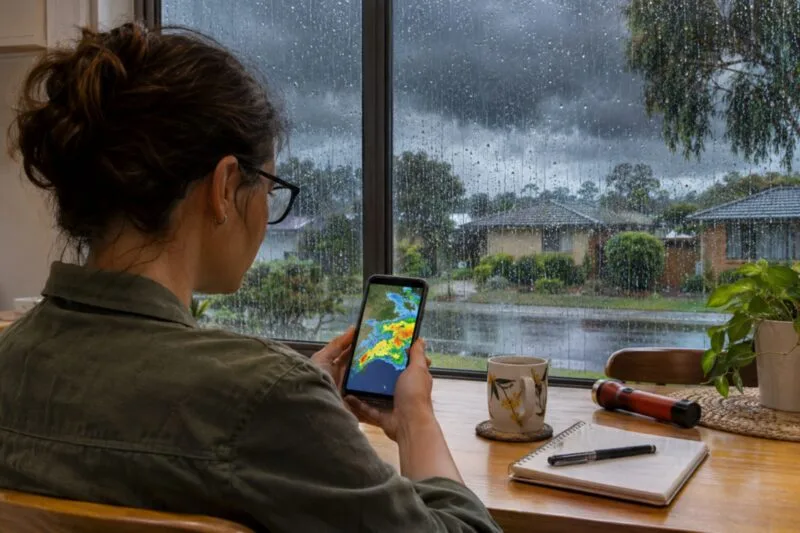
How to Read Australian Weather Radar During Severe Weather
Learn how to track storm movement on Australia’s Bureau of Meteorology radar, interpret rain colors, and use official warnings when radar has limits.
Checked November 27, 2026, at 4:01 p.m. EST (21:01 UTC). Rogers, TELUS, and Bell all sell Canadian wireless plans, but the best choice depends on the places you need service, the data you actually use, and the full monthly cost after discounts and device payments. Compare the same type of plan on the same day: advertised prices can depend on autopay, a home-service bundle, a limited-time credit, or the number of lines.
The practical takeaway is to test coverage first, then compare plan rules and total cost. A lower headline price is not a win if the signal is weak at home, your U.S. trips are excluded, or a phone financing balance makes switching expensive.
Destaques

Start with the locations that matter to you, not a nationwide marketing claim. Search the Rogers coverage map, TELUS coverage map, and Bell coverage map using specific addresses or postal codes for your home, workplace, and frequent destinations. Check the technology layer as well as general coverage: 5G availability does not mean every address, room, or device will get the same signal or speed.
Carrier maps are planning tools, not guarantees. Buildings, terrain, network traffic, phone model, and indoor construction can change the experience. If reception is crucial, ask neighbors or coworkers which networks work in the exact places you use your phone, and use a trial period to test service. The CRTC says customers generally have 15 days to return a cellphone without penalty if dissatisfied with service, subject to usage limits; customers with disabilities have a 30-day trial period with different limits. Read the contract for how the trial works.
Look at several recent bills or the usage screen in your phone settings. Separate data used on Wi-Fi from cellular use, and account for video streaming, navigation, hotspot sessions, and travel. Compare the high-speed allowance, not just the word “unlimited.” Some plans provide a set amount of high-speed data and then reduce speeds; others advertise unlimited high-speed use. Check the exact threshold, the speed after it, and whether the offer is per line or shared across a family account.
Also compare hotspot permissions, international texting, Canada-wide calling, and whether a plan includes U.S. talk, text, and data. A roaming feature can save time, but it may be limited to certain destinations, trip lengths, or eligible plan tiers. Check the current terms for every country you visit. The CRTC says providers cannot charge more than $50 in data-overage fees per billing cycle unless you explicitly agree to pay more, and the account holder controls consent beyond the established limits. That cap does not make a small data allowance convenient, so choose a plan that fits your normal use.
Make a side-by-side estimate with the same assumptions for all three providers. Record the regular plan price, the price after autopay, any internet or TV bundle discount, multi-line savings, promotional credits, and the date each credit ends. Rogers’ current plan page, for example, displays some prices after autopay and when bundled with Internet or TV. Bell’s plan terms describe eligibility conditions for promotional credits and its five-year price guarantee; TELUS also advertises family discounts and price-lock terms on eligible plans. These offers are not identical, and their conditions can change.
Then add taxes, one-time activation or SIM charges, optional features, and any phone payment. Compare the first bill and the steady-state bill after promotions expire. If you already have home Internet with one company, calculate the bundle savings against the best standalone plan from another provider. A bundle is only worthwhile if its total cost and service fit your household.
If your phone is paid off and compatible, ask for a bring-your-own-device quote from each carrier. Rogers, TELUS, and Bell all offer BYOD options, and keeping your phone can make the monthly comparison clearer. Confirm that the phone is unlocked, supports the network bands and features you need, and is not on the national lost-or-stolen blacklist. If you want a new device, compare the total device cost, required plan tier, monthly financing, bill credits, and amount due if you leave early. A “$0” upfront offer can still create a device balance or require a more expensive plan.
Canada’s Wireless Code requires newly purchased phones from providers to be unlocked, and the CRTC says you may cancel after two years without cancellation fees even if you agreed to a longer term. Device financing can still have remaining payments or other amounts due, so ask for the exact payoff figure before switching. Keep your old service active until your number transfer is complete.
Choose the provider whose network works best in your real routine and whose written plan terms match your needs at the lowest sustainable total cost. For a single-line user, compare standalone BYOD offers. For a family, calculate each line separately and confirm whether data is shareable. For frequent U.S. travel, value the included roaming countries against the cost of your typical trips. For a new phone, include financing and exit costs in the comparison.
Before you order, save a screenshot or copy of the offer, read the Critical Information Summary and contract, and confirm what happens when a promotion ends. If sales staff quote a price verbally, ask for the full terms in writing. The CRTC Wireless Code applies to retail wireless voice and data services in Canada and requires clear contract information. If a provider does not resolve a complaint, the CRTC directs customers to contact the Commission for Complaints for Telecom-television Services.
No. The carriers describe their maps as approximate; signal varies with location, buildings, terrain, device, and network conditions. Check specific addresses and test service where possible.
No. Some plans reduce data speeds after a high-speed allowance. Check the plan’s threshold and reduced-speed terms before signing up.
In most cases, yes. Start the transfer with the new provider and keep your existing service active until the transfer finishes. Confirm any device balance and account requirements first.
Learn how to track storm movement on Australia’s Bureau of Meteorology radar, interpret rain colors, and use official warnings when radar has limits.
Use the Bureau of Meteorology’s radar to track rain near you, then check official flood warnings and river conditions. Learn what radar can—and cannot—tell you.
Steelers vs Broncos live updates, game recap, and highlights as Pittsburgh defeats Denver 24-5 behind Mason Rudolph and a dominant defensive display.
Suspecting food poisoning after Thanksgiving dinner? Discover key symptoms, timelines, immediate self-care steps, and when to seek urgent medical care.

Find DWP’s official cyber incident updates, what claimants should do if Universal Credit services are unavailable, and how to avoid scam messages.

Ireland defeated Australia 38–14 in the Nations Championship fifth-place playoff. Check the final score, try scorers, match timeline, and replay streaming options.
Southampton secured a vital 2-0 win over Middlesbrough at St Mary's Stadium on Friday, November 27, 2026. Get live match updates, goals, and analysis.

The Devils beat the Flames 5–3 in Newark, scoring three times in the third period. See the final score, period breakdown, key scorers, and game details.

Igor Jesus put Nottingham Forest 1–0 ahead of Chelsea at halftime. See the verified goal and key first-half moments from Nov. 27.