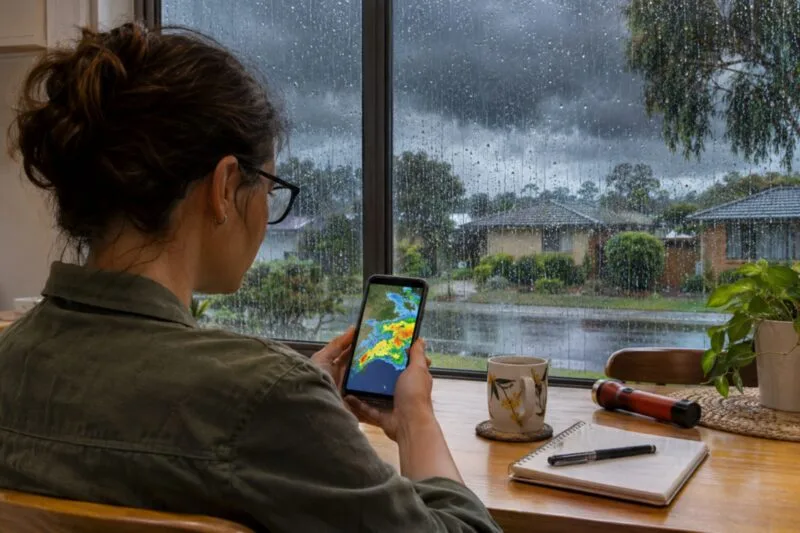
How to Read Australian Weather Radar During Severe Weather
Learn how to track storm movement on Australia’s Bureau of Meteorology radar, interpret rain colors, and use official warnings when radar has limits.
If you or someone at your holiday gathering woke up feeling unwell after Thanksgiving dinner, understanding whether your symptoms stem from foodborne illness—and knowing how to respond—is vital. Food poisoning following large communal meals is remarkably common, most frequently caused by improper holding temperatures of cooked poultry, gravies, and stuffing. For anyone experiencing gastrointestinal distress or questioning the safety of yesterday's feast, prompt self-care, symptom tracking, and strict adherence to leftovers safety protocols are essential.
Thanksgiving feasts present unique food safety challenges because households prepare unusually large volumes of food that often sit on dining tables or carving boards for extended periods. According to public health data from the U.S. Centers for Disease Control and Prevention (CDC), several distinct bacteria frequently cause foodborne illness around the late-November holiday:
If you suspect that your holiday dinner made you sick, prioritizing gentle, supportive care will accelerate recovery and prevent severe complications:
While the vast majority of foodborne infections clear up spontaneously within one to two days, complications such as severe dehydration or invasive bacterial infection require urgent medical evaluation. Seek immediate care or call emergency services if you or a loved one exhibit any of the following warning signs:
If you are concerned about whether leftovers in your refrigerator are still safe to consume, adhere strictly to guidelines established by the FoodSafety.gov Food Safety Guidelines:
Yes. Many foodborne pathogens, most notably Clostridium perfringens, have an incubation period of 6 to 24 hours. If dinner was served late Thursday afternoon, symptoms such as sudden abdominal cramping and diarrhea often begin early Friday morning.
No. While reheating leftovers thoroughly to 165°F (74°C) kills active vegetative bacteria, it does not destroy pre-formed toxins created by bacteria such as Staphylococcus aureus or Bacillus cereus while food sat unrefrigerated. Discard any food left at room temperature past the 2-hour window.
Both present similar symptoms, but food poisoning typically has a more acute, sudden onset (often within hours of eating a specific meal) and frequently affects multiple people who shared the same dishes. Stomach viruses (such as norovirus) often develop over 12 to 48 hours and can spread easily person-to-person through touch and shared surfaces.
Learn how to track storm movement on Australia’s Bureau of Meteorology radar, interpret rain colors, and use official warnings when radar has limits.

Use the Bureau of Meteorology’s radar to track rain near you, then check official flood warnings and river conditions. Learn what radar can—and cannot—tell you.
Steelers vs Broncos live updates, game recap, and highlights as Pittsburgh defeats Denver 24-5 behind Mason Rudolph and a dominant defensive display.

Find DWP’s official cyber incident updates, what claimants should do if Universal Credit services are unavailable, and how to avoid scam messages.

Ireland defeated Australia 38–14 in the Nations Championship fifth-place playoff. Check the final score, try scorers, match timeline, and replay streaming options.
Southampton secured a vital 2-0 win over Middlesbrough at St Mary's Stadium on Friday, November 27, 2026. Get live match updates, goals, and analysis.

The Devils beat the Flames 5–3 in Newark, scoring three times in the third period. See the final score, period breakdown, key scorers, and game details.

Igor Jesus put Nottingham Forest 1–0 ahead of Chelsea at halftime. See the verified goal and key first-half moments from Nov. 27.

Compare Rogers, TELUS, and Bell phone plans by local coverage, high-speed data, roaming, discounts, and device costs before choosing a Canadian carrier.