Home
» Today
»
Strait of Hormuz Tanker Risks: What They Mean for Australian Fuel Prices — November 16, 2026
Strait of Hormuz Tanker Risks: What They Mean for Australian Fuel Prices — November 16, 2026
Information checked: November 16, 2026, 4:11 p.m. Sydney, Australian Eastern Daylight Time (AEDT, UTC+11:00); 5:11 a.m. UTC.
Fresh tanker security concerns in the Strait of Hormuz are putting renewed attention on how quickly a shipping shock can reach household budgets. Iranian naval authorities claimed that three tankers caught fire after striking mines on November 14, but Reuters said it could not independently verify those accounts. Separately, an international maritime security advisory dated November 12 documented earlier tanker attacks and continued to rate the Strait of Hormuz threat level as severe. For Australian drivers and businesses, the important question is not whether every reported attack has been established, but whether lost or delayed oil and fuel cargoes push international refined-fuel prices higher.
The immediate consumer impact remains uncertain: no verified single tanker incident establishes a nationwide Australian petrol-price rise of a particular number of cents per liter. Australia's competition regulator says international refined-fuel benchmarks, exchange rates, and retail market dynamics all matter. It says benchmark price changes can take approximately two weeks to filter through to city fuel prices, and longer in some regional areas.
Highlights
Iran reported November 14 mine strikes involving three tankers; Reuters said it could not independently verify the claim.
A November 12 maritime advisory classified security risk in the strait as severe and documented attacks on tankers earlier that week.
Australian gasoline and diesel prices are linked to Singapore refined-fuel benchmarks and the Australian dollar, not directly to the price of one tanker cargo.
Motorists can compare stations and avoid unnecessary panic buying; any sustained cost impact depends on disruption length and actual supply losses.
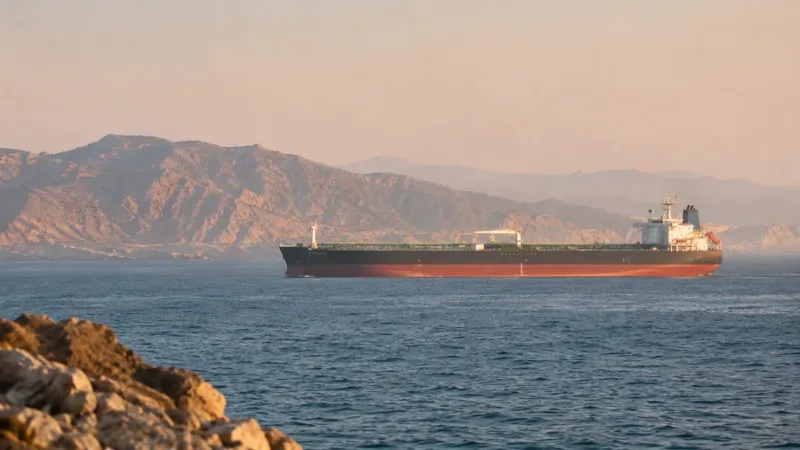
Illustrative image of a tanker near a mountainous coastline. This is not a photograph of a reported attack or a specific vessel in the Strait of Hormuz.
What is happening to oil tankers in the Strait of Hormuz?
The waterway between Iran and Oman remains a high-risk shipping corridor. In a November 14 report, Reuters described Iranian naval claims that three vessels had struck mines and caught fire. The reporting did not establish the claims independently, so they should not be treated as confirmation that three separate mine strikes occurred. The extent of damage and the ships' identities should not be inferred from the allegation alone.
There is separate, stronger documentation of recent maritime incidents. The Joint Maritime Information Center advisory issued November 12 recorded a tanker reporting an unknown-projectile strike at 13:38 UTC on November 10, corresponding to 5:38 p.m. in Oman (Gulf Standard Time, UTC+04:00). The advisory said the crew was safe and no environmental damage was reported in that incident. It also listed an attack reported around 02:00 UTC on November 11 north of Khasab, Oman—6:00 a.m. Gulf Standard Time—with the crew reported safe. Those times describe reported incidents, not the publication time of the advisory.
Abu Dhabi National Oil Company also confirmed an attack on one of its vessels in UAE territorial waters during the afternoon of November 10, while providing no precise time. These accounts demonstrate real operational hazards but do not prove that every subsequent claim is accurate, nor do they establish a complete closure of the strait.
Why could shipping risks raise fuel prices in Australia?
The Strait of Hormuz links major Persian Gulf exporters with global import markets. The International Energy Agency estimates that approximately 20 million barrels per day of crude oil and petroleum products crossed it in 2025, representing about one-quarter of global seaborne oil trade. The IEA estimates that roughly four-fifths of oil passing through the strait was destined for Asia. Those figures describe the historical exposure of the trade route, not a confirmed volume lost during the November 2026 incidents.
If operators suspend voyages, wait for escorts, pay higher insurance premiums, or divert available cargoes, buyers can face higher delivered costs. A longer disruption could tighten supplies of both crude and refined products. Conversely, successful rerouting, inventories, resumed shipments, and substitute supply could limit any price increase. The degree and duration of disruption are crucial; a frightening headline alone cannot predict prices at the pump.
According to the Australian Competition and Consumer Commission (ACCC), Australia's regular unleaded petrol price is influenced by the Singapore Mogas 95 benchmark, while diesel is influenced by Singapore Gasoil 10 ppm. These international fuel benchmarks are quoted in U.S. dollars, meaning the Australian dollar's exchange rate also affects domestic costs. Wholesale and retail competition, transportation expenses and local fuel-price cycles create further differences among regions and stations.
How soon could Australian drivers see higher gasoline or diesel prices?
The ACCC says movements in international benchmark prices can take around two weeks to move through supply chains to retail prices in Australia's major cities, and potentially longer in regional markets. That is a typical transmission lag, not a guaranteed timetable for this specific event. Retail prices can also change because of existing local pricing cycles even if the international market barely moves on a given day.
For households, a useful way to assess exposure is to separate the wholesale signal from an individual pump-price sign. Watch whether Singapore refined-fuel benchmarks rise persistently, whether the Australian dollar weakens against the U.S. dollar, and whether the ACCC's weekly fuel-price monitoring shows higher average wholesale and retail prices. A temporary rise at one station does not prove that Hormuz shipping risks are responsible.
What could happen to delivery services, groceries and flights?
Diesel is an operating cost for freight operators, farm machinery and many businesses. If elevated diesel costs persist, companies may face pressure to adjust transport charges, although the timing and size of any retail pass-through will depend on contracts, competition and other costs. Aviation fuel could also be exposed to sustained global petroleum-product shortages; that does not establish that any airline has announced a fare increase tied to the latest reported tanker incidents.
Energy costs can affect consumers indirectly, but it would be misleading to assign a precise increase to supermarket bills, airfares or delivery charges without company-specific evidence. Australia's regional markets also differ: remote motorists may have fewer retail choices and different transport costs than drivers in large cities.
What should consumers do while tanker tensions persist?
Compare local pump prices. The ACCC fuel information pages explain how to shop around and monitor price cycles, and local fuel-price apps can help identify lower-priced stations.
Plan routine fill-ups rather than stockpiling. Unverified reports should not be treated as proof of an imminent local shortage; storing extra fuel creates its own safety risks.
Watch the full cost of driving. Combine trips where practical, check tire pressure, and budget for the possibility—not the certainty—of higher fuel expenses.
For small businesses, review fuel-sensitive contracts. Track actual invoice changes before passing through surcharges; use clearly documented costs rather than headline-based estimates.
What should readers watch next?
Three indicators matter more than speculation: independently verified attacks and maritime warnings; sustained vessel movements and delivered oil or refined-fuel supply; and international price data reflected in Australian wholesale prices. If traffic stabilizes and product deliveries resume, the risk premium could ease. If attacks or restrictions repeatedly prevent cargoes from moving, energy supply chains could remain strained and consumer costs could rise. Neither outcome is certain on the evidence available as of the stated check time.
FAQ
Is the Strait of Hormuz completely closed?
The reviewed maritime material documents attacks and reduced traffic, not proof that every vessel has been prohibited from crossing. Conditions can change quickly, so current official maritime advisories matter.
Will gasoline prices rise immediately in Australia?
Not necessarily. International price shifts often take roughly two weeks to filter through to major-city retail prices, according to the ACCC, and local pump prices have other influences.
Does a tanker attack automatically mean fuel shortages?
No. The effect depends on the number and duration of disrupted shipments, inventories, substitute routes, and supply responses. A reported attack alone does not establish a shortage at Australian stations.