Home
» Today
»
UK Snow and Cold Weather: Travel Advice and Home Safety Checklist
UK Snow and Cold Weather: Travel Advice and Home Safety Checklist
Verified: November 24, 2026, at 12:00 a.m. GMT (UTC+00:00). Check official warnings and transport updates again before setting out, because conditions and alerts can change.
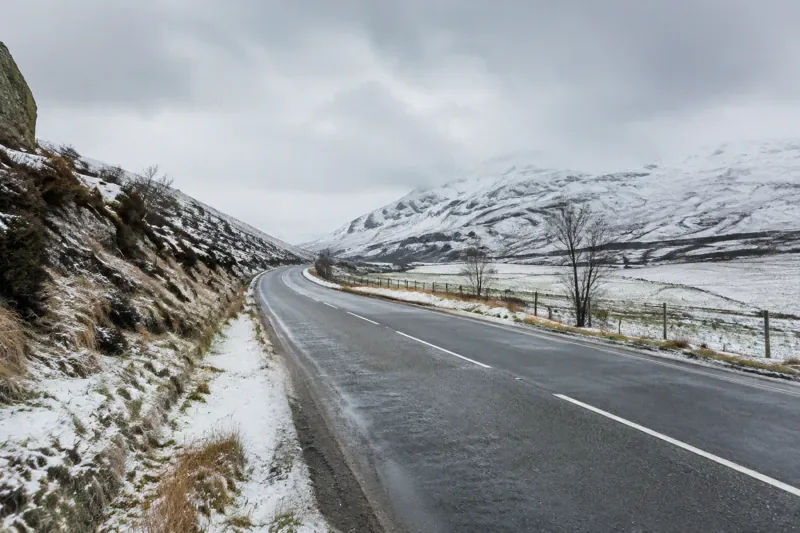
The practical message for people in the UK is to prepare for regional ice, rain and possible hill snow, not to assume that a single nationwide snowstorm is forecast. The Met Office’s warning page currently lists a yellow ice warning for parts of Scotland and northeast England from 3:00 a.m. to 9:00 a.m. GMT on Tuesday, November 24, and a yellow rain warning for Cornwall and the Isles of Scilly from 10:00 a.m. to 11:59 p.m. GMT that day. Its forecast says rain will move northeast and turn to snow over higher ground in Scotland. These conditions can affect roads, rail journeys and homes even where there is little or no settled snow.
Destaques
Current Met Office alerts are regional: morning ice in parts of Scotland and northeast England, plus heavy rain in Cornwall and the Isles of Scilly on November 24.
Check the exact route, departure time and operator updates; delay nonessential journeys if ice or disruption is likely.
For essential driving, clear every window and the roof, allow much more stopping distance and carry warm clothing, food, water and a charged phone.
At home, protect exposed pipes, know where the stopcock is and check on people who may struggle to stay warm.
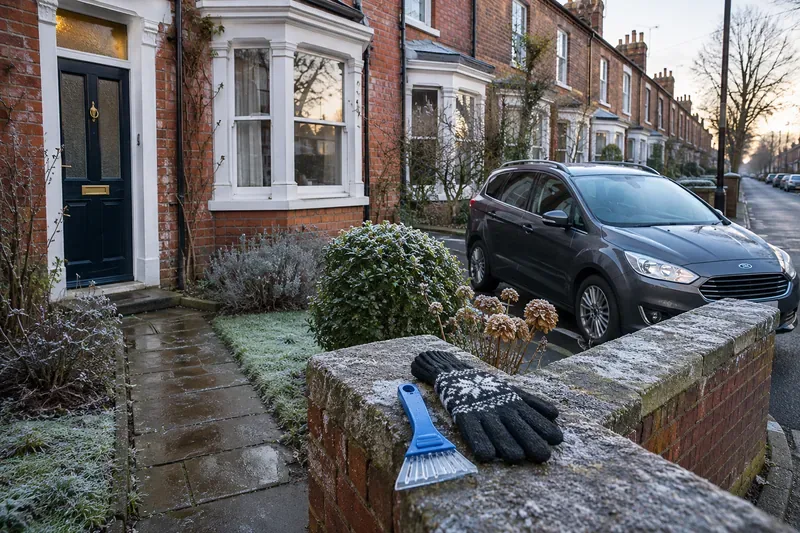
Illustrative image: A frosty British street with a cleared car and basic winter travel items; it does not depict a specific forecast location or weather incident.
What is the current UK snow and ice outlook?
At the time checked, the Met Office has issued a yellow ice warning covering parts of Central, Tayside and Fife, Grampian, Highlands and Eilean Siar, northeast England, southwest Scotland, and the Lothian Borders. It is valid from 3:00 a.m. to 9:00 a.m. GMT on November 24. The warning explains that rain falling onto surfaces below freezing could create icy patches; snow is more likely on higher ground, including routes over the Grampians. A separate yellow rain warning covers Cornwall and the Isles of Scilly from 10:00 a.m. through 11:59 p.m. GMT, with flooding and travel disruption possible.
This is a snapshot, not a guarantee that every named place will be affected. A yellow warning means impacts are possible and people should stay alert to local conditions. Check the Met Office UK warnings map and the UK forecast for updates, and use the alert for the relevant time and postcode. There is no basis here for describing this as a UK-wide snow warning.
How should you prepare before traveling?
Start with the journey, not just the weather headline. Check forecasts for both origin and destination and for the hours you will be on the road. Review live traffic information from National Highways for England’s major routes, and check your rail operator or National Rail for service alerts. Local authority and devolved-nation road services may cover roads outside the National Highways network.
If your trip is not essential and ice is expected, postponing it is often the simplest way to reduce risk. The Highway Code says drivers should avoid driving in icy or snowy conditions unless the journey is essential. If you must travel, tell someone your route and expected arrival, leave extra time, and consider whether a safer main-road route is available. Conditions can change quickly between treated main roads and untreated side roads, bridges, shaded sections or exposed hills.
What should you keep in the car?
Before departure, clear ice, snow and condensation from all windows, mirrors, lights and number plates. Clear snow from the roof too, so it cannot slide onto the windscreen or other road users. Do not leave the engine running in an enclosed space to warm the car. Drive smoothly, accelerate and brake gently, leave a much larger gap than usual, and avoid sudden steering. The Highway Code notes that stopping distances can be much longer on ice or snow.
A compact winter kit can make an unexpected delay more manageable:
Ice scraper and de-icer, plus a torch and spare batteries.
Warm, waterproof clothing, sturdy footwear, gloves and a blanket.
Phone fully charged, charging cable or power bank, and any essential medication.
Drinking water and nonperishable snacks; a first-aid kit and any vehicle-specific essentials.
For remote or higher routes, consider a shovel and check whether your vehicle and tires are suitable for the conditions.
Do not treat the kit as a reason to continue into dangerous conditions. If roads are blocked or visibility is poor, follow police and highway authority instructions and stop somewhere safe.
How can you make your home safer in cold weather?
Cold weather preparation is mostly about preventing avoidable failures. Locate the internal stopcock before you need it. Insulate pipes and tanks in unheated spaces, such as lofts, and check that outside taps and vulnerable plumbing are protected. Clear leaves from gutters where it is safe to do so, and follow official flood guidance if heavy rain is forecast in your area. Keep a supply of needed medicines, drinking water, shelf-stable food and charged lights or batteries in case travel or power is disrupted.
Keep rooms you regularly use comfortably warm and follow health advice for your nation and personal circumstances. Older adults, very young children, pregnant people, and people with long-term health conditions or limited mobility can be more vulnerable to cold. Check in on neighbors or relatives who may have difficulty heating their home. If you use gas or another fuel-burning appliance, have it maintained by a qualified professional, keep vents and flues unobstructed, and use a working carbon-monoxide alarm. Never use an outdoor barbecue or generator indoors.
What should you do if a pipe freezes or bursts?
If a pipe freezes, follow the Met Office’s advice: turn off the water at the stopcock if needed, open the affected tap and thaw the pipe gradually with warm towels or a hot-water bottle. Never use a blowtorch or naked flame. If a pipe bursts, shut off the water and, if it is safe, the heating system; contact a qualified plumber. Keep away from electrical equipment where water is present. The Met Office frozen-pipe guidance explains the basic steps.
Frequently asked questions
Is snow forecast across the whole UK?
No. The forecast checked points to snow mainly over higher ground in Scotland, alongside regional ice and rain warnings. Check the latest Met Office map for your location.
Should I drive during an ice warning?
Only if the trip is essential and conditions on your route are safe. The Highway Code advises avoiding driving in icy or snowy weather unless necessary; check alerts and delay if in doubt.
What is the first thing to do if a water pipe bursts?
Turn off the water at the stopcock, keep clear of wet electrical equipment, and contact a qualified plumber. Do not try to thaw a pipe with an open flame.