Home
» Today
»
Uninspected Beef, Pork and Goat Recall: How to Check Your Food
Uninspected Beef, Pork and Goat Recall: How to Check Your Food
A nationwide meat recall announced by the U.S. Department of Agriculture’s Food Safety and Inspection Service (FSIS) on September 22, 2026, deserves a careful label check rather than a quick glance at the type of meat. Star Meat Delivery Inc. of Lucama, North Carolina, is recalling approximately 167,639 pounds of raw pork, beef and goat products that were produced without the benefit of federal inspection and carried a false USDA mark of inspection. FSIS assigned recall number 022-2026 and lists it as an active Class I recall.
The most important confirmed identifier is the false establishment number “EST. 1363.” FSIS says any product bearing that number should be considered misbranded and unsafe to eat. The affected bulk products were distributed under the A&D Foods label, but that does not mean every consumer package will still show the A&D Foods name or the original bulk label. FSIS specifically warns that retailers may have applied their own pricing and safe-handling stickers to individual packages.
That distinction matters: this is not a recall where checking only a familiar brand name is enough. The practical goal is to match as many pieces of evidence as possible—establishment number, product description, purchase source, receipt, packaging and retailer information—then avoid eating the product if it matches the recall or cannot be confidently cleared.
What is confirmed about the recall?
As of September 23, 2026, the official FSIS recall notice for Star Meat Delivery Inc. says the recalled raw meat was produced on various dates before September 22, 2026. The products were vacuum-sealed and packed into cardboard boxes for shipment, then sent to A&D Foods in Georgia for further distribution to retail and restaurant locations nationwide.
FSIS says the products were produced without federal inspection and bore a false USDA inspection mark. The establishment number “EST. 1363” does not correspond to a federally granted inspection establishment. The agency also says food made without inspection may contain undeclared allergens, harmful bacteria or other contaminants. At the time of the recall notice, FSIS reported no confirmed illnesses or injuries linked to consumption of these products.
Action: If you have raw beef, pork or goat meat purchased recently, especially from a retailer that may repackage meat in-store, check it before cooking or serving it.
How to check your beef, pork or goat meat
1. Start with the package and your receipt
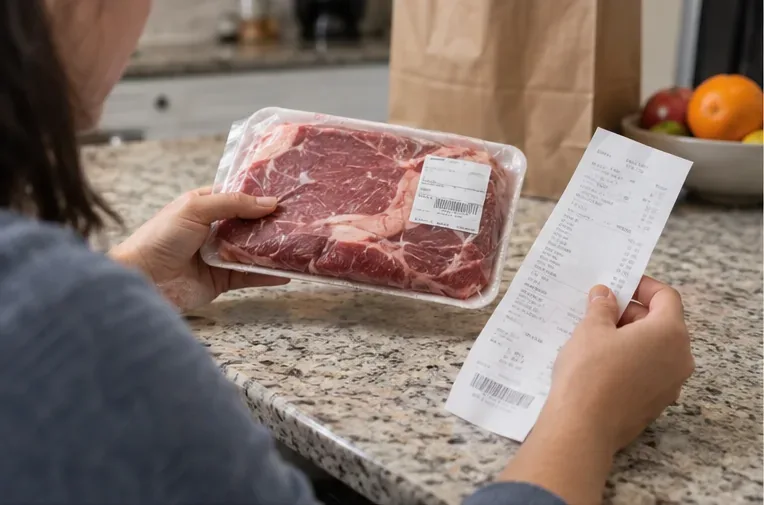
Look at the package you bought, then compare it with a store receipt, online order history, delivery-app order or credit-card transaction if you still have one. Note the store name, purchase date, product description and price-per-pound label. This can help when the package itself does not show the original supplier.
A common misunderstanding is that a national recall means every package of beef, pork or goat in the country is affected. That is not what FSIS says. The recall concerns products tied to this specific production and distribution chain, not all raw meat of those species.
Action: Write down or photograph the store name and purchase date before you discard any packaging.
Compare the package with your receipt or order history so you can identify where and when the meat was purchased.
2. Look closely for “EST. 1363”
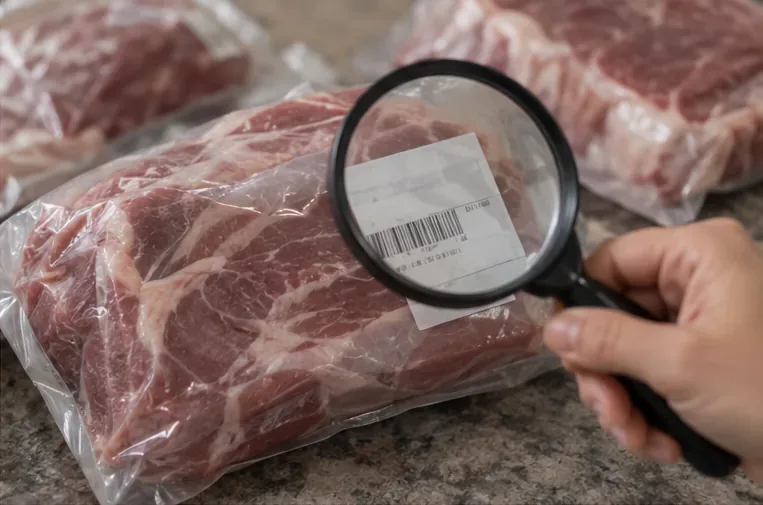
The clearest confirmed recall marker is “EST. 1363.” On meat packaging, an establishment number is often printed near a USDA inspection mark or elsewhere on the label. In this recall, however, the mark and number were false. Do not treat the presence of a USDA-style mark as proof that this meat was federally inspected.
If you see “EST. 1363,” FSIS says the product should be considered misbranded and unsafe to eat. Do not cook it in an attempt to make the recall irrelevant. The problem is not a single confirmed pathogen that can be managed by a specific cooking step; the product bypassed required federal inspection, and FSIS cites the possibility of undeclared allergens, harmful bacteria or other contaminants.
Action: If “EST. 1363” appears anywhere on the package, stop using the product and follow the disposal or return guidance below.
Inspect labels carefully for establishment information, supplier details and other identifying marks.
3. Check whether the product description matches the recalled categories
The official notice lists multiple A&D Foods bulk products. They include goat cuts; skin-on goat cuts; sliced ribeye; thin-sliced beef chuck; beef oxtail; beef short ribs; bone-in shanks; ground pork; pork chorizo; pork chops; pork feet; pork rib pieces; diced, sliced and thin-sliced pork Boston cuts; menudo mix; pork hock; beef ribs; thin-sliced beef short ribs; sliced pork Boston butt; premium-cut beef short ribs; and beef feet.
Product names and weights on a consumer package may differ from the wording used on the bulk shipping box. For example, a retailer could divide a large vacuum-packed item into smaller portions and apply its own sticker. That is why a product-description match is useful but not sufficient on its own.
Action: If your meat is one of these categories and came from a store or restaurant that could have received A&D Foods product, move to the next check rather than assuming a different store label clears it.
4. Do not rely on the absence of the A&D Foods name
This is one of the most important recall-specific details. FSIS says individual consumer packages may not bear the same labeling as the bulk boxes because retail stores may have added their own stickers with pricing and safe-handling instructions. Therefore, “I do not see A&D Foods” does not prove the meat is unaffected.
What remains uncertain for a particular consumer package is its exact upstream supplier when the original label is gone. A store’s meat counter or customer-service desk may be able to use purchase records, lot information or distributor records to determine whether the package came from the recalled shipment.
Action: If the supplier is unclear, contact the retailer and provide the purchase date, product type, package weight and any label codes before eating the meat.
5. Keep questionable meat separated while you verify it
If you are checking with the retailer or FSIS and do not yet know whether the meat is affected, prevent raw juices from leaking onto other foods or refrigerator surfaces. Keep the product contained, and do not open it just to inspect the meat itself. Appearance and smell cannot verify whether a recalled product was federally inspected or whether an undeclared allergen or pathogen is present.
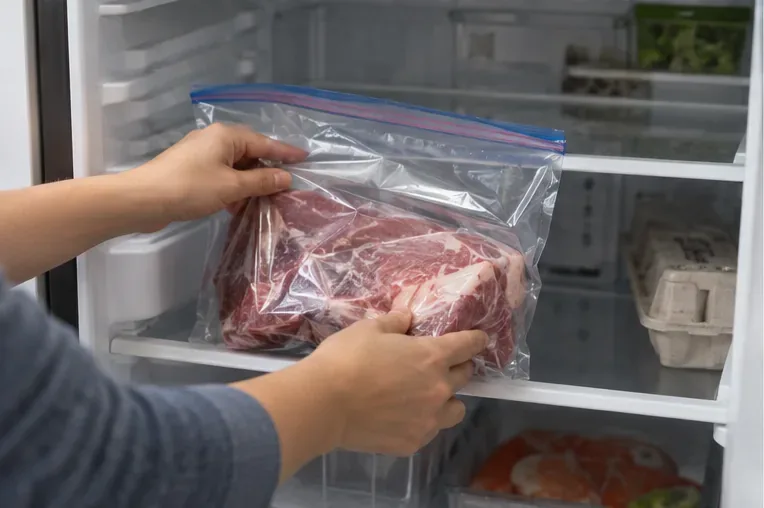
Action: Place the package in a leak-resistant outer bag or container and keep it away from ready-to-eat foods while you verify its status. Do not serve it while the question is unresolved.
Keep questionable raw meat contained and separated from other foods while you confirm whether it is part of the recall.
6. Return or discard confirmed recalled product
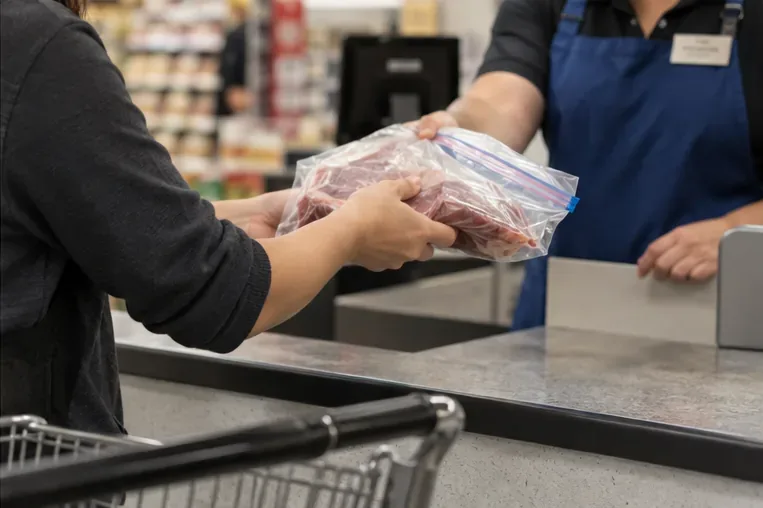
FSIS advises consumers not to eat the recalled products. They should be thrown away or returned to the place of purchase. Restaurants and retailers should not sell or serve them. If you plan to return the meat, follow the retailer’s instructions and transport it in a sealed container or bag that prevents leaks.
Action: Once the package is confirmed as recalled, do not keep it for later cooking. Return it or dispose of it so no one in the household accidentally uses it.
A recalled meat product can be returned to the place of purchase when the retailer accepts returns under the recall guidance.
Quick recall check: what each clue means
Clue
What it tells you
What to do
“EST. 1363” on the package
Confirmed recall identifier in the FSIS notice
Do not eat; return or discard
A&D Foods on bulk or original packaging
Matches the distributor label named in the recall
Compare product description and establishment information with the FSIS notice
Store-applied meat-counter sticker only
Does not rule the recall in or out
Ask the retailer to trace the supplier using purchase date and label details
Beef, pork or goat product but no matching identifiers
Species alone is not enough to identify recalled meat
Check receipt, retailer and official recall updates before deciding
Meat looks and smells normal
Not evidence that it was federally inspected or safe
Use traceability information, not appearance, to assess recall status
Why “uninspected” does not simply mean “the inspector missed one package”
Federal meat inspection is a regulatory system applied to establishments and production, not a consumer-visible spot check of a finished package. FSIS explains that meat sold in interstate commerce must be federally inspected, while qualifying state-inspected meat may be sold under state rules within that state. In this recall, the issue is specific: FSIS says the recalled Star Meat Delivery products were produced without the benefit of federal inspection and carried a false federal mark.
Another misconception is that a recall must identify a specific bacterium before consumers should act. This recall is based on the absence of required inspection and false labeling. FSIS classified it as Class I. The agency’s recall guidance defines Class I as a health-hazard situation in which there is a reasonable probability that use of the product will cause serious adverse health consequences or death.
Action: Treat the official recall instruction—not the meat’s appearance, odor or your usual cooking method—as the deciding factor.
What is still uncertain or may change?
FSIS states that it may update the product list and labels as more information becomes available. That matters because the recall involves bulk distribution and possible retail repackaging. A consumer may have a store-labeled package that cannot be linked to the recall simply by reading the front label.
The exact retail locations that handled a given package may also become clearer as traceback information is developed. FSIS generally posts retail consignee information for Class I recalls when it becomes available. Because those lists can be updated, a retailer check today may provide more detail than was available when the recall was first announced.
Action: Recheck the official recall notice if you have a questionable package and the store cannot immediately confirm its supplier. The recall page is the best source for updated product labels and distribution information.
What if you already ate the meat?
At the time of the September 22 recall notice, FSIS said there were no confirmed reports of illness or injury from these products. That does not mean every affected product is proven safe; it means no illnesses or injuries had been confirmed in connection with the recall at that point.
If you feel well, the practical next step is still to identify and remove any remaining recalled product from your refrigerator or freezer. If you are concerned about an illness or injury, FSIS advises contacting a health care provider. Consumers can also use the agency’s Report a Problem with Food page. FSIS asks consumers reporting meat problems to retain useful evidence when possible, including the original packaging, relevant package codes, the establishment number, purchase location and purchase date.
Action: If you may need to report a problem, preserve the label and receipt information rather than throwing away every identifying detail first.
A simple decision rule for this recall
If you see EST. 1363, do not eat the product. If you have a matching raw beef, pork or goat product but only a store-applied label, use your receipt and retailer to trace the supplier before eating it. If the store confirms it came from the recalled A&D Foods/Star Meat Delivery supply, return or discard it. If the store cannot identify the source, keep the meat separated and check the latest FSIS notice rather than guessing.
The official recall can evolve as additional labels or distribution details are identified. For a current check, use the USDA FSIS recall page for recall 022-2026 as the primary reference.