Verified and updated: November 21, 2026, 9:12 a.m. UTC.
The global AI boom is being driven by a reinforcing cycle: companies are investing heavily in computing infrastructure and AI tools, while more people and organisations find practical uses for them. Stanford HAI’s 2026 AI Index reports that global corporate AI investment more than doubled in 2025 and that 88% of surveyed organisations used AI. For consumers, the change is showing up in familiar places: phones, search, writing tools, photo features and customer support.
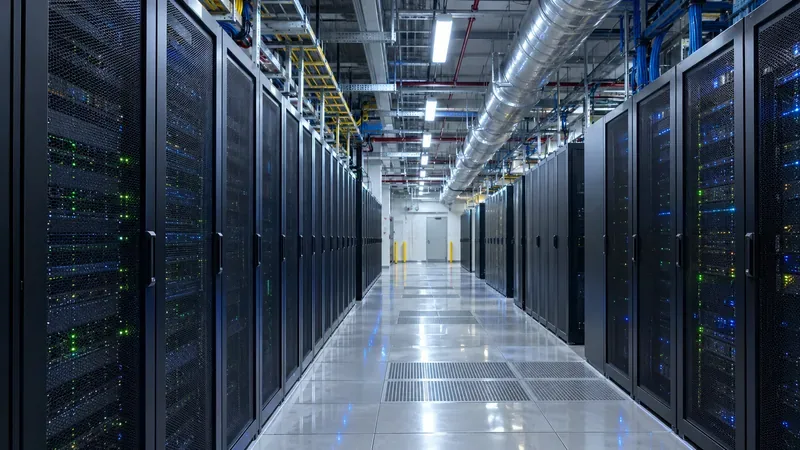
The boom also has a physical footprint. The International Energy Agency reports that data center electricity use rose 17% in 2025, with AI-focused data centers growing faster. That investment and power demand help explain why AI is appearing in more products—and why its costs, reliability and energy needs are part of the story.
Destaques
- Investment, better-performing models and everyday usefulness are reinforcing one another.
- AI now appears in consumer apps and devices, often as a feature inside products people already use.
- AI systems depend on data centers, advanced chips and electricity, which can constrain expansion.
- Adoption is spreading quickly, but results still need checking and access to features varies.
What is driving the global AI boom?
Three forces are working together. First, computing hardware and cloud services make it possible to train and run increasingly capable models at scale. Second, improvements in software have made AI useful for tasks such as summarising, translating, searching, drafting and analysing images. Third, companies see potential to save time, create new services and compete in markets where AI capabilities are becoming a selling point.
Investment figures indicate the scale of the race, though they do not guarantee that every project will succeed. Stanford HAI estimates global corporate AI investment reached a record $581.69 billion in 2025, including private investment and mergers and acquisitions. Its report also says generative AI attracted a large share of private AI funding. Those figures describe investment, not the value consumers receive or the eventual returns.
Adoption data offers another view. Stanford’s 88% figure covers surveyed organisations and should not be read as the share of every business using AI in every task. In a separate, nationally representative U.S. Census Bureau survey, AI use varied considerably by firm size: in the data collection period ending May 3, 2026, 37% of firms with at least 250 employees reported using AI, compared with fewer than 20% of firms with four or fewer employees. The results show how adoption can spread unevenly across the economy.
How does AI affect everyday technology?
For many people, AI is not a separate machine. It is a feature inside a device or service: a writing suggestion in an email app, a voice assistant that understands a request, a photo tool that edits an image, or a search service that produces a conversational summary. On phones and computers, some functions run on-device while others send a request to remote data centers. Which approach applies depends on the product, feature and settings.
These additions can make common tasks faster. AI can help rephrase a message, translate text, summarise a long document, organise notes or describe what is in an image. Accessibility features may use speech recognition, captions or image descriptions. Recommendations and spam detection also rely on machine-learning systems, although not every such feature uses generative AI.
Convenience comes with limits. A generated answer can sound confident while being wrong, incomplete or out of date. Image and voice tools can produce convincing but misleading material. Privacy protections also differ by service: users should check what data a product collects, how it is used and whether conversations or files can be excluded from training. For important decisions, verify claims with reliable sources and avoid sharing sensitive information unless the service’s terms and controls are clear.
Why do data centers and electricity matter?
AI services rely on data centers containing servers and specialised chips. Training large models can require substantial computing, and responding to user requests also uses energy. The IEA says data center electricity consumption grew 17% in 2025; consumption at AI-focused data centers rose 50%. It projects total data center electricity use could roughly double from 485 terawatt-hours in 2025 to 950 TWh in 2030. That is a projection, not a certainty: efficiency gains, demand, construction delays and energy supply all affect the outcome.
For consumers, infrastructure pressures may influence where new services launch, how quickly features respond and whether some advanced capabilities cost extra. At the community level, new data centers can increase demand on local power grids. The IEA identifies grid connections, equipment supply and planning as constraints, while noting that policy and investment choices affect how expansion is managed.
What could happen next?
AI is likely to become more embedded in routine software if companies can make it useful, affordable and dependable. Some tasks may move onto personal devices, while more demanding systems will continue to rely on remote computing. Businesses may automate parts of existing workflows, but adoption figures alone do not establish how many jobs will change or disappear. Outcomes depend on the task, the organisation and how people use the tools.
For consumers, the practical test is whether a feature saves time or improves access without creating more work through errors, confusing controls or privacy trade-offs. Compare what a tool can do with what it actually does, check important answers, and review the settings before connecting it to personal files or accounts. The AI boom is changing everyday tech through many small product decisions as much as through headline-grabbing model releases.
Frequently asked questions
Why is AI growing so quickly?
More capable models, wider access through cloud services and consumer apps, and strong business investment are accelerating adoption.
Does every AI feature send data to the cloud?
No. Some features run on a device, while others use remote data centers. Check the product’s documentation and privacy settings.
Will AI replace everyday apps?
It is more often being added inside existing apps and devices. Whether it replaces a particular tool depends on usefulness, cost and user choice.
Sources