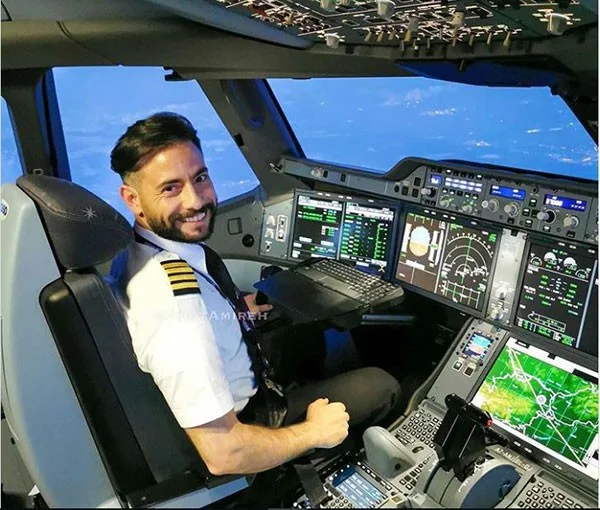
It is a fact that we rarely see pilots with beards, especially when they are on duty. The reason behind this lies in important factors related to flight safety and health.
Airlines always emphasize their professional image and safety for passengers. Pilots with beards, especially goatees or thick beards, can create an untidy impression, affecting the overall image of the pilot and the airline.

Although Federal Aviation Administration (FAA) policy does not require pilots to be clean-shaven, some major airlines have strict safety policies in place. For example, American Airlines requires its pilots to be clean-shaven before taking off for duty.
The top priority of the aviation industry is flight safety. In an emergency such as loss of cabin pressure or fire, to ensure oxygen supply for themselves and continue to control the aircraft, pilots need to use oxygen masks. When wearing a mask, having a beard or thick beard can cause the mask to not fit tightly, leading to oxygen leakage, endangering the pilot, affecting their ability to handle the situation and their lives.
One study found that passengers with beards who wore oxygen masks had oxygen leakage of 16 to 67 percent.
The cockpit is home to a lot of electrical equipment and fuel, so there is a high risk of fire. Beards, especially goatees and long beards, are more flammable than hair, so in the event of a fire they can pose a potential hazard. Shaving helps reduce this risk.

However, some airlines also allow pilots to grow beards if they are neatly trimmed and do not obscure the face. Air Canada allows male pilots to grow short beards, no longer than 1cm.
In some special cases such as religious reasons, pilots may be granted permission to grow beards, but must meet requirements on beard length and style and ensure that they do not affect flight safety.