Home
» Today
»
Woolworths Investor Update: Grocery Prices, Sales Growth and November 18 Outlook | Nov. 16, 2026
Woolworths Investor Update: Grocery Prices, Sales Growth and November 18 Outlook | Nov. 16, 2026
Information checked: November 16, 2026, 4:14 p.m. Australian Eastern Daylight Time (AEDT; Sydney, UTC+11:00), equivalent to 05:14 UTC.
For Australians watching their grocery bills, Woolworths Group’s latest confirmed investor disclosures offer a mixed but important message: supermarket sales are growing, the company reports lower average prices, and its online business is expanding. Yet those figures do not mean every household’s weekly basket has become cheaper. For shareholders, the immediate question is whether stronger sales and operational improvements can turn into durable profit without undermining the value proposition that attracts customers.
The next major briefing is Woolworths Investor Day on Wednesday, November 18, 2026, scheduled to begin at 9:00 a.m. AEDT in Sydney (UTC+11:00), or 22:00 UTC on Tuesday, November 17. As of this check on November 16, the event had not occurred. Its presentation materials and any new targets must not be treated as already announced. The latest published quarterly figures remain those released on October 28. See the official Woolworths Investor Day page and Woolworths’ ASX announcements archive.
Destaques
Australian Food sales grew 6.9% year over year in the first quarter of fiscal 2027, to A$14.841 billion.
Average Australian Food Retail prices excluding tobacco fell 0.7% year over year, according to Woolworths’ measurement—not a guarantee for every basket or store.
Group eCommerce sales reached A$3.1 billion, up 16.0%, underscoring the shift toward digital shopping and delivery.
November 18 Investor Day remains ahead: investors should await the published presentation before drawing conclusions about fresh guidance.
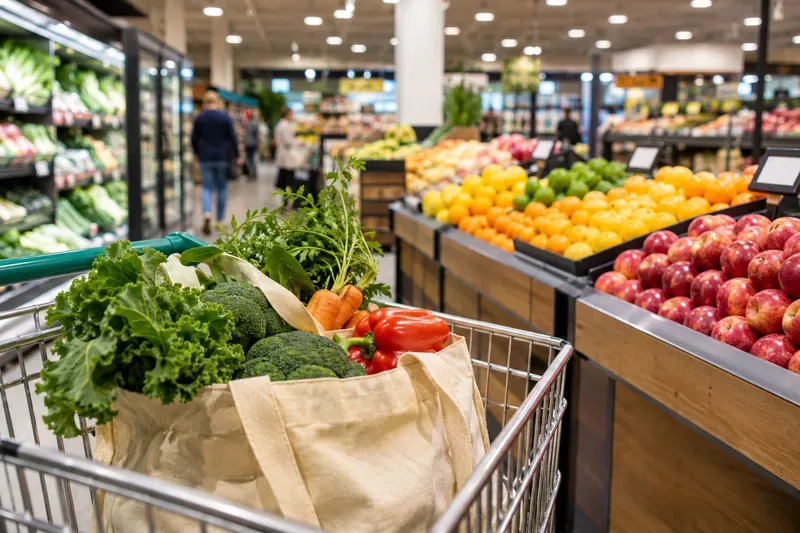
Illustrative supermarket shopping scene. The image is newly generated and does not depict a specific Woolworths store, customer, or investor event.
What did Woolworths actually report in its latest investor update?
Woolworths’ report covers the 14 weeks ended October 4, 2026, not the full fiscal year. Group sales totaled A$19.353 billion, up 4.7% from A$18.483 billion a year earlier. Australian Food, the segment most directly connected to grocery shoppers, contributed A$14.841 billion, up 6.9%. Woolworths Food Retail sales, covering stores and eCommerce, rose by the same percentage. These are sales figures, not profit margins, and stronger revenue can reflect a combination of more transactions, more items, changes in shopping habits, and prices.
Comparable-store sales increased 6.1%, with comparable transactions up 3.0% and items sold up 4.0%. Management acknowledged that its Disney Ooshies promotion boosted demand early in the quarter, although it said sales momentum continued afterward. Anyone extrapolating an annual growth rate from this quarter should account for the campaign and the upcoming holiday season. All figures come from the Woolworths’ October 28 first-quarter sales announcement.
Will groceries get cheaper at Woolworths?
The company reported that its average selling prices excluding tobacco decreased 0.7% from the prior-year quarter, marking an eleventh consecutive quarter of lower average prices on that measure. Its Lower Shelf Price program covered more than 1,000 products, including additional well-known brands. Management also pointed to targeted promotions and Everyday Rewards offers, and said it was preparing more than 500 budget-conscious festive products for the holiday period.
That is evidence of a value strategy, not a promise that all grocery prices will fall. A shopper’s bill depends on the exact products chosen, produce seasonality, pack sizes, local availability, whether a discount applies, and how much the household buys. Moreover, average price changes can be affected by the mix of products sold. Shoppers can take practical steps now: compare unit prices per kilogram or liter, inspect eligibility and end dates on loyalty promotions, compare own-brand and branded options, and check the entire basket rather than a few advertised discounts.
Does the investor briefing signal more online delivery and rewards offers?
It signals that digital convenience is a substantial growth priority, although future offers and delivery fees remain subject to company decisions. Woolworths reported A$3.1 billion of group eCommerce sales, a 16.0% annual increase. Within Australian Food, eComX sales rose 20.2%, and online penetration reached 18.2%. Nearly half of delivery orders were fulfilled within two hours during the reported quarter. Everyday Rewards active membership reached 10.9 million.
For households, these figures suggest a continuing focus on digital ordering, pickup, rapid delivery, and personalized offers. But the cheapest method may still be a planned in-store shop if delivery charges, minimum-spend conditions, or impulse purchases outweigh advertised savings. Consumers should compare checkout totals, not just displayed shelf prices.
What are the main risks for Woolworths shareholders?
The headline sales recovery is encouraging, but there are three issues investors should not overlook. First, the stronger Australian Food result must be assessed against the costs of delivering discounts, staffing stores, maintaining logistics infrastructure, and serving fast-growing online orders. Second, trading was uneven across the group: BIG W sales declined 0.9% in the quarter, while Woolworths described softer conditions in New Zealand Food. Third, the promotional lift from Ooshies makes underlying repeat purchasing especially important.
For context, Woolworths’ fiscal 2026 full-year results reported group EBIT before significant items of A$3.105 billion, up 12.7%. That historical profit number cannot be treated as a confirmed forecast for fiscal 2027. As new management materials emerge, investors should compare any margin, cost-savings, capital-spending, and cash-flow outlook with the baseline in the company results and presentations. This article is general information, not individualized investment advice.
What should shoppers and investors watch at Woolworths Investor Day on November 18?
The event is scheduled to begin at 9:00 a.m. AEDT on November 18 in Sydney (UTC+11:00), corresponding to 22:00 UTC on November 17. The company says presentation materials will be released to the ASX before the briefing, and a webcast will be available through registration. The official official Woolworths Investor Day page is the appropriate place to confirm logistics; the Woolworths’ ASX announcements archive will provide company filings.
For shoppers: look for concrete, measurable commitments on grocery affordability, the breadth and duration of price cuts, private-label ranges, and the trade-off between online convenience and delivery costs. For investors: look for updated guidance, grocery margin trends, logistics productivity, capital allocation, and plans for BIG W and New Zealand. These are topics worth watching, not confirmed announcements or outcomes of the future event.
If Woolworths can sustain customer traffic while controlling fulfillment and operating costs, that could strengthen earnings over time. If competition forces deeper discounts or cost inflation remains stubborn, margins could face pressure even as sales rise. Neither outcome is established by the October quarter alone. The most reliable interpretation will require the actual Investor Day documents and subsequent trading reports.
FAQ
When is Woolworths’ next Investor Day?
Wednesday, November 18, 2026, starting at 9:00 a.m. AEDT in Sydney (UTC+11:00), equivalent to 22:00 UTC on November 17.
Did Woolworths say all grocery prices are falling?
No. Woolworths reported a 0.7% year-over-year decline in its average Australian Food Retail prices excluding tobacco for the first quarter of fiscal 2027. Individual items and shopping baskets may move differently.
Does 6.9% Australian Food sales growth mean profits rose by 6.9%?
No. That figure measures sales growth, not earnings. Profit depends on gross margins, operating expenses, promotional costs, and other factors.