Leftover Halloween Candy and Pumpkins: What to Do Next

Sort leftover Halloween candy safely, share or repurpose sealed treats, and choose food use or compost for pumpkins based on their condition.
AI-generated article checking tools are often terrible. They routinely flag human-written articles as AI-generated content for reasons like grammar, word choice, and style, causing major problems for students and others who rely on the words written.
So if these tools keep detecting your posts as AI-generated, here's why and how you can fix it.
Your grammar is too polished
One of the ways AI checkers mark AI-generated articles is by how polished they are, and whether they mostly use standard or common sentence structures. AI is theoretically immune to grammar mistakes, but even the best writers can make small mistakes when writing. Likewise, if your article is grammatically generic and lacks style, it will be judged as lacking in personal style, which can trigger AI content detection tools.
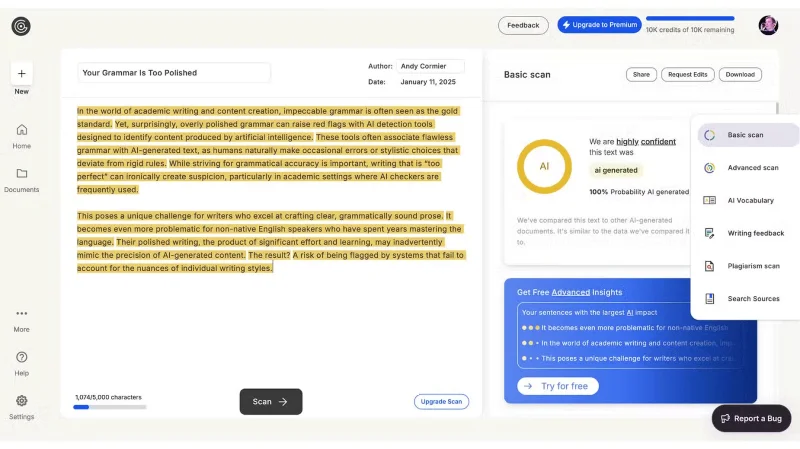
To illustrate, below is an article written by ChatGPT. The content was then pasted into GPTZero and the article was determined to be extremely likely to be written by AI at a 100% probability.
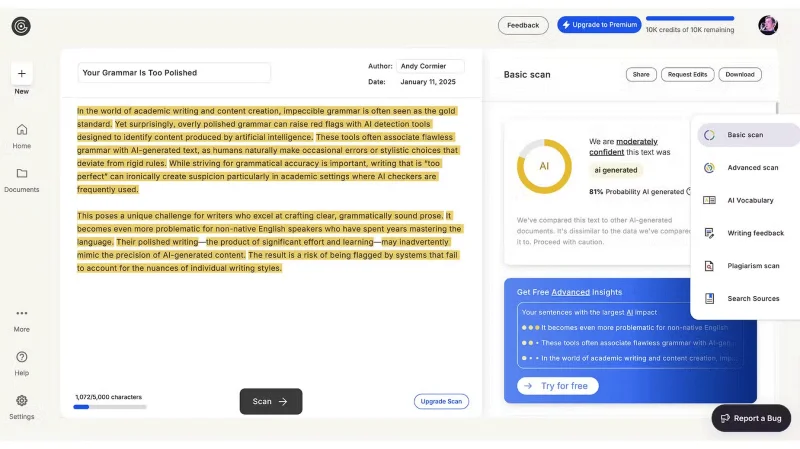
With a few minor grammar errors (removing some commas and adding typos), along with a few minor stylistic changes, the GPTZero score would drop significantly to 81%.
You use the same common words that AI uses.
When reading an article, many of us have developed an intuition about whether it was written by an AI, such as the passages and flowing words that AIs often use, such as “delve,” “highlight,” “underscore,” “pose,” “the world of,” “strive,” and countless other words and phrases. This is evidenced by the significant increase in the use of the word “delve” in academic research articles in 2023, which coincided with the release of ChatGPT .
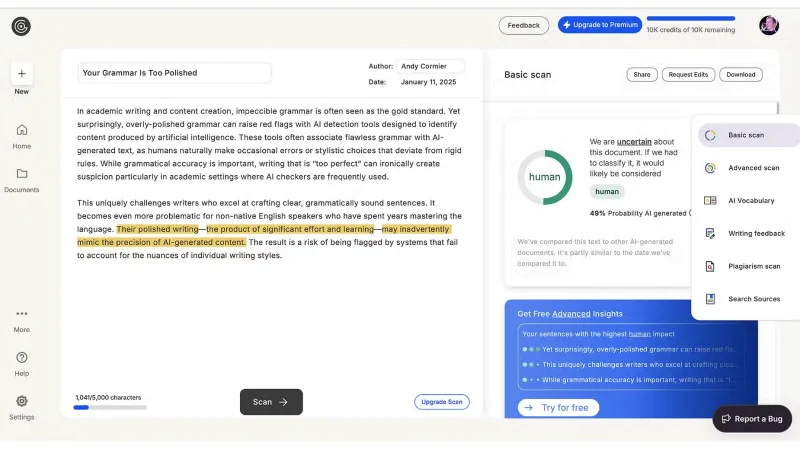
Using the same text as the previous example, if we make a few small changes to the most suspected AI-generated segments, the GPTZero score drops to 49% — a score that would be considered “human-written.” Clearly, AI checkers can be easily fooled with just a few small tweaks, and this is one of many examples that highlight their ineffectiveness.
When building large language models , AI companies often outsource data annotation to countries where English is a common second language. As a result, some of the words we associate with AI text, such as “delve,” may be the result of data annotations done by second-language English speakers who have those words in their vocabulary.
This, combined with the fact that many people who become fluent in English as a second language often know and understand grammar rules better than native speakers, who have a more intuitive approach, means that English as a second language users may face a double risk of being given a false positive result by the test tool, due to their grammatical and vocabulary choices that are consistent with the assessment criteria.
Using AI writing assistants can enable evaluation criteria
Both of these issues can be seen even without using Generative AI tools . If you actually try to write an original paper and use writing assistants like Grammarly, your paper is more likely to be marked as AI-written. This is definitely a gray area in academia, as these tools are often technically Generative AI assistants, and students often use them as a substitute for studying rather than a useful supplement.
So, when using tools like Grammarly, be careful not to rely on them too much and use Grammarly's suggestions as learning opportunities instead of accepting them mindlessly.
Copy results from ChatGPT
Finally, and most obviously, if you actually use ChatGPT and do nothing to modify its output, the checker will almost certainly flag your content as AI-generated; this is not a false positive. However, even if you are seriously trying to write completely original, unaided work, perfect grammar and certain vocabulary and phrasing choices can cause you to get false positives.
Sort leftover Halloween candy safely, share or repurpose sealed treats, and choose food use or compost for pumpkins based on their condition.
Compare workplace Halloween costume choices by respect, dress code, mobility, and safety—and learn when a subtle accessory or a policy check is the better option.
Find a couples costume that fits your style, budget, and comfort level, from Addams Family classics to original inside-joke duos.
Need a last-minute high school Halloween costume? Compare 10 easy closet-based ideas by prep time, comfort, school-day practicality, and simple safety checks.
Use a simple 2026 Halloween decorating timeline for indoor décor, outdoor displays, and fresh pumpkins, with practical adjustments for weather and events.
Mix five vivid, approachable Halloween cocktails with measured recipes, simple prep tips, and an alcohol-free option for your party guests.
Find 15 office-friendly Halloween costume ideas for 2026, with practical checks for dress codes, respectful themes, comfort, and workplace safety.
Plan a fun elementary school Halloween party with easy crafts, games, inclusive treats, costume tips, and a sample 75-minute classroom schedule.
Compare realistic side hustles for 2026 by startup cost, fees, flexibility, and income control, with current tax and scam guidance from official sources.
Upgrade your home office ergonomics with current OSHA and NIOSH guidance on chair fit, monitor height, laptop setup, lighting, and movement.








