BBC Licence Fee Projections: How Streaming and TV Rules Could Change
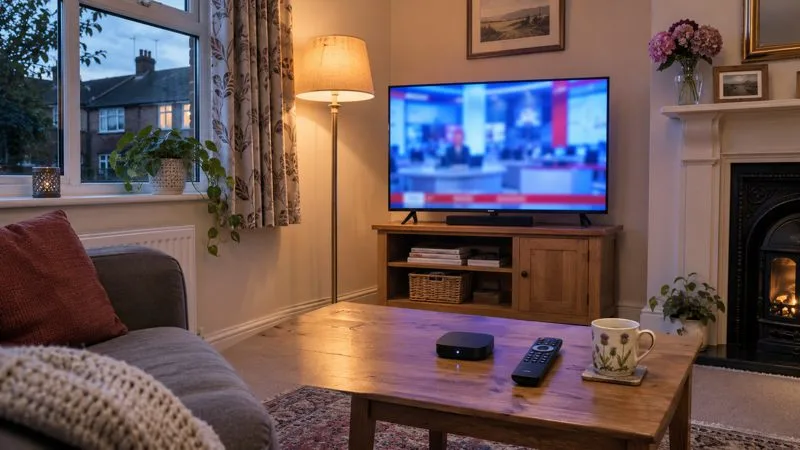
The UK’s BBC Charter Review is weighing licence fee reform as viewing shifts online. Here is what is confirmed, what could change, and what remains undecided.
Checked November 24, 2026, 4:42 a.m. GMT (UTC+00:00), London. The BBC’s next funding settlement is now central to the UK’s Charter Review, but future projections are not yet a new rulebook. The government has confirmed that the current annual color TV Licence rises to £180 from April 1, 2026, and that it will rise with inflation again in April 2027. Beyond that settlement, ministers are considering reforming the licence fee as part of the process for a new BBC Charter beginning in 2028.
That review matters to streaming audiences because it could change what counts as a contribution to public service broadcasting, how the BBC can distribute programming online, and whether the existing license requirement should apply more broadly. As of November 23, Parliament had not announced a settled extension to streaming-only homes. In October, a minister told the House of Lords that the government remained open to options and would set out its direction in a White Paper expected by the end of 2026.
The government’s Charter Review Green Paper, launched in December 2025, asked for views on a range of options to keep the BBC sustainable and fair for audiences. Those options include reforming the licence fee, updating concessions, and allowing the BBC to generate more commercial revenue. It also addresses independence, accountability, regional production, and public service obligations. A White Paper was expected during 2026, with the new Charter due to take effect in 2028.
These are policy options, not decisions. The government has separately set the fee through the end of the current Charter period: £180 annually from April 2026, with the £5.50 increase described as a 3.14% CPI uplift, followed by an inflation-linked increase in April 2027. The current Charter ends on December 31, 2027. That schedule is distinct from longer-term projections about how a successor system might work.
Under current GOV.UK guidance, a household needs a TV Licence to watch or record live television on any channel or service, or to use BBC iPlayer. A household watching only on-demand content on services such as Netflix, Disney+, Channel 4 streaming, or Amazon Prime Video does not need a licence on that basis alone. The relevant distinction is what people watch, not whether they use a television set, phone, tablet, or computer.
The possibility of changing that boundary reached Parliament in October 2026. Asked about extending the fee to households that use streaming services, the government said the Charter Review was considering a range of funding reforms and taking account of household bills, consumer choice, investment, and the creative economy. The minister did not confirm that streaming-only homes would be brought into scope. Comments made by individual peers, or reported proposals, should not be mistaken for an adopted policy.
The pressure is structural. The House of Commons Library says the licence fee produced £3.84 billion in 2024/25 and accounted for 65% of the BBC’s £5.90 billion total income. It also reports the BBC’s estimated evasion rate at 12.52% for that year, up from 6.95% in 2019/20. The Library attributes the rise partly to changing viewing habits and cost-of-living pressures. These figures explain why policymakers are considering whether a household-based charge remains workable as audiences move online.
At the same time, extending the charge could change consumer expectations and the competitive landscape. If a future system were linked to access to public-service content or to household status rather than particular viewing behavior, it might capture some people who currently rely only on subscription or free on-demand platforms. The government would need to specify scope, exemptions, collection, affordability protections, and how any rules interact with services that carry BBC content. That is a possible regulatory path, not a forecast that can yet be treated as certain.
The implications may extend beyond a line on a bill. The 2024 mid-term review led to changes that extend Ofcom’s regulation to BBC online public-service content. This reflects the shift from scheduled channels to digital distribution: public-service programming and accountability can no longer be considered only in the context of traditional broadcast television.
A new Charter could further clarify how public-service content is made available, how the BBC competes with commercial streamers, and how its publicly funded and commercial activities are separated. The government has explicitly included more commercial revenue among the options. In October’s Lords debate, a minister also acknowledged that the question of streamers using BBC resources without paying for them could be considered. That exchange signals an issue for policy debate; it does not establish a new payment obligation for platforms.
For households, the practical outcome depends on the final design. A broader base could spread the BBC’s funding burden across more homes, but it might also require stronger exemptions or income-sensitive support. A redesigned fee could change payment schedules or concessions while leaving on-demand-only use outside the licence. A larger commercial role could bring new revenue while raising questions about public-service priorities, advertising, and market impact. The Charter Review’s stated goal is a sustainable and fair model, but the trade-offs remain to be resolved.
For now, existing rules and the published fee schedule remain the useful guide. Viewers can check the GOV.UK licensing page for the current requirement and current concession information. People should not assume that a Netflix or Disney+ subscription alone triggers a licence, nor assume that the rule will never change. The government’s anticipated White Paper should show which options it prefers; legislation, Charter terms, or implementation details may still be needed before any long-term reform takes effect.
One important timing note: the next scheduled inflation-linked increase under the current settlement is April 2027. Any later price or coverage projection depends on future decisions and inflation, so a precise post-2027 household cost cannot yet be stated as fact.
No. On-demand streaming by itself does not require a TV Licence under current guidance. Watching live TV on any service or using BBC iPlayer does.
No such extension has been confirmed. The government is considering future funding options during the Charter Review.
The government told Parliament it expected to set out its policy direction in a White Paper by the end of 2026; the new BBC Charter is due to begin in 2028.
The UK’s BBC Charter Review is weighing licence fee reform as viewing shifts online. Here is what is confirmed, what could change, and what remains undecided.
NVIDIA shares jumped 31.48% after Jensen Huang returned as CEO. Here’s what the move, latest earnings and risks mean for tech investors.
Jensen Huang’s return as Nvidia CEO drove a 31.5% one-day stock jump. Here’s what’s confirmed, why searches surged, and what investors should watch next.
The UK licence fee is £180 for 2026/27, with another CPI-linked rise scheduled for April 2027. See what Parliament’s long-range projections say—and what remains undecided.
GTA VI is set in Leonida, but Rockstar has not announced a GTA Online character or asset transfer. Here is what current migration rules mean for players.
GTA VI launched with Leonida and an official map, but Rockstar has not confirmed a GTA Online move, multiplayer release date, or character transfer.
Explore how Leonida could transform GTA Online racing, cooperative missions and shared-world exploration, and what Rockstar has actually confirmed.
The DWTS Season 35 finale airs live coast-to-coast Nov. 24. See ABC and Disney+ viewing times, voting limits, eligibility, replay details and how to make your votes count.
The DWTS Season 35 finale airs live Tuesday, Nov. 24, at 8 p.m. ET on ABC and Disney+. See U.S. time-zone start times, the West Coast encore, and Hulu streaming date.
Find out when November’s Beaver Moon reaches its full phase, why it is a supermoon, and how to see it across the United States on November 23–24.