BBC Licence Fee Projections: How Streaming and TV Rules Could Change
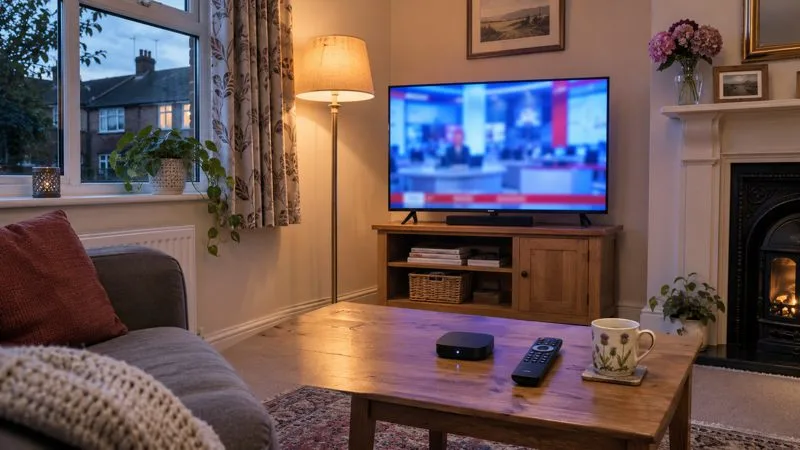
The UK’s BBC Charter Review is weighing licence fee reform as viewing shifts online. Here is what is confirmed, what could change, and what remains undecided.
Checked November 24, 2026, at 4:24 a.m. UTC (UTC+00:00).
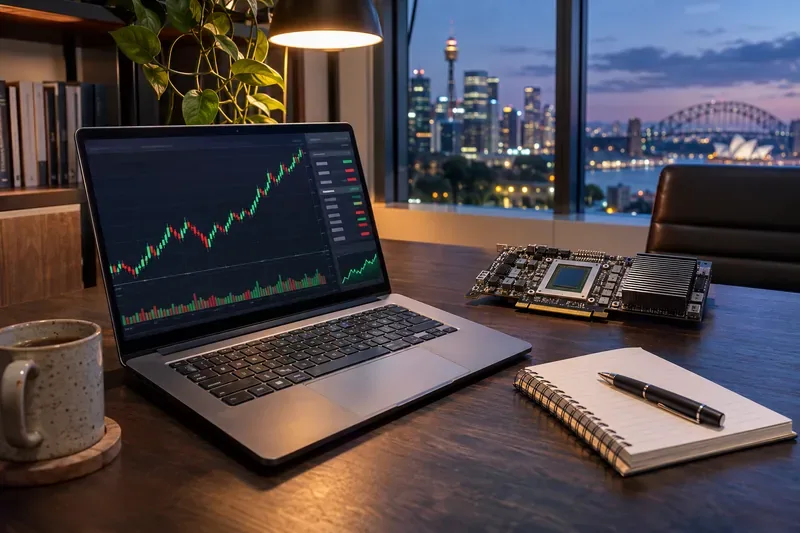
Jensen Huang and Nvidia are dominating market searches because a sudden leadership reversal landed on top of an unusually volatile stretch for the AI trade. Nvidia announced on November 23 that its board had reinstated Huang as president and chief executive, less than two weeks after the company said he had resigned. Reuters reported that NVDA shares finished the November 23 session up 31.5%, a dramatic one-day move that made the story both a corporate-governance headline and a market event.
The move is real, but it is not proof that the stock’s risks disappeared or that Huang’s return alone explains every point of the rally. Nvidia had just reported another quarter of rapid growth, while broader U.S. shares were also rebounding after a sharp sell-off. For Australian readers tracking the company, the essential distinction is between the confirmed leadership change, the share-price reaction, and the unanswered questions about why the board reversed course and what comes next.
Nvidia’s November 12 announcement said Huang had resigned as president, CEO, and a member of the board, effective immediately. CFO Colette Kress was appointed interim CEO, and the board said it would search for a permanent successor. The company’s public statement did not give a detailed explanation for the resignation.
On November 23, Nvidia announced that the board had voted unanimously to reinstate Huang after a series of discussions and meetings. The company said the board was satisfied with his candor and ability to lead. Its statement also said the board received input from senior U.S. government officials and, based on that input, was confident the reinstatement posed no national-security risk. Huang resumed the CEO and board roles; Kress remained CFO. Nvidia’s Form 8-K states that the board action took place on November 22 and was effective immediately.
The short gap between the resignation and return is the main reason the word “back” became such a strong search hook. Investors were not just reacting to a normal succession announcement: they had to process a sudden exit, an interim-CEO plan, and a reversal before a permanent replacement was named. The board’s decision also drew attention to how much leadership continuity and governance matter at a company so closely associated with its co-founder.
Read Nvidia’s reinstatement announcement, the SEC Form 8-K, and the company’s November 12 CEO-transition release.
The immediate catalyst was the board’s announcement that Huang was returning. Reuters reported that the shares rose 31.5% at the close on November 23. That close was at 4:00 p.m. New York time, Eastern Standard Time (UTC−05:00), which was 9:00 p.m. UTC. The percentage is a reported market result, not a forecast or a measure of the company’s long-term value.
Huang is more than a public face for Nvidia. He has led the company through its shift from a graphics-chip maker into a central supplier of accelerated computing and AI systems. The company’s results underscore why investors treat its leadership as consequential: for the quarter ended October 25, Nvidia reported $115.8 billion in revenue, up 103% from a year earlier, including $107.6 billion from its Data Center business. Those numbers were released on November 17, before the board announced Huang’s return, so they help explain the underlying attention but did not trigger the November 23 jump.
There was also a wider market backdrop. The Associated Press reported that U.S. stocks were already set to rebound after a difficult week and that the S&P 500 and Nasdaq Composite rose sharply on November 23. It described Huang’s return as a catalyst that helped push the rally further. That context matters: daily stock moves can reflect company news, sector sentiment, positioning, and broader market flows at once. A close-to-close gain cannot isolate one cause.
See Nvidia’s third-quarter fiscal 2027 results, Reuters’ report on Huang’s return and the share reaction, and Nasdaq’s regular trading hours.
No. A sharp rebound can reverse part of a prior decline without resolving the questions that produced volatility. Reuters noted that the November 23 gains did not erase all the losses since Huang’s resignation. The company’s board has announced its decision, but investors may still assess the process, the board’s independence, and the stability of leadership. These are issues to monitor, not conclusions about future performance.
The business outlook also remains separate from the CEO headline. Nvidia’s November 17 release projected $130 billion in revenue for its fiscal fourth quarter, plus or minus 3%, and said its outlook did not assume Data Center compute revenue from China. That guidance is a company forecast, not a guarantee. Demand from cloud providers and other AI customers, supply capacity, competition, export controls, and the cost of building data centers can all affect whether expected growth translates into earnings and cash flow.
For investors following NVDA from Australia, keep the timestamps and currencies straight: the 31.5% move describes the U.S. dollar share price over the Nasdaq session on November 23, not an Australian-dollar return. The AUD result for an Australian holder can differ because of exchange-rate movements, brokerage costs, taxes, and the investor’s purchase price. The extraordinary one-day rise also does not establish that shares will keep moving in the same direction.
The next useful signals are Nvidia’s updates on execution and its product roadmap, any further board or governance disclosures, and the company’s next financial results. Watch whether revenue and margins support the expectations embedded in the price, and whether the AI infrastructure spending cycle continues. Search interest can flag what has caught public attention; it cannot tell readers whether NVDA is cheap, fairly valued, or suitable for a particular portfolio.
Nvidia reinstated him as CEO and board member on November 23, less than two weeks after announcing his resignation.
Reuters reported that NVDA closed 31.5% higher in the Nasdaq session.
No. One-day price action does not guarantee future returns; investors still face company, industry, governance, currency, and valuation risks.
The UK’s BBC Charter Review is weighing licence fee reform as viewing shifts online. Here is what is confirmed, what could change, and what remains undecided.
NVIDIA shares jumped 31.48% after Jensen Huang returned as CEO. Here’s what the move, latest earnings and risks mean for tech investors.
Jensen Huang’s return as Nvidia CEO drove a 31.5% one-day stock jump. Here’s what’s confirmed, why searches surged, and what investors should watch next.
The UK licence fee is £180 for 2026/27, with another CPI-linked rise scheduled for April 2027. See what Parliament’s long-range projections say—and what remains undecided.
GTA VI is set in Leonida, but Rockstar has not announced a GTA Online character or asset transfer. Here is what current migration rules mean for players.
GTA VI launched with Leonida and an official map, but Rockstar has not confirmed a GTA Online move, multiplayer release date, or character transfer.
Explore how Leonida could transform GTA Online racing, cooperative missions and shared-world exploration, and what Rockstar has actually confirmed.
The DWTS Season 35 finale airs live coast-to-coast Nov. 24. See ABC and Disney+ viewing times, voting limits, eligibility, replay details and how to make your votes count.
The DWTS Season 35 finale airs live Tuesday, Nov. 24, at 8 p.m. ET on ABC and Disney+. See U.S. time-zone start times, the West Coast encore, and Hulu streaming date.
Find out when November’s Beaver Moon reaches its full phase, why it is a supermoon, and how to see it across the United States on November 23–24.