Home
» Today
»
Bird Flu Outbreak: Are Chicken and Eggs Safe for UK Shoppers?
Bird Flu Outbreak: Are Chicken and Eggs Safe for UK Shoppers?
For UK shoppers, the current bird flu outbreak is not a reason to stop buying chicken or eggs. The Food Standards Agency (FSA) says avian influenza poses a very low food-safety risk to consumers, and properly cooked poultry and poultry products, including eggs, are safe to eat. Keep following standard food-handling and cooking advice; the main public-health precaution is to avoid close contact with sick or dead birds.
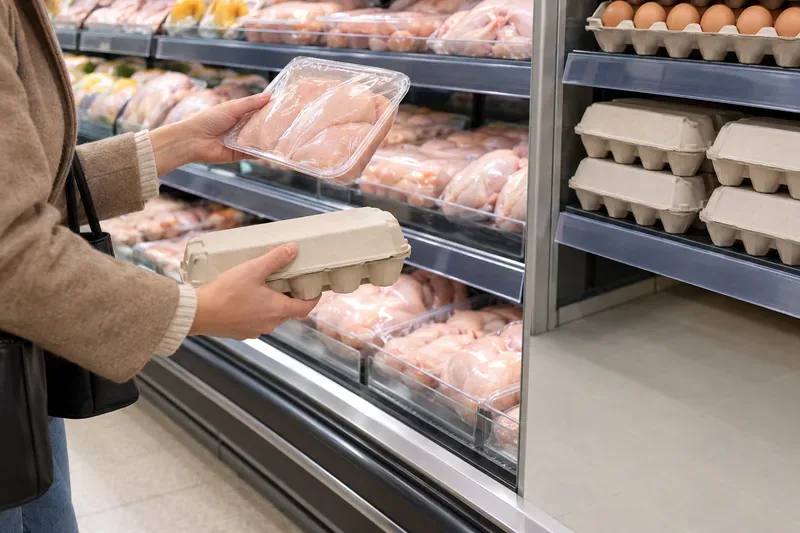
A shopper selects sealed chicken and eggs from a refrigerated display.
What the latest UK outbreak report says
The official UK bird flu case page lists two poultry outbreaks for the 2026–27 season as of its October 19, 2026 update. H5N5 was confirmed in poultry at Ness on the Isle of Lewis, Scotland, on October 2. H5N1 was confirmed in commercial poultry near Belford in Northumberland, England, on October 19. The report lists one case in England and one in Scotland, with none in Wales or Northern Ireland at that point. These are cases in birds, not reported cases in people.
Authorities declared protection and surveillance zones around both affected premises. These zones set animal-health controls in areas near an outbreak, including rules for moving birds and related materials. They are not, by themselves, a nationwide warning that chicken or eggs in stores are unsafe. The outbreak page is a changing record, so check the latest official UK bird flu situation for new cases or zone changes.
What shoppers should do
Keep normal poultry and egg choices
There is no general FSA advice for UK consumers to avoid poultry or eggs because of these outbreaks. You do not need to switch to a different protein, throw away food already in your kitchen, or avoid a whole region based only on a nearby farm case. Continue to check packaging, use-by dates, and any product-specific notice as you normally would. For Scotland, see Food Standards Scotland’s cooking guidance; Northern Ireland shoppers can also consult DAERA’s current bird flu advice.
Cook poultry thoroughly and prevent cross-contamination
Follow the cooking directions on the package and make sure poultry is steaming hot throughout, with no pink meat and clear juices. If you use a food thermometer, follow the safe temperature guidance for your location and the food you are preparing. Keep raw poultry and its juices away from ready-to-eat foods, wash your hands and kitchen surfaces after handling it, and refrigerate it as directed. These are routine safeguards against foodborne illness; the low bird flu risk is not a reason to undercook food.
Eggs remain part of the FSA’s advice that poultry products are safe when properly handled and cooked. Bird flu does not create a new rule to avoid eggs. Continue to use eggs according to their label and follow any existing advice that applies to children, pregnant people, older adults, or people with weakened immune systems, especially for raw or lightly cooked egg dishes.
Do not confuse an outbreak zone with a product recall
A farm disease-control zone and a grocery-product recall are different notices with different purposes. A zone helps control animal disease around an affected premises; a recall identifies a particular product and tells customers what to do. Do not infer that a product is recalled from an outbreak headline alone. If a food business or regulator issues a notice naming a product, brand, or batch, follow that notice’s instructions. Check the FSA’s food and allergy alerts for England, Scotland, and Wales, and the relevant DAERA notices for Northern Ireland.
Keep distance from sick or dead wild birds
The food advice does not remove the separate warning about direct contact with birds. UK health authorities say the risk to the general public is very low, while infection can follow close contact with infected birds or their droppings. Do not touch or move a sick or dead wild bird. In England, Scotland, and Wales, you can report dead wild birds through GOV.UK; in Northern Ireland, use DAERA’s reporting service. Not every report leads to collection, but reports help authorities monitor disease.
If you have had close contact with a bird and then develop flu-like symptoms, get advice from NHS 111 and mention the exposure. Seek urgent help for severe breathing difficulty. This is a precaution for possible exposure, not a reason for ordinary shoppers to worry about handling sealed food from a supermarket.
What would change the advice?
Change your shopping or meal plan if an official food alert identifies a product you bought, or if public authorities issue new consumer advice. A growing number of bird cases alone does not automatically change the FSA’s food-safety guidance. The useful result for shoppers is simple: continue normal purchases, cook poultry thoroughly, handle raw meat hygienically, and use official notices for specific instructions. The guidance is a snapshot of the evidence available now, so check the linked government pages again if reports change.