Home
» Today
»
Buying a Used EV in Australia: 8 Checks for Battery Health, Range and Charging
Buying a Used EV in Australia: 8 Checks for Battery Health, Range and Charging
A used electric vehicle can be a good fit when its remaining range, battery condition, and charging setup match your routine. The dashboard estimate alone cannot answer all three questions. Before you agree to a price, compare a battery health report with the car’s history, drive it, confirm that you can charge it where you live and travel, and check the vehicle’s records.
This checklist is for battery-electric cars and can also help with plug-in hybrids, whose smaller traction batteries and fuel systems need separate checks. Ask the seller for permission to inspect and charge the vehicle, and arrange a qualified independent inspection when possible.
What should you check before buying a used EV?
1. Ask for a battery State of Health report
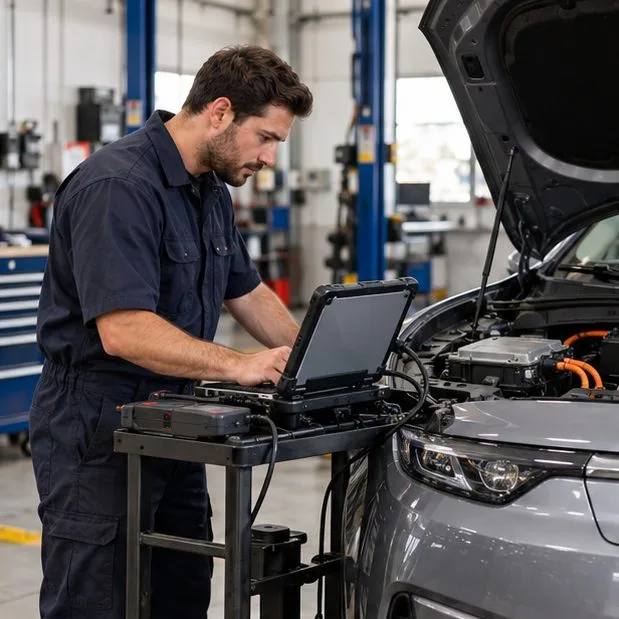
An EV technician works beside a gray car with diagnostic equipment during an inspection.
Request a recent battery State of Health (SoH) report from the seller or dealer. Australia’s Department of Climate Change, Energy, the Environment and Water explains that SoH compares a battery’s current condition and performance with when it was new. It is usually expressed as a percentage, and many EVs also show battery information through onboard diagnostics or an app. An independent assessment can add useful context.
Check that the report identifies the vehicle and includes its date and odometer reading. Ask the provider or an EV-qualified mechanic what the test measures and what its result means for this model. A percentage is one part of the decision: compare it with the car’s usable range, warranty, history, and intended price instead of treating one number as a universal pass-or-fail cutoff. If there is no report, ask whether the seller will allow an independent battery check before purchase.
2. Verify the warranty and service history
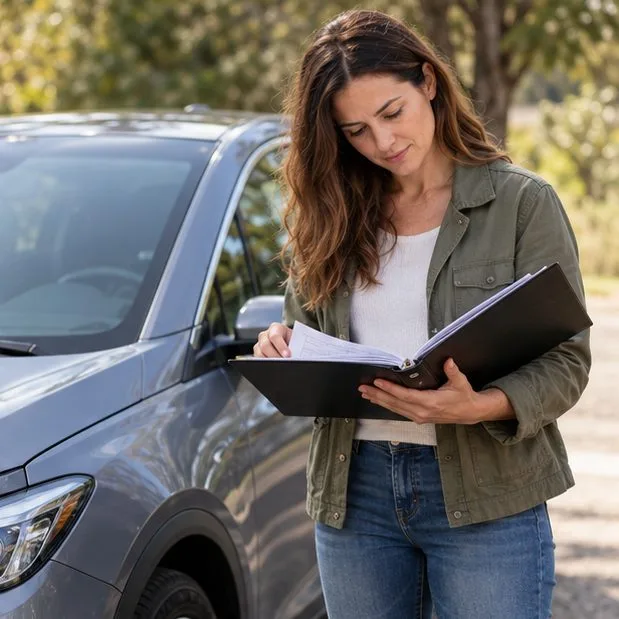
A buyer reviews vehicle documents beside a used car before making a decision.
Match the service records to the vehicle identification number (VIN), dates, and odometer. Look for scheduled servicing, repair invoices, and any documented work on the battery, charging system, or high-voltage components. Ask for details about any battery or module replacement, including who performed the work and whether the records include a warranty.
Battery warranty terms differ by manufacturer, model, and vehicle. Australian government guidance says many EV battery warranties are eight years or 160,000 kilometers, but those figures do not guarantee coverage for a particular used car. Check the original warranty booklet or manufacturer directly for the in-service date, distance limit, coverage conditions, remaining term, and transfer rules. Ask whether servicing requirements have been met.
3. Compare the published range with your regular trips
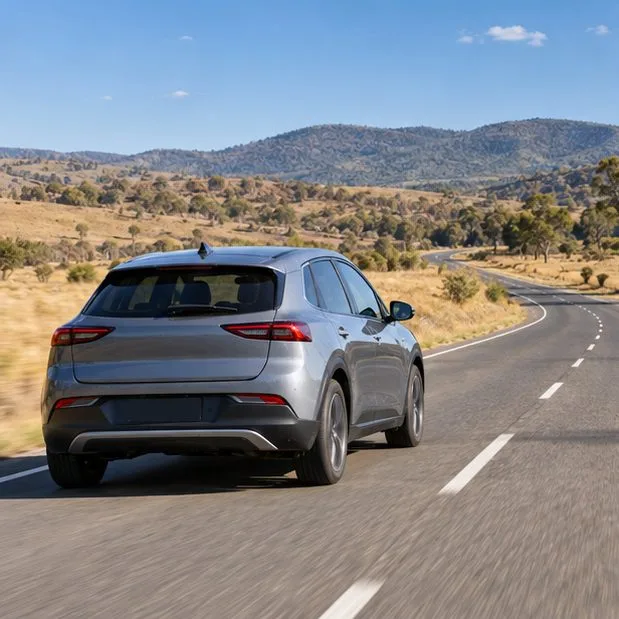
An electric car travels along a regional road, illustrating the distance needs to consider before buying.
Start with the journeys you make most often: daily driving, regular work or family trips, and the longer route you expect the car to handle. Include the return leg and identify charging options along the route. Then compare the specific car’s advertised range and energy consumption with that plan.
In Australia, WLTP is a commonly used test standard. Compare figures measured under the same protocol because the same vehicle can have different published range numbers under different tests. Test-cycle figures are a comparison aid, not a promise of what this used car will deliver. Actual range varies with driving style, speed, terrain, weather, vehicle load, and use of heating or air conditioning. Use the manufacturer’s manual and vehicle-specific information for context.
4. Take a test drive and observe energy use
Drive a route that resembles your normal use, with the seller’s approval. Before and after the drive, note the battery percentage, distance traveled, and any energy-use information the car displays. Pay attention to warning messages, charging alerts, and whether the drive feels consistent with the condition described in the report and records.
A short test drive cannot certify the full battery capacity or prove the car’s maximum range. Treat the displayed remaining-distance estimate as one observation, not a battery-health diagnosis. If the estimate changes sharply or a warning appears, ask the seller for an explanation and have the vehicle assessed by an EV-qualified technician before relying on it.
5. Confirm plug type, cable, and port condition
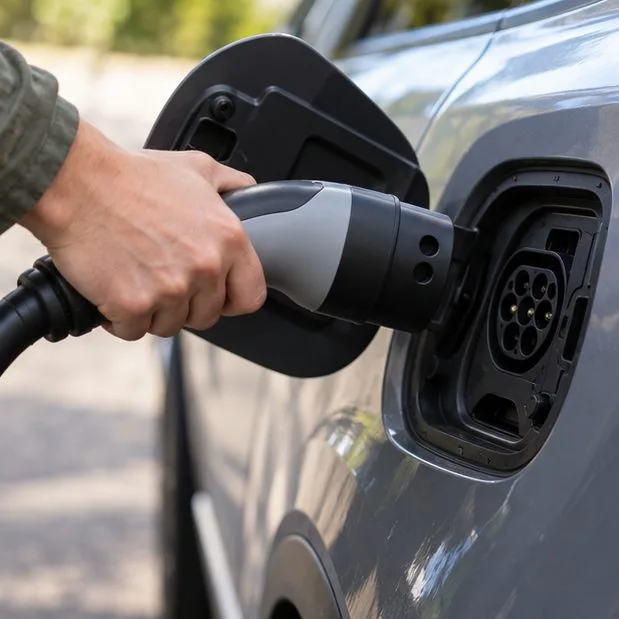
A connector meets an open EV charging port; check that the car, cable, and charger are compatible.
Inspect the car’s charging port and check its connector types against the owner’s manual and the chargers you expect to use. Australian guidance identifies Type 2 for slower AC charging, CCS2 as the standard DC fast-charging plug, and CHAdeMO as an older DC option used by a limited selection of vehicles. Do not assume that two EVs from the same model year have identical charging equipment.
Ask whether an AC charging cable is included. Many public AC chargers require drivers to bring their own Type 2 cable, while DC fast chargers have an attached cable. Check the cable, plug, and port for visible wear or damage, and confirm that the cable is suitable for this vehicle. Use a charging map or provider app to check connector availability on the routes you plan to drive.
6. Test an AC charge and check your home setup
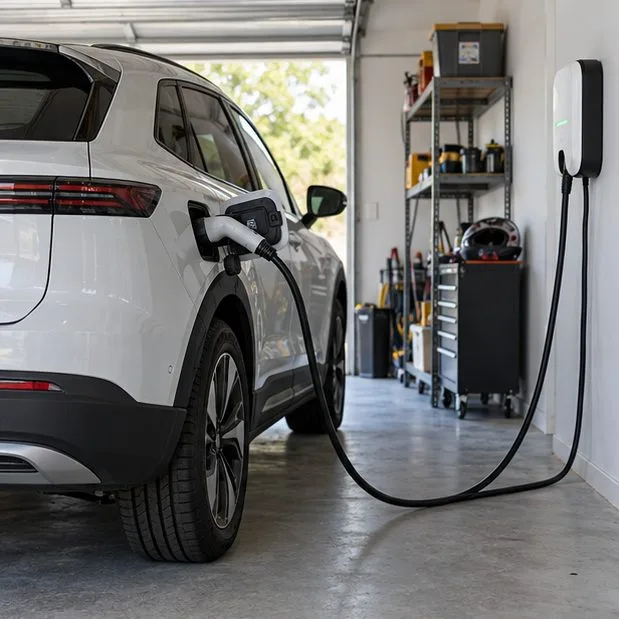
A used EV connected to a home charger, a practical setup to check before purchase.
If practical, ask to start a charge on an AC charger compatible with the car. Confirm that the cable locks in place, the session begins, the vehicle indicates that it is charging, and no warning appears. A charging rate can depend on the charger and the car’s own AC limit, so compare the result with the specifications for both rather than expecting every car to take the charger’s maximum output.
Think through where you will charge at home. A standard power point may be sufficient for some driving patterns; a dedicated home charger must be installed by a licensed electrician and may require electrical upgrades. Apartment and strata residents may need building approval. The Green Vehicle Guide’s home charging calculator can estimate time and cost using charger rate, battery size, and your electricity tariff. Public charging prices and home electricity costs vary, so use your own plan and likely charging mix.
7. Confirm DC fast charging if it matters to your trips
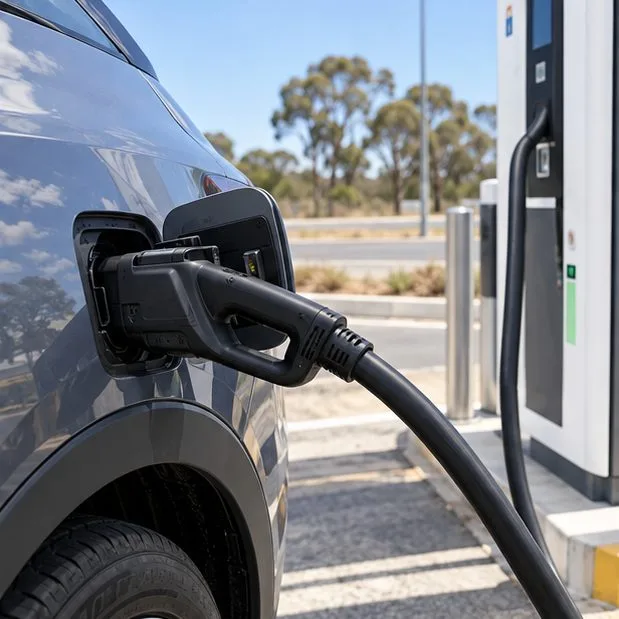
A tethered cable connects an EV to a public fast charger during a compatibility check.
If longer drives are part of your routine and the vehicle supports DC fast charging, arrange a brief charging check at a compatible public station. Confirm that the connector fits, the charging session starts, and the car does not display an error. Use a station that matches the car’s connector, and follow the vehicle’s instructions.
Do not judge the battery from one charging-rate reading. The charger’s power, the car’s maximum acceptance rate, the battery’s state of charge, and other conditions affect the session. Ask the seller for the vehicle’s documented charging specifications and check the owner’s manual. The key buyer question is whether this specific car can use the charging network and charging speed your regular journeys require.
8. Arrange an EV inspection and check the vehicle records
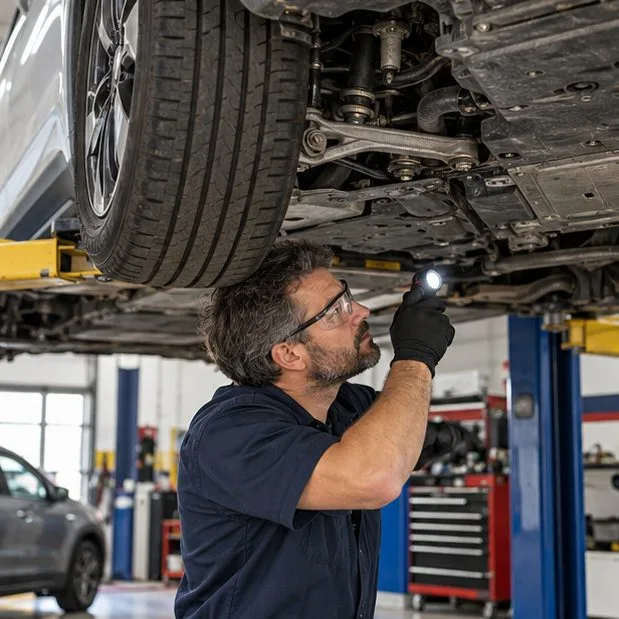
A mechanic checks a vehicle’s tire and underside during a pre-purchase inspection.
Have an independent mechanic experienced with EVs inspect the car. Ask them to check ordinary used-car items as well as EV-specific components, including tires, suspension, brakes, charging equipment, warning codes, and visible damage to the battery enclosure or underbody. The Department’s used-EV guidance recommends a pre-purchase inspection by a mechanic experienced with EVs. Request a written report and price estimates for any work identified; an inspection can find issues but cannot promise that no future repair will be needed.
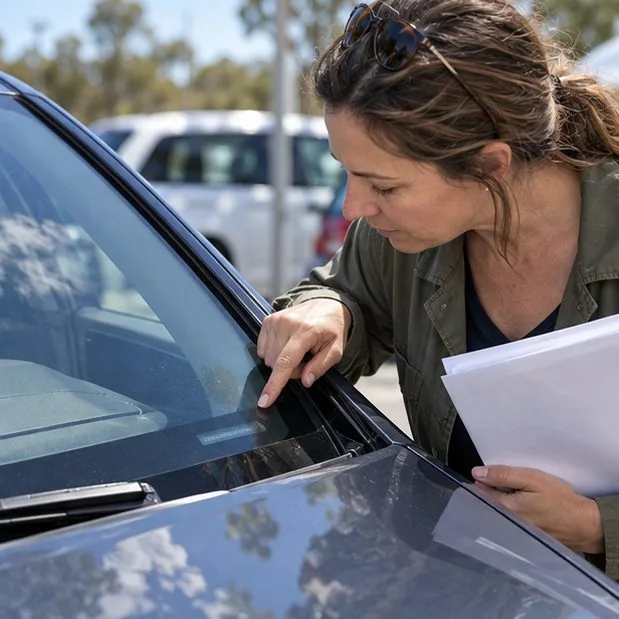
A buyer checks the VIN area at a windshield while holding the vehicle paperwork.
Compare the VIN on the car with the registration and sale paperwork. For a private sale or auction, the ACCC recommends checking the Personal Property Securities Register (PPSR): its $2 vehicle search can show whether money is owing and may show if the car is recorded as stolen or written off. Check the Australian Government’s vehicle recall service for an active recall, then ask the seller or manufacturer whether required recall work is complete. Consumer protections vary by sale type and state or territory; the ACCC notes that most consumer guarantees and state and territory laws do not apply to cars bought privately or at auction.
When is a used EV ready to buy?
A stronger purchase case is one where the battery report, service record, warranty status, range needs, charging compatibility, and inspection findings tell a consistent story. Keep the price and expected charging costs in view, and get repair estimates in writing if the inspection finds work. A missing record or warning is a reason to ask questions and verify details; it is not, by itself, proof of a specific fault.
Before signing, make sure you understand how and where you will charge, what connectors and cables come with the car, and what warranty remains. If the numbers or documents do not line up, pause until the seller, manufacturer, or an independent EV specialist can clarify them. The safest decision is based on evidence about the individual vehicle and your own driving pattern.