Home
» Today
»
Brazil Election Results: What to Know About Lula’s Win
Brazil Election Results: What to Know About Lula’s Win
Updated October 26, 2026: Brazil’s Superior Electoral Court (TSE) has declared President Luiz Inácio Lula da Silva the winner of the October 25 presidential runoff. Lula received 51.79% of valid votes, defeating Senator Flávio Bolsonaro, who received 48.21%. The final count gives readers a clear result; understanding the percentages, the close first round, and the official ballot records helps put that result in context.
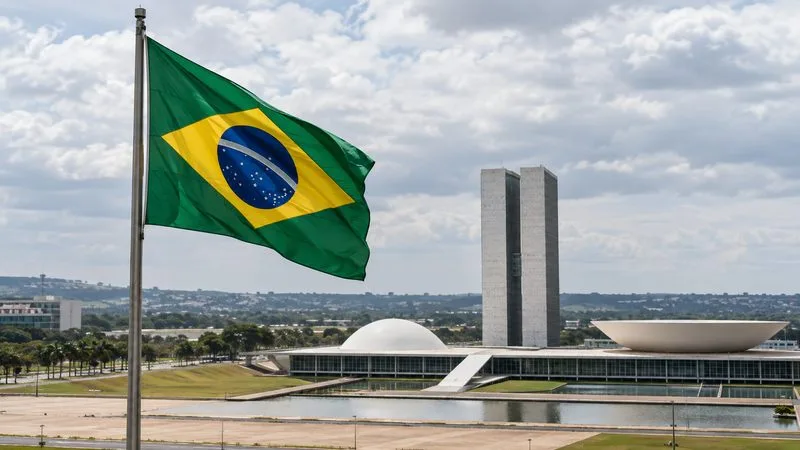
Brazil’s national flag flies in front of the National Congress in Brasília.
Brazil election results: Lula wins the 2026 runoff
The TSE announced the result on Sunday, October 25. Its published tally lists the following totals for the presidential runoff:
Candidate
Party
Votes
Share of valid votes
Luiz Inácio Lula da Silva
Workers’ Party (PT)
64,256,232
51.79%
Flávio Bolsonaro
Liberal Party (PL)
59,826,041
48.21%
The difference was 4,430,191 votes, or 3.58 percentage points. That margin is calculated from the TSE’s published totals and percentages. The percentages refer to valid votes, not to every registered voter or every person in Brazil. Blank and null ballots are recorded separately and do not count as valid votes for a candidate.
The TSE reported that about 128.2 million of more than 158 million eligible voters went to the polls in the runoff. It put abstention at about 19.2%. That turnout figure is useful context, but it does not change the denominator used for the candidates’ 51.79% and 48.21% shares.
Why there was a runoff
Brazil held the first round on Sunday, October 4, 2026, and the runoff on Sunday, October 25. In the first-round count reported by the TSE, Flávio Bolsonaro received 47.03% of valid votes and Lula received 45.16%. The TSE identified them as the two candidates advancing to the presidential runoff. The October 25 tally is the result that decided the presidency; the October 4 figures show how the contest reached that final round.
This distinction matters when checking charts and posts online. A first-round result, an early partial count, or a map showing one state is not the same as the completed national runoff total. Always check the election round, the reporting status, and whether a figure is a candidate’s percentage of valid votes or a count of ballots.
What Lula’s reelection means—and what it does not establish
Lula served as president from 2003 through 2010 and is completing a third term from 2023 through 2026. His reelection gives him a fourth presidential term overall, after a break between his earlier terms and his return to office. The TSE’s electoral calendar sets the inauguration of the newly elected president and vice president for January 5, 2027.
The result determines who will lead Brazil’s executive branch for the next term. It does not, by itself, show that every policy proposal will pass or that every voter supports the new administration. Brazil’s 2026 general election also covered governors, senators, federal deputies, and state or district deputies. Those races affect the political environment in which a president governs, so readers should check the TSE’s results by office and state instead of inferring the balance of Congress from the presidential vote alone.
For U.S. readers following “Lula Brazil” searches, the practical takeaway is to separate confirmed election facts from expectations about the next administration. The result confirms Lula’s reelection. Future decisions on trade, climate, social programs, and foreign relations will depend on policy announcements and the legislative process after the transition; the presidential result alone does not settle those questions.
How to verify the official result
Use the TSE’s official Resultados portal and select the 2026 general election’s second round. The system lets users explore results by country, state, municipality, or electoral zone and by office or candidate. It also reports the number of polling sections counted and voter participation. These filters help readers check whether a claim refers to the national presidential outcome or to a smaller geographic area.
The TSE also explains how its Boletim na Mão app can scan the QR code on a polling section’s printed Boletim de Urna (BU). The BU is the record of the count at that section. Comparing a section-level bulletin with the corresponding TSE result is a more useful check than relying on an unlabelled screenshot. Confirm that the election round and polling section match, and remember that a partial count may change as additional bulletins are processed.
What happened with the voting-hours extension?
On October 25, an interim order from Brazil’s Supreme Federal Court (STF) extended voting from 5:00 p.m. to 7:00 p.m. Brasília time for polling sections that were still open at the scheduled closing. Brasília time on that date was Brasília Time (BRT, UTC−03:00), so the extension ran from 20:00 to 22:00 UTC. The TSE said it would resume receiving ballot bulletins and totalizing votes after 7:00 p.m. Brasília time.
This was a documented procedural change, and the TSE later announced Lula’s reelection. The extension alone does not establish that the official tally was changed or invalid. To assess a claim about a particular polling place or a legal challenge, look for the related TSE record, court decision, or ballot bulletin; do not treat an unsourced post as proof of an outcome change.
What to watch next
The next fixed milestone is the January 5, 2027 inauguration. Between the election and the start of the new term, look for official transition announcements and for the finalized results in the legislative and state contests. If your question is whether a specific policy will change, wait for a formal proposal, an executive decision, or legislation rather than treating campaign statements as enacted policy.
A reliable reading of Brazil’s election results comes down to four checks: use the TSE’s final national runoff tally; distinguish valid-vote share from turnout; keep first-round and runoff figures separate; and verify procedural or fraud claims against official records. Those checks clarify what Lula won while leaving unresolved questions about future policy where they belong: in the post-election record.