Home
» Today
»
Cruise Safety and Passenger Rights: What Canadian Travellers Should Know | Nov. 25, 2026
Cruise Safety and Passenger Rights: What Canadian Travellers Should Know | Nov. 25, 2026
Updated: November 25, 2026, 12:06 p.m. UTC (7:06 a.m. EST).
After a guest was reported overboard from Royal Caribbean’s Allure of the Seas off the Bahamas late November 23, the ship joined a search and rescue operation and its itinerary changed. CBS News, citing the U.S. Coast Guard and Bahamian officials, reported that the Royal Bahamas Defence Force was leading the search with Coast Guard support. Passengers on other sailings should take away a practical lesson: when an emergency changes a cruise, follow crew instructions, get itinerary changes in writing and check the specific ticket contract and insurance policy before assuming a refund is owed.
The incident is a reminder of the stakes of shipboard safety, but public reporting has not established the circumstances of the fall or whether any safety failure occurred. This article focuses on passenger actions and rights, rather than speculating about the investigation.
Destaques
Report an immediate safety concern to ship staff or security and follow crew directions.
Keep written records of itinerary changes, announcements, expenses and claim reference numbers.
For a cancelled port or delayed return, check the cruise contract and insurance wording; compensation is not automatic in every case.
Canadian government advice recommends checking destination advisories and arranging suitable travel health and interruption coverage.
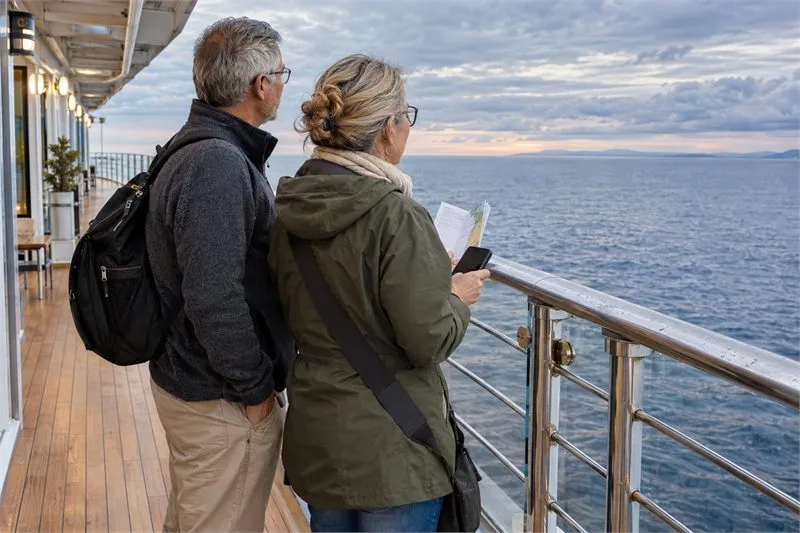
Illustrative image: passengers checking travel information aboard a cruise ship. It does not depict Allure of the Seas or the reported incident.
What happened on Allure of the Seas?
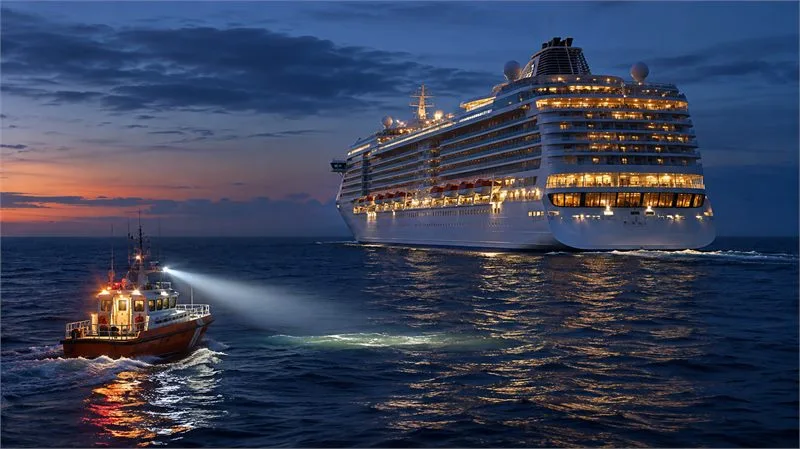
In a November 24 report, CBS News reported that the ship alerted the U.S. Coast Guard and Royal Bahamas Defence Force at about 11:30 p.m. Monday about a man overboard off San Salvador Island. Bahamian authorities led the search with Coast Guard support. The news report also described the ship turning back and said Royal Caribbean had not provided further public details at that point. Details such as the guest’s identity and the circumstances remain unconfirmed in the reporting cited here.
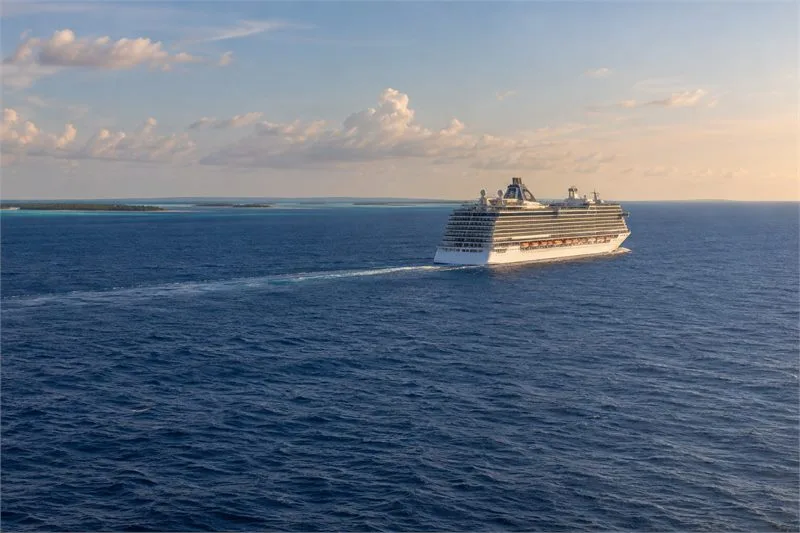
For travellers, the immediate consequence was an interrupted voyage. A report published Nov. 25 said the ship would miss its planned St. Maarten call. That illustrates how a search, medical emergency or other safety response can change ports and arrival timing. It does not, by itself, establish a passenger’s entitlement to compensation.
What should cruise passengers do during an emergency?
If you witness someone in danger, alert a crew member immediately and give the location, time and details you observed. Do not climb over, lean across or bypass safety barriers to try a rescue. Follow announcements and crew directions, and keep passageways clear for responders. If you are directly affected, ask the ship’s guest services or security team how to report the matter and how to obtain a written record.
For an itinerary disruption, save messages from the ship, app notifications and revised schedules. Note the date, time and names or roles of staff you speak with. Keep receipts for meals, accommodation, transport or missed connections, and contact your travel insurer promptly if you incur extra costs. Ask the cruise line what it will provide and whether any excursion booked through it will be refunded; get the answer in writing.
What rights do Canadian cruise passengers have when a port is cancelled?
There is no single Canadian rule that guarantees a refund every time a cruise skips a port. The result may depend on the passenger ticket contract, where the cruise was purchased, applicable provincial or territorial consumer rules, the reason for the change and the exact loss. Royal Caribbean’s Canadian guest terms, for example, reserve broad discretion to alter an itinerary in specified circumstances, including medical or lifesaving emergencies. Read the terms that apply to your own booking.
Transport Canada’s Coasting Trade Act guidance addresses when a foreign vessel’s changed Canadian embarkation or disembarkation arrangements may require a licence. It explains that the Act applies to the vessel and operator, not to passengers requesting to embark or disembark. It is not a general compensation scheme for a missed port.
If you believe the cruise line or seller has not met its contractual obligations, make a written complaint to the company and travel seller, keep the response, then consult the consumer protection office in your province or territory. For a charge dispute, ask your card issuer about its process and deadlines. These routes do not guarantee a successful claim; the documents and governing terms matter.
Will travel insurance cover a changed cruise itinerary?
Coverage depends on the policy, trigger, exclusions, limits and whether the expense is eligible. The Government of Canada’s cruise travel guidance recommends reviewing travel health and trip interruption insurance and checking travel advisories for departure, arrival and port destinations. Before buying, ask the insurer specifically about onboard medical treatment, emergency evacuation, missed connections and extra accommodation or transport costs. Keep receipts and contact the insurer’s assistance line before arranging costly services when possible.
For Canadian domestic cruises, Transport Canada also describes passenger-vessel insurance requirements for qualifying voyages departing Canada, including voyages that travel outside Canadian waters and return to Canada. That requirement concerns insurance held for passenger vessel liability; it is not a substitute for personal travel insurance.
How can passengers prepare before boarding?
Read the ticket contract, including itinerary-change, medical, complaint and claim deadlines.
Save the cruise line’s emergency contact, insurer assistance number and booking documents offline.
Review the Government of Canada advisories for each destination and share your itinerary with someone at home.
Attend the safety briefing, locate your muster station and pay attention to rules around railings and restricted areas.
Check how your policy treats medical care at sea and evacuation, and confirm any exclusions or pre-existing-condition requirements.
What happens next: Authorities and the cruise line may issue further verified information about the Allure of the Seas incident or itinerary. Until then, circumstances should not be inferred from the existence of the search alone. Passengers currently sailing should rely on direct ship notices for operational changes; future travellers can reduce uncertainty by keeping their records and coverage details accessible.
Frequently asked questions
Does a cancelled cruise port automatically mean a refund?
No. Check your ticket contract and applicable consumer rules, then ask the cruise line in writing what refund or credit applies to your booking.
Who should I contact if a cruise emergency changes my travel plans?
Start with ship guest services or the cruise line, then contact your travel insurer about covered costs and assistance. Keep records of each conversation.
Does provincial health insurance cover medical evacuation from a ship?
Do not assume it does. Review your provincial or territorial plan and travel policy for out-of-country care, shipboard treatment and evacuation limits.