Home
» Today
»
Cruise Ship Man Overboard Protocols: How a Search Unfolds | Nov. 24 Update
Cruise Ship Man Overboard Protocols: How a Search Unfolds | Nov. 24 Update
Verified November 24, 2026, at 8:26 p.m. Pacific Standard Time (PST, UTC−08:00; November 25 at 04:26 UTC). When someone is reported overboard from a cruise ship, the bridge team treats it as an urgent search-and-rescue case: it establishes the best known position and time, alerts the crew, starts a ship-specific recovery maneuver, and contacts the maritime authorities responsible for the area. In the latest reporting reviewed, Royal Caribbean’s Allure of the Seas had searched near San Salvador Island in the Bahamas after a guest was reported overboard late Monday, November 23. CBS Miami reported that Bahamian authorities were leading the search with U.S. Coast Guard support. A later cruise-industry report said the ship was released from the search operation around 12:30 p.m. Eastern Standard Time on November 24 and that its scheduled St. Maarten call was canceled. The guest’s identity and condition had not been publicly confirmed.
That sequence illustrates the difference between the ship’s immediate response and the wider rescue operation. A cruise line may turn its vessel around and support a search, but the search area, rescue assets, and when a vessel can leave are coordinated with the responsible search-and-rescue authority. Conditions, the time elapsed, visibility, sea state, and the capabilities of responding vessels all affect what can be done. A reported search handoff does not by itself confirm the outcome for the person missing.
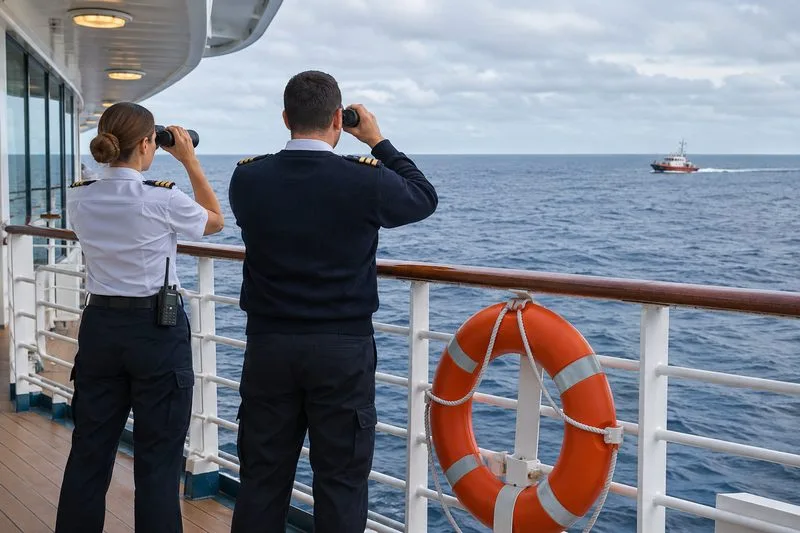
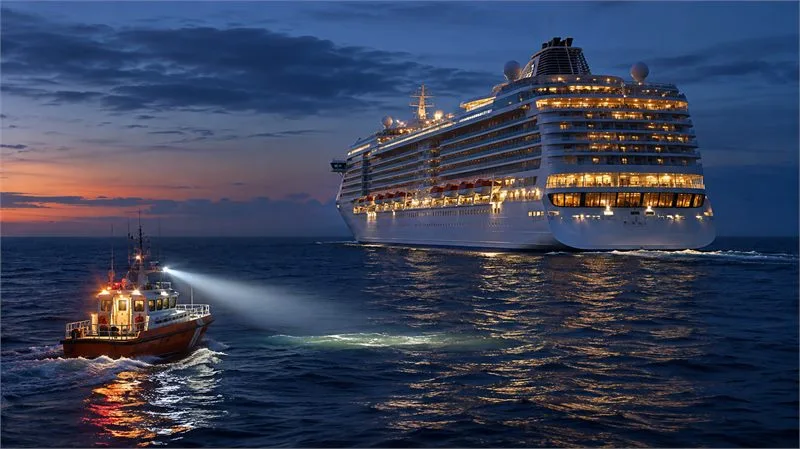
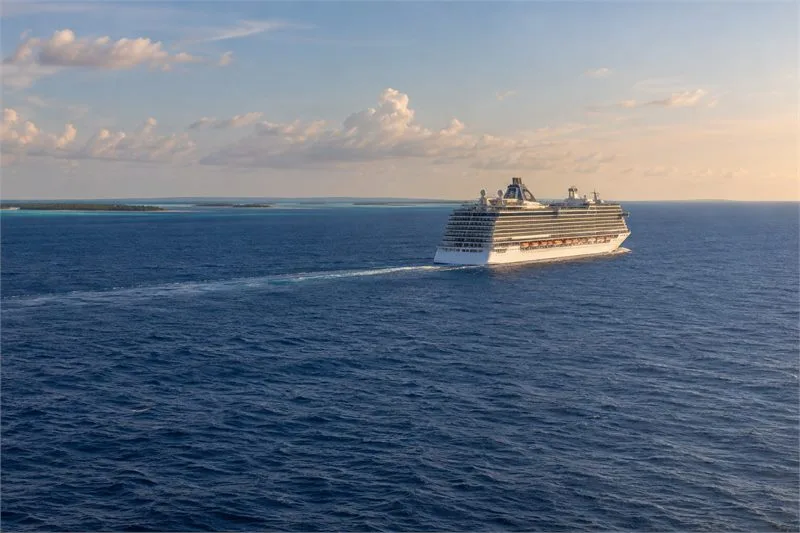
Illustrative image generated for this article; it does not depict the Allure of the Seas incident or the actual search area.
Key Points
First actions: Alert the bridge immediately, mark the time and position, raise the alarm, and keep a lookout on the person or last known location.
Search coordination: The ship notifies the relevant rescue authorities, which can coordinate nearby ships, boats, aircraft, and other resources.
Recovery: Bringing someone alongside and aboard a large moving ship is hazardous, so trained crew use the vessel’s recovery plan and suitable equipment.
Allure update: Reporting says the ship was released from the search and skipped St. Maarten; officials had not confirmed the guest’s identity or condition.
What happens first when someone goes overboard?
The International Maritime Organization’s IAMSAR guidance describes three broad situations: the fall is seen from the bridge and action is immediate; a witness reports it after a delay; or someone is reported missing and the crew must determine whether they went overboard. These situations are not interchangeable. When the fall is not witnessed, investigators may need to establish when and where the person was last seen, while the bridge considers a larger possible search area.
For an observed or suspected fall, the IMO guidance calls for the crew to mark the time and position using satellite navigation, throw a lifebuoy as close to the person as possible, sound the ship’s whistle, alert the master and engine room, and post lookouts. Crew may use a dye marker or smoke signal, prepare recovery equipment, and keep the bridge updated. The ship’s safety management system sets the vessel-specific steps and who performs them. A passenger should not assume every ship uses the same announcement phrase or audible code.
The bridge may reduce speed or turn back to return toward the last known position. The maneuver depends on how long ago the person was seen, the ship’s handling characteristics, visibility, wind and sea conditions, engine capability, and whether other vessels can assist. The IAMSAR manual outlines several standard recovery maneuvers, but these are decisions for trained bridge teams; they are not instructions for passengers to attempt.
Who leads the search and rescue?
The master and crew initiate the response aboard the ship, while the appropriate rescue coordination authority organizes the broader operation. Depending on the location, this can involve a national coast guard or another maritime rescue service. Authorities can ask ships in the area to keep a lookout, pass sightings, or assist, and can dispatch their own vessels or aircraft if available.
For the Allure of the Seas case, CBS Miami reported that the ship notified Coast Guard watchstanders and the Royal Bahamas Defence Force at about 11:30 p.m. Monday, November 23. The report said the Bahamian force was leading the search and the U.S. Coast Guard had requested assistance from nearby vessels. Royal Caribbean said it immediately launched a search-and-rescue effort, was working with authorities, and was supporting the guest’s loved ones. The later report that the ship was released from the operation and its itinerary changed is a subsequent development; it does not establish that the search itself had ended or disclose the guest’s status.
How is a person brought back aboard a cruise ship?
Finding someone is only part of the challenge. The IMO’s recovery guide notes that a large ship’s height, the movement between the ship and the water, sea conditions, and the person’s physical condition can make recovery difficult. A ship cannot safely stop instantly, and propellers, hull openings, ladders, and rescue craft all create hazards that trained crew must manage.
The ship’s recovery plan identifies suitable equipment and roles in advance. Crew may use a rescue boat or a designated recovery point, depending on the vessel design and conditions. Once the person is aboard, medical personnel assess and treat them. Cold exposure, injury, exhaustion, and water inhalation are possibilities, but no outcome should be presumed from the fact that a search or recovery effort was launched.
What should passengers do if they witness a fall?
Passengers can help by getting accurate information to the crew quickly. Alert a crew member or use the nearest emergency contact method, and state the exact location, time, direction, and what you saw. If you can do so safely, continue pointing out the location from a secure position and follow crew instructions. Do not climb over a railing, jump into the water, or crowd an exposed deck to watch; that can create another emergency and obstruct the search.
If you are aboard during a search, listen for official announcements and check the cruise line’s app or guest-services desk for itinerary changes. Keep walkways and crew work areas clear. If you are a family member ashore, rely on updates from the cruise line and relevant authorities rather than sharing an unverified name, age, photograph, or theory about how the person went overboard. In the Allure case, officials had not publicly confirmed the guest’s identity, age, or condition in the reporting available at verification time.
Why can a cruise itinerary change during a search?
A ship that turns around, slows down, or remains near a search area loses time and distance on its planned route. Rescue authorities may also need the ship to stay nearby until other assets arrive or until its assistance is no longer required. The captain then has to balance the rescue operation with safe navigation and remaining port calls. For Allure of the Seas, later reporting said the November 25 stop in Philipsburg, St. Maarten, was canceled and passengers were told to expect a sea day instead. Travelers should treat the ship’s onboard notice as the operative itinerary and check directly with the cruise line about excursions and travel arrangements.
Does a cruise ship always turn around after a man-overboard report?
The bridge responds according to the ship’s procedures and the circumstances. A turn or other maneuver may be used to return toward the last known position, but the safest option depends on timing, ship handling, weather, and coordination with rescuers.
Can passengers help with the search?
Yes: report what you saw promptly, give the location and time, remain in a safe place, and follow crew instructions. Do not enter the water or obstruct crew and rescue teams.
Does the ship leaving the search area mean the person was found?
No. A vessel may be released when authorities no longer need its assistance or another resource takes over. Only an official update can confirm the search outcome.