Home
» Today
»
Cruise Travel Safety: Marine Regulations and Passenger Precautions for Canadians (November 2026)
Cruise Travel Safety: Marine Regulations and Passenger Precautions for Canadians (November 2026)
Sources checked: November 25, 2026, 04:06 UTC (UTC+00:00).
For Canadians planning a winter cruise, the most useful response to renewed concern about passengers going overboard is to understand the safeguards already required at sea and the steps travelers can take themselves. International maritime rules address emergency training, lifesaving equipment, ship design and rescue communications. They reduce risk, but they cannot guarantee that every emergency will be detected immediately or resolved successfully.
Recent reporting about Royal Caribbean's Allure of the Seas has brought attention back to these issues. This guide focuses on prevention and travel preparation rather than assigning a cause to that incident. No new fleet-wide safety rule arising from that case was confirmed in the official material reviewed for this guide.
Destaques
International SOLAS standards cover ship safety, emergency equipment and passenger musters.
Complete the safety briefing promptly and learn where to report an emergency on your particular ship.
Keep children away from railings, avoid climbing on balcony furniture and respect deck closures.
Canadian travelers should confirm medical evacuation and trip interruption coverage before departure.
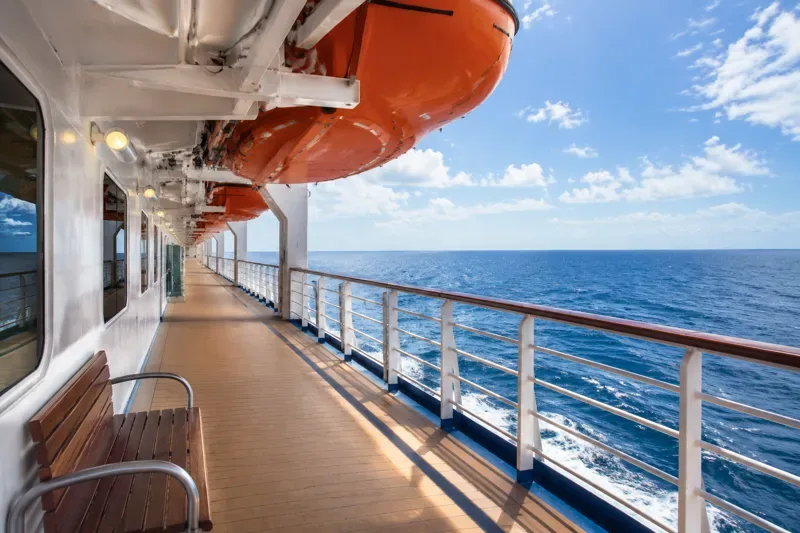
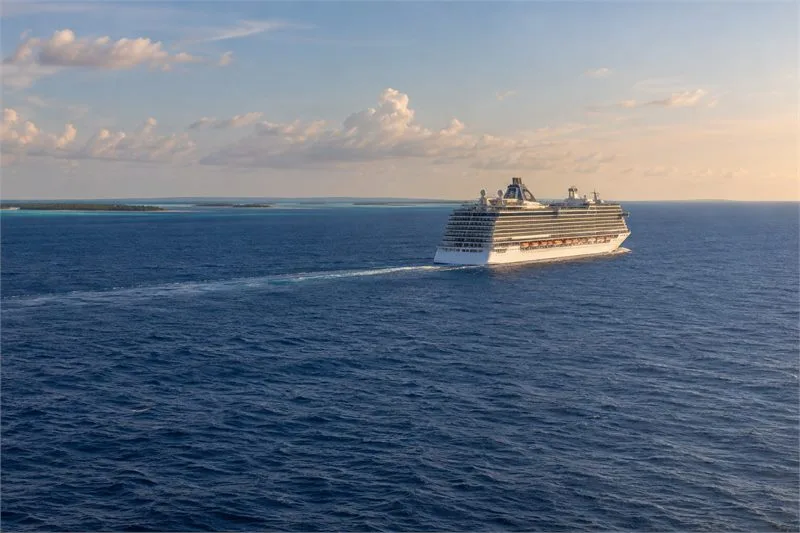
AI-generated editorial illustration of a cruise ship promenade, showing railings and lifeboats. It does not depict the Allure of the Seas incident or a verified ship inspection.
What maritime safety regulations apply to cruise ships?
The International Maritime Organization (IMO) administers the International Convention for the Safety of Life at Sea, commonly called SOLAS. The treaty establishes baseline requirements for vessel construction, equipment and operations. The country where a ship is registered is responsible for enforcing applicable requirements, while port authorities may also inspect visiting vessels under relevant rules.
Chapter III covers lifesaving equipment, including survival craft and life jackets. Chapter IV addresses emergency radio communications, and Chapter IX requires a formal safety management system. These provisions matter even when a Canadian passenger boards a foreign-registered vessel in another country. National legislation can add further obligations depending on the voyage, so the passenger's citizenship alone does not determine which maritime law applies.
Read the IMO overview of SOLAS for the international framework. A ship's compliance with that framework is not proof that a particular incident could not have occurred.
What should passengers do immediately after boarding?
For applicable voyages lasting more than 24 hours, the SOLAS passenger muster requirement calls for newly boarded passengers to assemble before departure or as the voyage begins. The IMO's revised requirement took effect on January 1, 2015. The operator may use different briefing formats, so follow the instructions for your own sailing and complete all required steps.
Identify your designated assembly point and walk the route from your cabin while conditions are normal. Learn how to obtain and wear a life jacket, and ask where children's sizes are available. Save the ship's emergency contact instructions offline rather than depending on mobile reception. If you have limited mobility, hearing or vision, discuss assistance arrangements with the crew before sailing. The IMO passenger drill notice explains the timing requirement.
How can passengers reduce the risk of falls overboard?
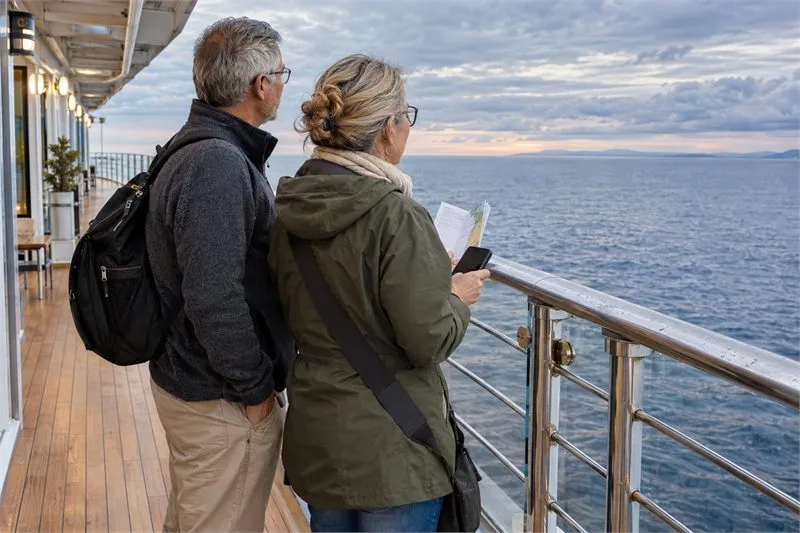
Stay on the passenger side of protective barriers. Never sit on a railing or stand on a chair to get a better photograph. Keep balcony furniture away from edges when traveling with children and supervise them closely near open decks. Wear footwear with good traction, particularly when surfaces are wet.
Alcohol, fatigue and motion sickness can affect balance and judgment. If someone is unsteady, accompany them to a safe interior area and ask crew members for assistance when necessary. Do not enter closed decks to take photographs during rough weather. If a companion is unexpectedly missing and you have reason to fear for their safety, notify the crew promptly rather than conducting a prolonged private search.
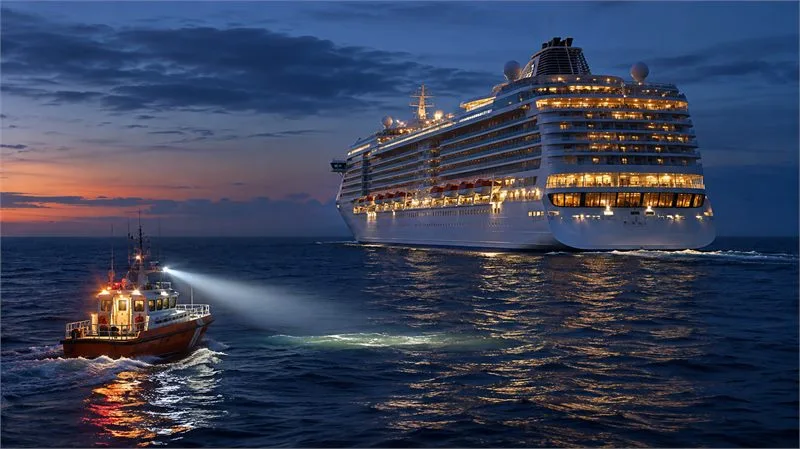
If you witness someone falling into the water, alert the crew immediately, keep the person in sight if possible from a safe position, and follow crew instructions. Never enter the water yourself. Passengers should not obstruct professional rescue operations.
What insurance should Canadians buy before a cruise?
Do not assume provincial or territorial health coverage will pay for a shipboard medical consultation, treatment overseas or an emergency transfer. Canada's official travel insurance guidance warns that public coverage abroad may be limited or unavailable, and bills can require payment upfront.
Ask your insurer in writing whether the policy covers treatment at sea, evacuation to an appropriate medical facility, medical escorts and onward transport to Canada when medically necessary. Check exclusions for pre-existing conditions, alcohol-related injuries, adventure excursions and destinations subject to travel advisories. Review trip interruption benefits separately: a missed port, a delayed flight and an emergency medical disembarkation may trigger different contractual provisions.
For example, if a medical emergency requires you to leave the ship in a foreign port, the cost of treatment, accommodation for a companion and a replacement flight may be handled under different benefits. Coverage depends on the actual policy, not simply the presence of a travel insurance logo on a credit card.
A rescue operation, weather disruption or medical emergency can affect arrival times and port calls. Leave a reasonable buffer between scheduled disembarkation and your flight home. Save independent excursion cancellation terms, airline booking references and the cruise contract before departure. Ask the operator for written confirmation of changes and keep receipts for expenses that may qualify for an insurance claim.
Check the Canadian government travel advisories for each destination, including transit stops. Download the contact details for Canada's consular service and share your itinerary with someone at home. Canadian citizens who need urgent consular support abroad can reach the Emergency Watch and Response Centre at +1 613 996 8885; see the official emergency assistance page. This is not a substitute for alerting the ship's crew during an immediate onboard emergency.
FAQ
Are cruise ship safety briefings mandatory?
Applicable international passenger ships must conduct passenger musters and safety instruction around departure. Follow the specific procedure provided by your cruise operator.
Does Canadian public health insurance cover cruise emergencies?
Not necessarily. Confirm private coverage for offshore treatment, evacuation and trip interruption before leaving Canada.
Should passengers cancel a cruise after an overboard report?
One report alone does not establish the safety of every voyage. Review official advisories, your operator's notices, your medical needs and your cancellation terms before deciding.