When to Start Decorating for Halloween in 2026

Use a simple 2026 Halloween decorating timeline for indoor décor, outdoor displays, and fresh pumpkins, with practical adjustments for weather and events.
You may wonder why there are 2.4GHz and 5GHz networks? What is the difference between them? Is 5GHz network stronger?
What is 2.4GHz and 5GHz WiFi?
First of all, 2.4GHz and 5GHz are part of the same WiFi network. Think of them like two different channels on your TV playing the same show. In the case of a dual-band router , the source of the Internet is the same, but there are two different ways to connect: Using the 2.4GHz band or the 5GHz band.
Since these two bands operate on different frequencies, they do not interfere with each other. This is why many modern routers can broadcast on both frequencies at the same time without negatively affecting the strength of the WiFi signal. Additionally, many modern routers automatically broadcast on both channels without any setup.
What is the real difference between 2.4GHz and 5GHz?
WiFi has become increasingly essential over the past decade. It is used by people all over the world and like any other wireless communication system, wifi has a frequency and wavelength. All of these factors will affect how the waves are transmitted and the distance the waves can travel.
The terms 2.4GHz and 5GHz refer to the frequency range of the router or device that is transmitting these signals. The biggest and most noticeable difference between these two frequencies is speed and range.

Under ideal conditions, 2.4GHz WiFi will support a maximum connection speed of 450Mbps or 600Mbps, depending on the type of router you use. While 5GHz WiFi will support a connection speed of up to 1300Mbps, which is extremely impressive!
Of course, there are a few things to keep in mind here. First, the maximum speed you’ll see will also depend on the wireless standard your router supports, which could be 802.11b, 802.11g, 802.11n, or 802.11ac (the most common). You can read more about how these standards affect performance in practice to get a better idea of what you need to know.
The second is the important phrase we just mentioned, “ideal conditions”. The 2.4GHz band can be considered a rather crowded “road”, because it is not only used for WiFi connections. Older cordless phones, cameras, home appliances, and a number of other devices tend to use the 2.4GHz band.
The longer wavelengths used by the 2.4GHz band are better suited to longer range connections, as well as being able to travel through walls and solid objects. So the 2.4GHz band is considered better if you need stable connections over a long range on your devices, or there are too many obstructions in the connection area.
However, with so many devices using the 2.4GHz band, congestion can occur, resulting in sudden connection drops and slower-than-expected connection speeds .
Meanwhile, the 5GHz band is used for more data-intensive devices like laptops, phones or tablets because it can transmit higher amounts of data and has fewer devices using it, so with the 5GHz band there is less congestion, which means you can get a more stable connection and much better connection speeds.
On the other hand, the shorter waves used by the 5GHz band make it less able to penetrate walls and solid objects and have a shorter effective range than the 2.4GHz band. Of course, you can also improve this through the use of a range extender or mesh WiFi systems , but of course, the cost of investing in these supporting equipment is also something we have to take into account.
What are dual-band and tri-band?
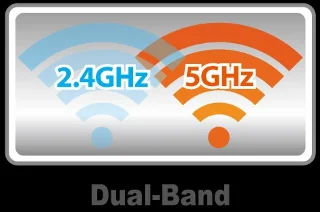
The good news is that most modern routers can function as either a dual-band router or a tri-band router. A dual-band router is a router that can broadcast both a 2.4GHz and a 5GHz signal at the same time, essentially giving you two parallel wireless networks. Dual-band routers come in two flavors:
A tri-band router is a router that can broadcast three networks simultaneously, two signals on the 5GHz band and one signal on the 2.4GHz band. The reason for this is to help alleviate potential congestion in the network. So if you have multiple devices using the 5GHz connection at the same time, such as streaming high-definition or even 4K video , you will see a clear benefit from using a tri-band router.
Should I choose 2.4GHz or 5GHz band?
The first thing to consider is that if you are using devices that support wired Ethernet connections and it is not difficult to connect the cable to the device, you should use a wired connection rather than a wireless connection. Wired connections offer lower latency, are less prone to disconnections due to interference, and are simply faster and more stable than wireless connections.
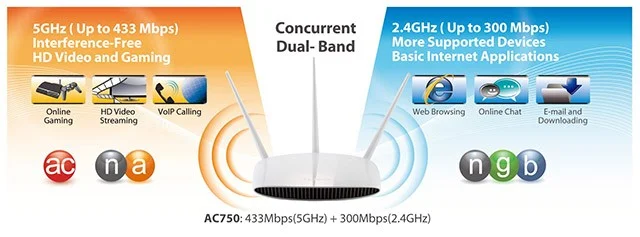
But we're talking about wireless connections here. If you're currently using 2.4GHz WiFi and wondering if you need to upgrade to 5GHz, the answer is yes, if possible.
Specifically, if you’re experiencing frequent connection drops or if you need a faster connection for streaming videos or playing games, you should upgrade to 5GHz. If you live in a crowded apartment complex with dozens of different routers and countless devices using the 2.4GHz band, you should definitely consider switching to the 5GHz band as soon as possible.
If you have a dual-band or tri-band router that has both 2.4GHz and 5GHz available, then as mentioned, you will have to decide which band to connect your devices to. The simplest thing is to just go ahead and use 5GHz WiFi for any devices that support it and use 2.4GHz for the rest, however, this is not always the best strategy.
Instead, think about how you’ll use each device. If it only supports 2.4GHz, that’s fine, but if it supports both bands, think about whether you really need to use 5GHz. For example, does the device need the higher speeds, or will you mostly be checking email and browsing the web? Does the device disconnect on the 2.4GHz network, and do you really need a more stable connection? Are you okay with the shorter range the device will have because it’s using the 5GHz band?

In summary, consider the following conditions before deciding whether to use the 2.4GHz or 5GHz band:
Summary
Both 2.4GHz and 5GHz bands have their pros and cons, and it’s best to stick with 2.4GHz unless you have a specific need for stability or speed (for video, gaming, etc.). Also remember that no matter which you choose, you should take the time to optimize your wireless signal by selecting the appropriate channel on your router.
2.4GHz
5GHz
Hope you make the right choice for yourself!
Use a simple 2026 Halloween decorating timeline for indoor décor, outdoor displays, and fresh pumpkins, with practical adjustments for weather and events.
Mix five vivid, approachable Halloween cocktails with measured recipes, simple prep tips, and an alcohol-free option for your party guests.
Find 15 office-friendly Halloween costume ideas for 2026, with practical checks for dress codes, respectful themes, comfort, and workplace safety.
Plan a fun elementary school Halloween party with easy crafts, games, inclusive treats, costume tips, and a sample 75-minute classroom schedule.
Compare realistic side hustles for 2026 by startup cost, fees, flexibility, and income control, with current tax and scam guidance from official sources.
Upgrade your home office ergonomics with current OSHA and NIOSH guidance on chair fit, monitor height, laptop setup, lighting, and movement.
Learn why emotional intelligence matters in leadership, where it helps most, how to strengthen it, and how to tell whether your approach is working.
A practical roadmap for moving into tech without a degree: choose an accessible role, build job-ready skills, prove them with projects, and use hiring feedback to improve.
Build a credible LinkedIn personal brand in 2026 with current profile, content, newsletter, analytics, verification, and visibility guidance from LinkedIn.
Quiet quitting and quiet firing are catchy labels, not diagnoses. Learn what is verified, what depends on context, and what employees and managers can do next.