Start with the year, then use the forecast as a planning tool
If you are a Dragon, 2027 may raise practical questions: Should you pursue a promotion, invest in a relationship, or take a financial risk? A yearly horoscope cannot confirm what will happen. It can, however, offer a reflective structure for setting priorities and checking your progress. For Dragon readers, the most useful theme for 2027 is to turn ambition into steady, visible growth: choose fewer goals, build reliable support, and judge outcomes by evidence in your own life.
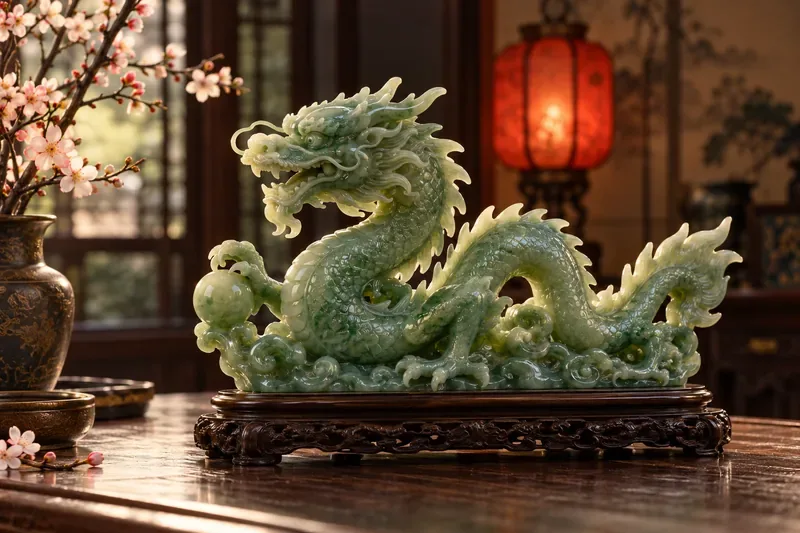
A jade-green dragon carving sits on a wooden stand beneath a glowing red lantern, with spring blossoms framing the scene.
The Hong Kong Observatory’s Gregorian–Lunar calendar conversion table names 2027 the Ding-wei year of the Goat. It places the first day of the first lunar month on February 6, 2027. The Observatory describes the Chinese zodiac as a 12-year animal cycle. These are calendar facts; the relationship, career, and luck themes below are traditional, interpretive horoscope writing rather than scientific forecasts. Gregorian birthdays in January or early February may fall before the lunar-year boundary, so check your birth date against the calendar before identifying your sign.
Hong Kong Observatory: 2027 Gregorian–Lunar Calendar Conversion Table · Hong Kong Observatory: The 12-Year Animal Cycle
What Dragon energy can mean in a Goat year
In popular Chinese zodiac descriptions, the Dragon is linked with confidence, initiative, and a desire to make an impact. The Goat is often associated with sensitivity, creativity, and a preference for a measured pace. These are symbolic associations, not fixed personality tests. Put together, they suggest a helpful question for the year: can you keep your bold direction while allowing enough time for other people, details, and changing conditions?
Think of this forecast as a prompt, not a verdict. A lucky outcome is not something the zodiac can guarantee. A more useful definition of luck is being prepared when an opportunity arrives: knowing your priorities, keeping commitments manageable, and making decisions with enough information. The sections below turn that idea into an entry-level plan for love, career growth, and money.
Love and relationships: make confidence easier to meet
If you are single
Use the year to be intentional about meeting people without treating chemistry as proof of compatibility. A Dragon’s directness can make the first move easier, but a good connection also needs curiosity and follow-through. Ask open questions, share what you are looking for at a natural pace, and observe whether the other person’s actions match their words.
A practical sign of progress is reciprocal effort: both people suggest plans, communicate clearly, and respect boundaries. If you find yourself carrying every conversation or overlooking repeated cancellations, pause and reassess. You do not need to label someone “right” or “wrong” based on a horoscope; you can decide whether the relationship works for you based on behavior.
If you are partnered
In an established relationship, confidence can help you raise an important subject, while patience can help the discussion stay constructive. Pick one issue—such as shared expenses, household duties, or time together—and agree on a specific next step. Then check whether the arrangement feels fair to both of you after trying it.
Look for observable improvement: fewer misunderstandings, clearer expectations, and more consistent follow-through. If conversations repeatedly become hurtful or unsafe, a zodiac forecast is not a solution; seek appropriate professional support or trusted help. Compatibility depends on the people and circumstances involved, not only their birth-year animals.
Career growth: make ambition measurable
For career decisions, treat “growth” as a result you can point to. It might mean completing a portfolio project, learning a skill that your current role actually uses, taking on a defined leadership responsibility, or applying to a role with clearer advancement. Before beginning, ask what success looks like and how it will be assessed. A written goal helps separate meaningful progress from a busier calendar.
Dragon confidence can be useful when presenting ideas or asking for greater responsibility. Balance it with preparation: outline the problem, explain your proposal, anticipate constraints, and invite feedback. A positive signal is not simply praise; it is a concrete next step, such as ownership of a project, a review date, or a clear skill plan.
If an opportunity arrives, compare its duties, compensation, manager, schedule, and development path with your priorities. A prestigious title may not be worthwhile if the role adds unsustainable hours without authority or pay. If advancement stalls, diagnose the cause before changing direction. A skills gap may call for training; unclear expectations may call for a conversation; limited openings may call for a broader job search. Adjust the strategy when evidence points to a different obstacle.
Money and luck: favor preparation over prediction
No horoscope can reliably predict investment returns, salary changes, or surprise expenses. For 2027, use the idea of luck as a reminder to improve your readiness. Review regular income, essential costs, debts, and upcoming obligations. Set a savings or repayment target that fits your actual cash flow, then check it monthly. Progress may look gradual: fewer late fees, a more accurate spending plan, or a growing buffer for ordinary expenses.
Before a major purchase or investment, slow down long enough to understand the total cost, risks, fees, and exit conditions. Be cautious about anyone promising guaranteed returns or urging you to act immediately. If a financial choice could affect your household security, compare options using reliable information and seek qualified advice suited to your location. A forecast should never replace that work.
One useful trade-off to consider is speed versus resilience. A fast opportunity may offer higher upside but leave less room for error; a slower plan may protect flexibility while taking longer. Choose based on your time horizon, responsibilities, and ability to absorb a loss—not because a month is labeled lucky.
A simple way to use the forecast
- Choose one relationship intention: for example, communicate a need clearly or make time for a weekly check-in.
- Choose one career outcome: define a project, skill, or application milestone and a date to review it.
- Choose one money habit: track spending, automate a manageable savings amount, or review a debt plan.
At the end of each month, write down what changed, what action helped, and what remains uncertain. If a goal is not moving, first check whether it is specific and realistic. Then revise the action: ask for feedback, break a large task into smaller steps, or adjust a budget to account for costs you can predict. Change course when the evidence calls for it; persistence is useful only when the approach still fits the situation.
Common mistakes to avoid
- Treating a general forecast as a personal guarantee. A birth-year sign cannot account for every person’s health, finances, work, or relationship context.
- Assuming the lunar year starts on January 1. The 2027 lunar new year begins in February, so early-year birthdays require a date check.
- Confusing confidence with certainty. Make room for feedback and new information before committing to a major decision.
- Waiting for luck instead of measuring progress. Choose actions you control and review the result against a clear standard.
The 2027 Dragon outlook in perspective
The Dragon Chinese horoscope for 2027 is best used as a planning lens: keep your ambition, but give it structure and room to adapt. In love, look for mutual effort and honest communication. In career, make growth visible through outcomes and feedback. With money, build flexibility and evaluate risks on their merits. These are practical ways to assess whether your choices are helping, regardless of what a zodiac forecast says.
Chinese zodiac interpretations vary, and this article uses only a broad year-animal framework rather than a personalized chart. Treat its themes as cultural reflection or entertainment. Your decisions—and the evidence you gather as you make them—remain more useful guides to your year than any promise of guaranteed luck.