Home
» Today
»
FAA Line Up and Wait Update: New Tower Staffing Rule Takes Effect Dec. 24
FAA Line Up and Wait Update: New Tower Staffing Rule Takes Effect Dec. 24
Verified and updated Nov. 25, 2026, at 9:37 a.m. UTC.
The FAA has tightened staffing requirements for “line up and wait” (LUAW), the procedure that lets a controller position an aircraft on a runway while it waits for takeoff clearance. A new requirement for a dedicated watch supervisor took effect Nov. 24; a second notice, issued Nov. 24, adds a related restriction on combining positions and is scheduled to take effect Dec. 24. The changes focus on air traffic control staffing and oversight. They do not authorize pilots to take off while waiting, and the FAA has not announced a nationwide delay estimate tied to the notices.
Destaques
LUAW means taxi onto the assigned runway, align, and wait; it is not a takeoff clearance.
Since Nov. 24, the FAA requires a stand-alone watch supervision position during LUAW operations.
A second notice requires the supervisor or controller-in-charge position to remain independent; it is effective Dec. 24.
Travelers may see operational effects where staffing changes affect runway sequencing, but the FAA has not quantified a passenger impact.
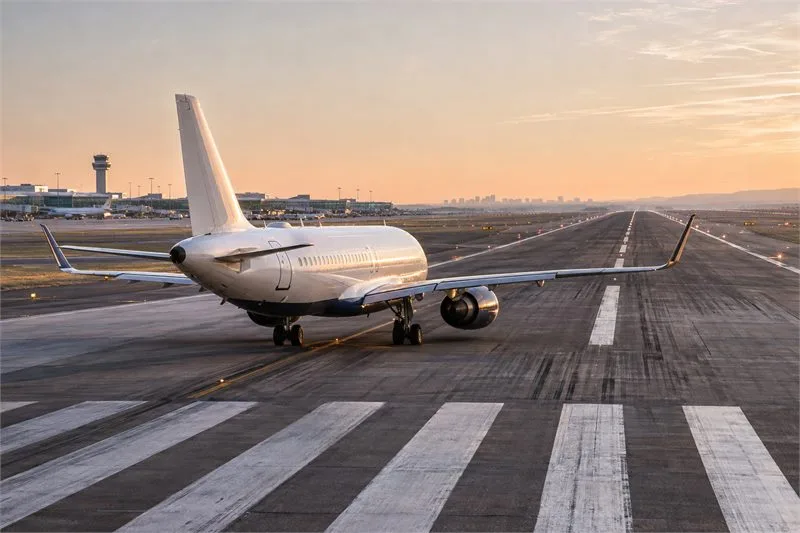
Illustrative image: an aircraft waits on a runway before departure. It does not depict a specific airport or event.
What does “line up and wait” mean?
LUAW is an air traffic control instruction to taxi onto the assigned departure runway, line up in the direction of takeoff, and wait for further instructions. It is used when a takeoff clearance cannot be issued immediately, such as when traffic or another operational condition requires the controller to hold the departure briefly. The aircraft occupies the runway, but it is not cleared for takeoff.
The distinction matters because entering the runway and beginning a takeoff roll are separate actions. The FAA’s Pilot/Controller Glossary says LUAW is not takeoff authorization. Its Aeronautical Information Publication warns that pilots have sometimes departed after correctly reading back a LUAW instruction but without receiving takeoff clearance. The FAA notes that such confusion can have catastrophic consequences, especially when runways intersect.
For pilots, the practical rule is straightforward: wait for the explicit takeoff clearance, listen for the aircraft’s call sign and assigned runway, and query air traffic control if an instruction is unclear. At an intersection, controllers use the intersection designator in the instruction. FAA guidance also tells pilots to stay alert to traffic and to contact the controller if they have been holding for a while without an expected delay being explained.
What changed in the FAA’s updated runway safety protocol?
The change is aimed at tower staffing, not a new phrase pilots must use. FAA Notice JO 7210.979, dated Oct. 9 and effective Nov. 24, 2026, makes a stand-alone watch supervision position mandatory during LUAW operations. That Operations Supervisor or Controller-in-Charge (OS/CIC) cannot be combined with another position. The notice also says the local control position must remain separate from non-local control positions during LUAW operations, while allowing certain combinations with other local control positions.
The FAA’s stated reason is to remove ambiguity and ensure the supervisor overseeing safety is not distracted by other operational duties. In a related notice, JO 7210.982, the FAA says the OS/CIC position must be staffed independently and cannot be combined with any other position while LUAW operations are being conducted. The notice was issued Nov. 24, but its effective date is Dec. 24, 2026. The dates are different: the dedicated watch-supervision requirement is already effective, while the added consolidation provision is not yet in effect as of this article’s update.
Why does LUAW need added oversight?
LUAW places an aircraft on an active runway before the tower can release it for takeoff. That can help controllers sequence departures, but it also means that the controller and flight crew must maintain a clear shared picture of runway occupancy, landing traffic, intersecting-runway activity, and any delay. If a pilot mistakes an instruction for another aircraft or assumes a takeoff clearance, the risk can rise quickly.
The FAA’s published departure procedures highlight several safeguards already in place. If landing traffic is a factor, air traffic control advises the aircraft holding on the runway about the closest relevant traffic within six flying miles, and advises arriving traffic that an aircraft is holding in position. The FAA also says controllers normally withhold a landing clearance when another aircraft is holding on the runway. Pilots are advised to scan for traffic, remain vigilant at night or in reduced visibility, and never land on an occupied runway even if a landing clearance was issued.
The supervision notices add a staffing layer to those operational safeguards. Their stated purpose is to make dedicated oversight clear and mandatory. They do not, in the documents reviewed, describe a change to the meaning of LUAW or replace the requirement for a separate takeoff clearance.
Could the rule affect flight delays?
Potentially, but the FAA notices do not provide a nationwide forecast or quantify delays. A dedicated supervisor and separate control positions require staffing to be available in the prescribed arrangement. If a tower cannot meet the applicable staffing requirement, its ability to conduct LUAW under the new policy could be affected; the notices do not publish airport-by-airport schedules or predicted effects on departure rates.
For passengers, the most useful takeaway is that this is a procedural safety measure for air traffic facilities, not a change to boarding, ticketing, or passenger actions. Runway sequencing can influence departure timing, but a delay on any particular trip depends on airport conditions, staffing, weather, traffic, and other factors. Check your airline’s flight status for trip-specific information.
Frequently asked questions
Does “line up and wait” mean the plane can take off?
No. It permits the aircraft to enter and line up on the assigned runway, then wait. The pilot still needs an explicit takeoff clearance.
When did the new FAA staffing requirement start?
JO 7210.979 took effect Nov. 24, 2026. The related JO 7210.982 notice was issued Nov. 24 and is scheduled to take effect Dec. 24, 2026.
Will the new rule delay my flight?
The FAA has not published a national delay estimate for these notices. Staffing requirements could affect operations at facilities depending on their circumstances, but passengers should check their airline for current flight information.