Home
» Today
»
FAA Runway Staffing Rule Could Add Ground Waits for Travelers — Nov. 25 Update
FAA Runway Staffing Rule Could Add Ground Waits for Travelers — Nov. 25 Update
Updated November 25, 2026, 9:37 a.m. UTC.
A new FAA requirement for air traffic control towers took effect November 24: when controllers use “line up and wait” (LUAW), a dedicated watch supervisor must be on duty and cannot combine that work with another position. A related FAA notice issued November 24 adds a further staffing restriction effective December 24. For passengers, the practical effect could be a little more waiting before some takeoffs if staffing or runway conditions limit use of the procedure—but the FAA notices do not quantify expected delays or predict a systemwide increase.
LUAW lets a controller position an aircraft on the runway while it waits for a separate takeoff clearance. The updated requirements concern tower staffing and runway safety, not a change to passenger check-in, boarding, or airline schedules. Any schedule effect will depend on how individual airports manage traffic and staffing.
Destaques
The dedicated watch-supervision requirement became effective November 24.
A follow-up notice requires that the watch supervisor or controller-in-charge remain separate from every other position starting December 24.
The rules apply to airport air traffic operations that conduct LUAW; they do not provide a forecast of passenger delay minutes.
Travelers should monitor their airline’s flight status and allow reasonable time for connections, especially during busy travel periods.
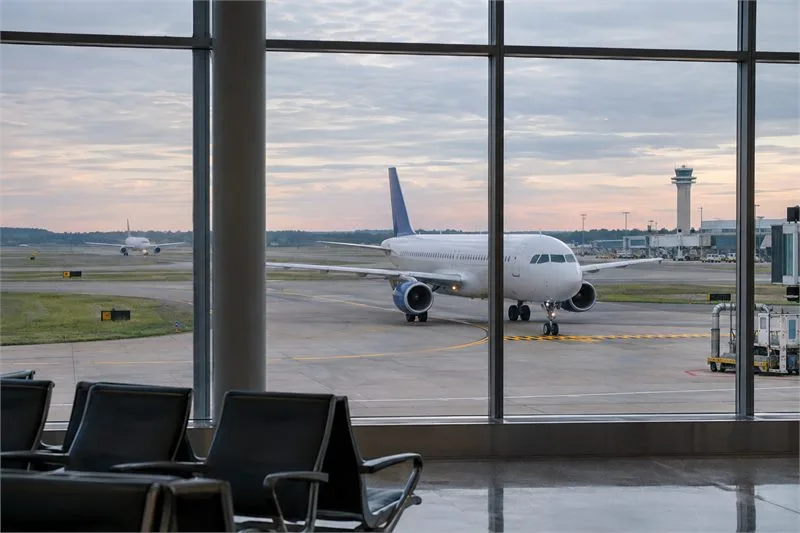
Illustrative image: A passenger aircraft waits on an airport taxiway. It does not depict a specific event.
What did the FAA change in its line-up-and-wait procedure?
The FAA’s October 9 notice, JO 7210.979, made dedicated watch supervision mandatory for LUAW operations effective November 24. The watch-supervision position—filled by an operations supervisor or controller-in-charge—must not be combined with another position. The notice also specifies that local control must not be consolidated with non-local control positions while conducting LUAW, while allowing certain combinations with other local-control positions.
The FAA says the purpose is to make supervision more focused during a runway operation. The agency describes the change as upgrading prior guidance from a recommendation to a requirement. This is an operational staffing standard for air traffic facilities, not a new instruction for passengers or a new takeoff clearance rule for pilots. Read FAA Notice JO 7210.979.
What is the December 24 FAA runway staffing change?
The FAA issued Notice JO 7210.982 on November 24, with an effective date of December 24. It specifies that, during LUAW operations, the operations supervisor or controller-in-charge position must be staffed independently and must not be combined with any other position. The notice says the change removes ambiguity in staffing requirements and keeps the supervisor available to oversee the operation. It applies to air traffic facilities conducting runway operations and using runway-status tracking procedures. Read FAA Notice JO 7210.982.
The two notices establish distinct dates: the LUAW watch-supervision requirement took effect November 24, while the further position-consolidation rule begins December 24. The FAA’s notice listings and documents state these dates; they do not say that the new policy has produced a measured increase in delays.
Could the FAA rule make flights take off later?
It could add ground waiting in some circumstances, but the size and frequency of any effect are not yet established in the cited FAA material. A tower might have to adjust how it assigns staff before using LUAW. If that affects runway sequencing at a busy airport, aircraft could wait longer to depart, and a late departure can reduce the time available for a connection or affect the aircraft’s next scheduled trip. Those are plausible operational pathways, not a published FAA delay forecast.
LUAW itself is designed to position an aircraft for an imminent departure when traffic prevents an immediate takeoff clearance. FAA controller guidance says an aircraft should not remain in LUAW status for more than 90 seconds without additional instructions. The procedure is conditional on traffic and safety, and the controller must issue appropriate traffic information. Dedicated supervision could mean that a facility needs to manage staffing carefully; it does not establish that every LUAW operation will be slower or that every airport will see a delay.
Departures are also affected by weather, congestion, equipment issues, airline operations and broader traffic-management decisions. The rule’s direct scope is tower staffing during a specific runway procedure. It should not be treated as the explanation for every late flight.
What should passengers do if their flight is delayed?
For a trip in the coming days, use your airline’s app or website for the most current departure time and gate information, and enable flight alerts. If you have a connection, check the itinerary’s connection time and identify the airline’s rebooking options before leaving for the airport. During the holiday travel period, leave practical buffer for a tight connection when booking if you can; a runway procedure is only one of many factors that can affect an itinerary.
If a departure begins to slip, follow the airline’s updates and speak with airline staff about available alternatives. The FAA notices do not direct passengers to arrive earlier, change tickets, or expect a set number of additional minutes. Travelers should base decisions on their specific flight’s status rather than assume the staffing change will affect every departure.
FAA guidance continues to describe LUAW as a clearance to enter and hold on the assigned runway—not permission to take off. Controllers issue a separate takeoff clearance. The core change in the new notices is who must be available in the tower when the procedure is used.
Frequently asked questions
When did the new FAA line-up-and-wait requirement begin?
The dedicated watch-supervision requirement took effect November 24, 2026. A related position-consolidation change takes effect December 24, 2026.
Will the FAA rule delay every flight?
No. The notices do not predict a systemwide delay or specify how many minutes any flight could wait. Effects, if any, depend on airport operations and conditions.
Does “line up and wait” mean an aircraft is cleared for takeoff?
No. It means the aircraft may enter the assigned runway and hold. A separate takeoff clearance is required.
Sources: FAA Notices JO 7210.979 and JO 7210.982, and FAA Air Traffic Control guidance on line-up-and-wait operations. Verified November 25, 2026.