Move ownCloud Files to a New Owner Without Losing Shares
Transfer owned files and outgoing shares with ownCloud’s occ command, understand what stays behind, and verify access before deleting the old account.
If you regularly play games on your computer , you will definitely be installing Steam . This is not only a service that provides copyright and prestige games but also an extremely popular tool to play and share games.
Steam for iOS Steam for Android
However, besides the above advantages, Steam also has many limitations and one of them is that this game service will automatically update automatically, making gaming, managing computers and other resources. become more difficult. So the best way is to turn off Steam updates .
The Steam automatically updates not only cause costs of computer storage space, but it also eats your internet bandwidth dramatically.
Step 1: You start the application on your computer and proceed to login the Steam account you are using.
Step 2: In the main interface of the application, left-click on cards Steam , select the Settings - Set below.
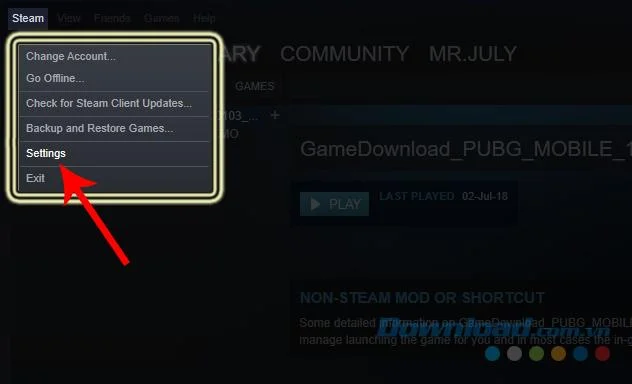
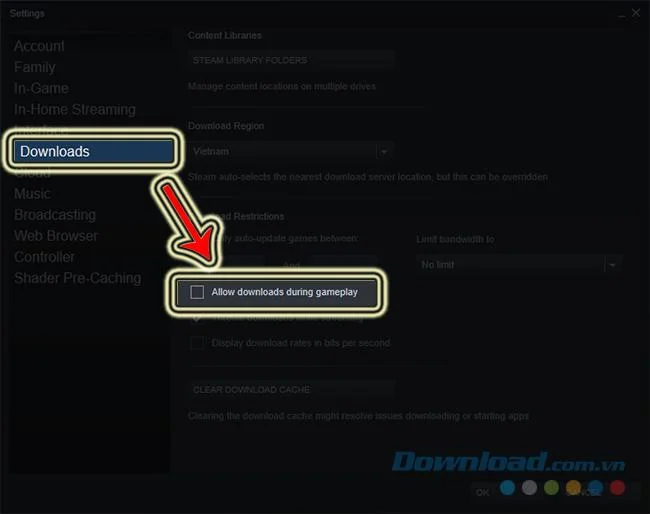
Step 3 : Interface Next, click an item Downloads - Get down and tick in the Allow downloads khi gameplay - Allows downloading while playing .
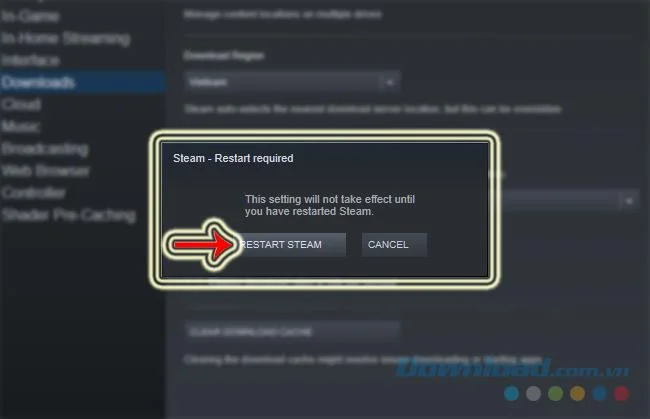
Step 4: The window requesting to restart Steam appears, click Restart Steam to accept or Cancel to complete the settings below and then restart later.
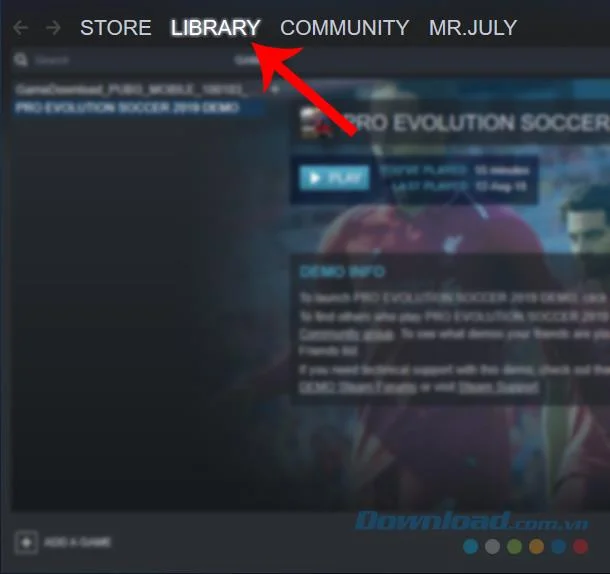
Step 5: Return to the main interface of Steam, left-click and select Library - Library .
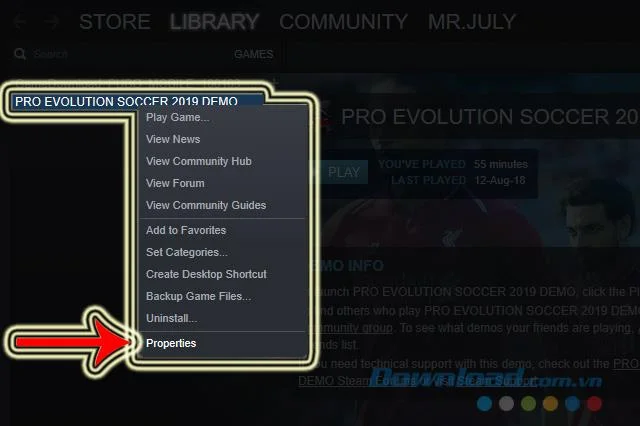
Step 6 : A list of all the games that you have on Steam will appear, right click on each game and select Properties - Settings.
Step 7: Another window appears as below, select to Updates tab .
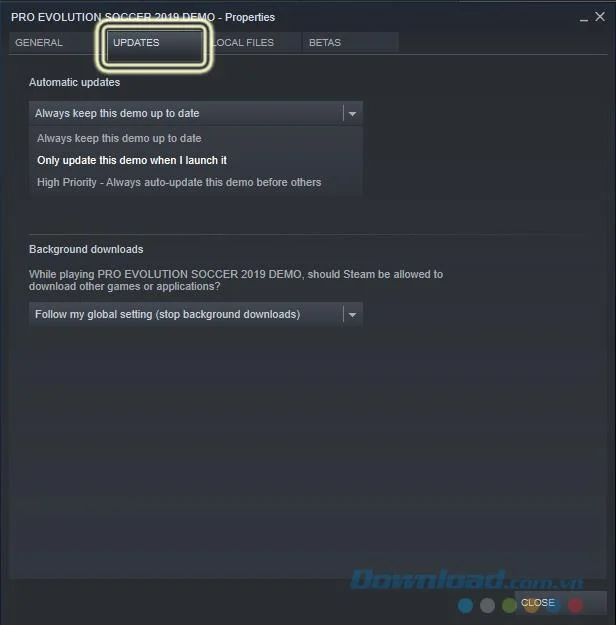
Step 8: Observe the Automatic updates section - Automatically update , you adjust it to Only update this game when I launch it - Only update when I start it .
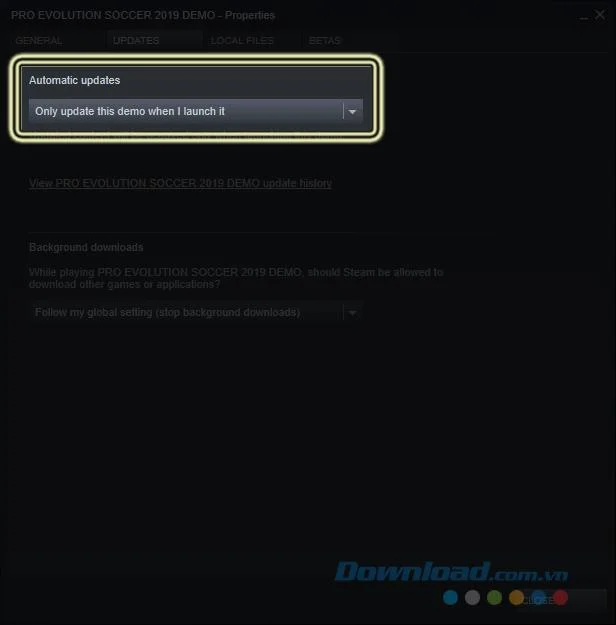
Finally, click Close below to close this window. We will need to do the same with all existing games to ensure later, regardless of playing any game, Steam will not update midway.
Transfer owned files and outgoing shares with ownCloud’s occ command, understand what stays behind, and verify access before deleting the old account.
Learn when ownCloud 10 database indexes need attention, how to apply supported schema updates safely, and when query tuning or a database change is the better fix.
Connect a Windows or Samba network share to ownCloud through External Storage, verify credentials, and troubleshoot inaccessible folders safely.
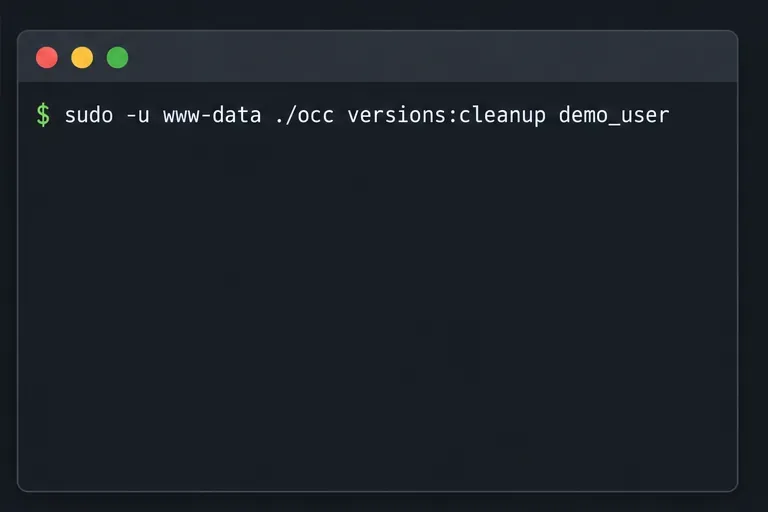
Remove every stored ownCloud Server Classic file version for one account or all users, and distinguish a full purge from retention-based expiry.
Trace an ownCloud mobile connection refusal by checking the server URL, phone network, HTTPS endpoint, and server logs in the right order.
Replace on-demand job runs with a systemd timer that runs ownCloud’s supported occ system:cron command every 15 minutes.
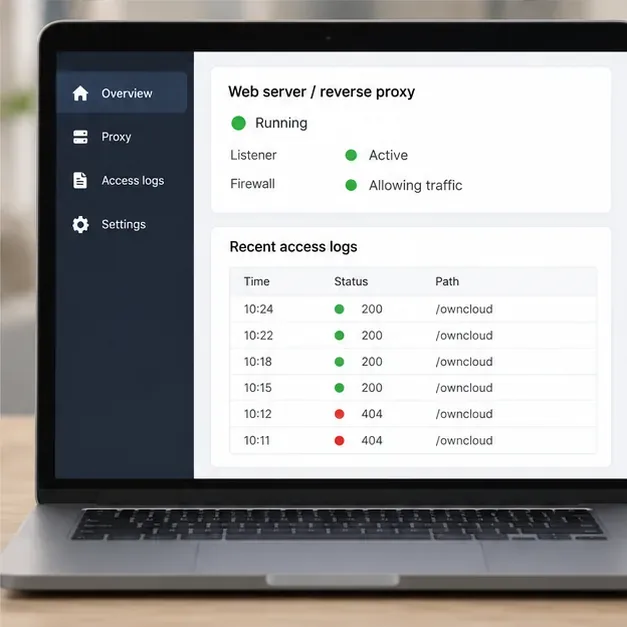
Trace the WebDAV request through Apache, Nginx, or a reverse proxy, then confirm ownCloud sync works with an authenticated PROPFIND test.
Fix Nextcloud’s missing outgoing address warning by setting its canonical URL and checking DNS, HTTPS, and reverse-proxy routing from the server itself.
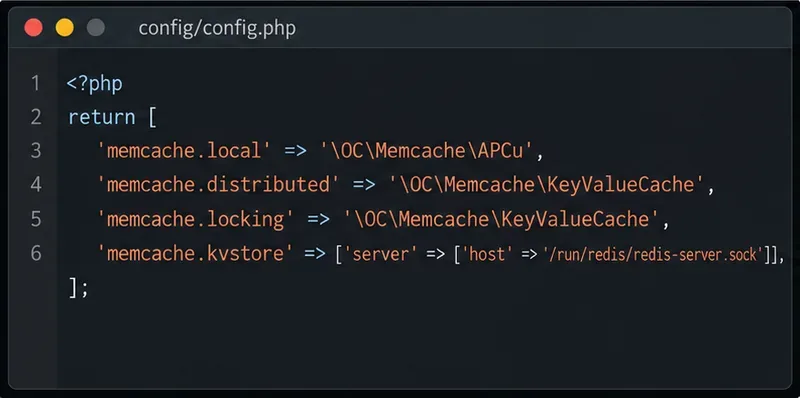
Configure APCu and Redis over a local Unix socket for Nextcloud caching and file locking, with steps for current and older Nextcloud releases.
Check Nextcloud’s cron mode, repair its systemd service and timer, and verify that background jobs run after startup and every five minutes.