How to Add Recycle Bin to File Explorer
This guide will show you all the steps needed to show the Recycle Bin in File Explorer, regardless of whether you are using Windows 10 or Windows 11.
Whenever you delete a file on your Windows 10/11 PC, either by right-clicking on the file and clicking on the Delete option or by selecting the file and pressing the Delete key on your keyboard, the file is moved to the Recycle Bin .
While there is an option in the Recycle Bin settings to completely delete files instead of moving them to the Recycle Bin, this option is disabled by default in Windows 10/11. In short, unless you delete a file using the Shift + Delete method , Windows will move the selected files to the Recycle Bin.
Putting files in the Recycle Bin is a safe option because you can restore deleted files if you need to access them for some reason in the future. And you can quickly delete all files in the Recycle Bin by right-clicking on the Recycle Bin icon and clicking the Empty Recycle Bin option .
Now, if you accidentally delete some files but are not sure which ones you deleted, you can easily view all recently deleted files. Please note that you can only view recently deleted files that have been moved to the Recycle Bin and cannot view files deleted using the Shift + Delete method .
View recently deleted files in Windows 10/11
Complete the instructions below to view recently deleted files in Windows 10/11.
IMPORTANT NOTE : This method only works if you put the file into Recycle Bin. If you have used Shift + Delete method or any software to delete the file permanently , then this method cannot help you view recently deleted files.
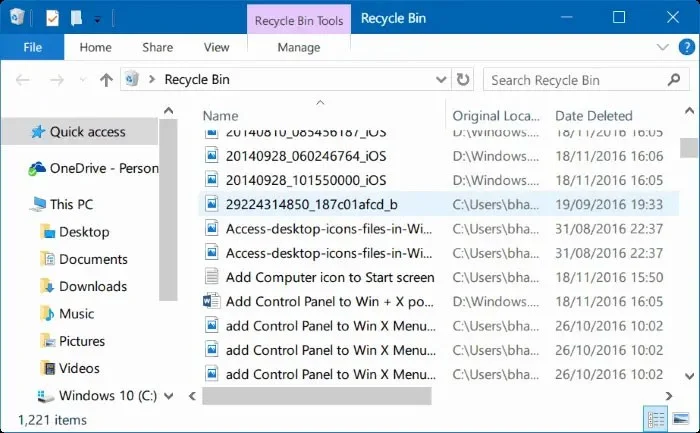
Step 1 : Open Recycle Bin by double-clicking on its icon on the desktop. If you don't see the Recycle Bin icon on the desktop area, please refer to: How to restore the missing Recycle Bin icon in Windows 10 .
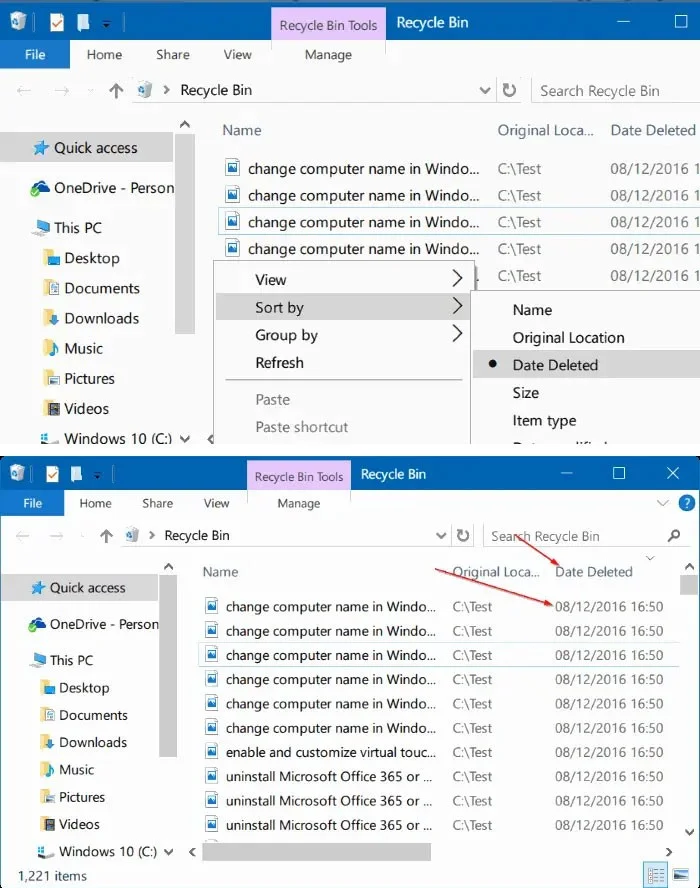
Step 2 : Right-click on an empty area, click Sort by and then click Date deleted . That's it! Now you can see all the recently deleted files with the date deleted next to each file.
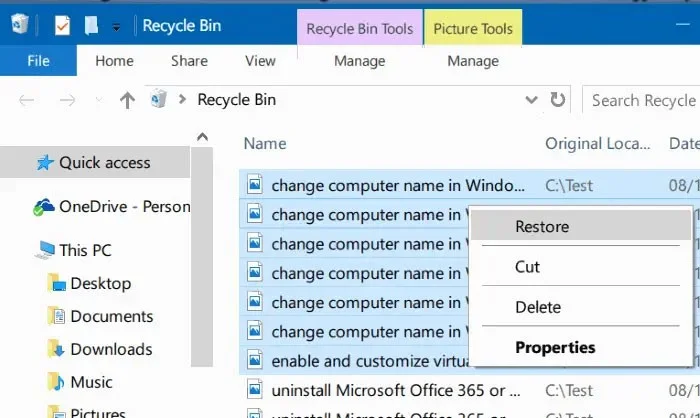
To restore a file, simply right-click on the file and then click on the Restore option to restore the file to its original location. If you want to restore multiple files at once, simply select the files you want to restore, right-click and then click on the Restore option .
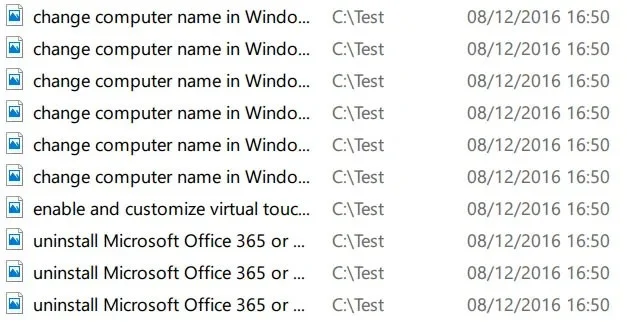
As you can see in the image, the Recycle Bin displays its original location right next to the file name.
If you are looking for a good data recovery tool , check out the free version of Disk Drill software.
Good luck!
See more articles below:
This guide will show you all the steps needed to show the Recycle Bin in File Explorer, regardless of whether you are using Windows 10 or Windows 11.
This guide will help you answer the question Where is the Recycle Bin in Windows 10? and let you choose the most comfortable way to reach the Windows 10 Recycle Bin location:
Discover how to use Windows 11 Quick Assist for seamless remote support. Learn step-by-step setup, troubleshooting, and tips to help friends or family with tech issues instantly.
Struggling with dual monitor lag on Windows 11? Discover proven troubleshooting fixes to eliminate stuttering, delays, and performance issues for seamless multi-monitor setups. Step-by-step guide inside.
Struggling with the frustrating Windows 11 "Startup Settings" blank error? Discover proven, step-by-step fixes to restore your boot options quickly and get your PC running smoothly again. No tech expertise needed!
Discover how to activate Windows 11 Enterprise using KMS effortlessly. This comprehensive guide covers everything from requirements to troubleshooting, ensuring seamless activation for your business needs.
Struggling with the dreaded KMODE EXCEPTION NOT HANDLED error on Windows 11? Discover proven, step-by-step fixes to resolve this blue screen nightmare quickly and get your PC running smoothly again. No tech expertise needed!
Struggling with Windows 11 "Motherboard" Driver Error? Discover proven troubleshooting steps to fix it fast and get your PC running smoothly again. Easy, step-by-step guide for beginners.
Struggling with ping spikes on Windows 11 over Wi-Fi? Discover proven fixes to stabilize your connection, reduce lag, and enjoy smooth gaming or streaming. Step-by-step solutions for instant results.
Accidentally deleted precious photos? Discover proven methods to recover deleted photos in Windows 11 effortlessly. Step-by-step guides, tools, and tips to restore your images safely.
Discover how to use Windows 11 Terminal instead of CMD for a modern, efficient command-line interface. Learn installation, setup, and tips to boost your productivity with tabs, themes, and more.
Discover safe, legitimate ways to activate Windows 11 Pro without a product key. Learn step-by-step methods using built-in tools and official Microsoft options to get your OS up and running smoothly. No risks, no hassle – just pure productivity.
Struggling with battery drain during hibernate in Windows 11? Discover expert fixes to preserve your laptop
Struggling with input lag in Windows 11 while playing Valorant or CS2? Discover proven, step-by-step fixes to restore smooth gameplay and boost your performance. Say goodbye to delays and hello to precision shots.
Struggling with the frustrating "Out of Memory" error in Microsoft Edge? Discover proven, step-by-step fixes to reclaim your browsing speed and stability. Updated with the latest tips for optimal performance.
Struggling with Google Drive not launching on Windows 11? Discover proven fixes to resolve the issue fast, from restarts to advanced troubleshooting. Get your cloud storage working seamlessly today!
Discover how to disable Game Bar Presence Writer on Windows to optimize gaming performance. Step-by-step guide to reduce lag, boost FPS, and enhance your setup for smoother gameplay. Essential tips for gamers in 2026.