Live update: This article was checked against live reporting and primary-source material through approximately 08:06 UTC on September 9, 2026 (15:06 ICT). The timing matters because the latest escalation unfolded across September 8 and the early hours of September 9, and some claims from the parties remain unverified.
What has been confirmed in the latest U.S.-Iran escalation
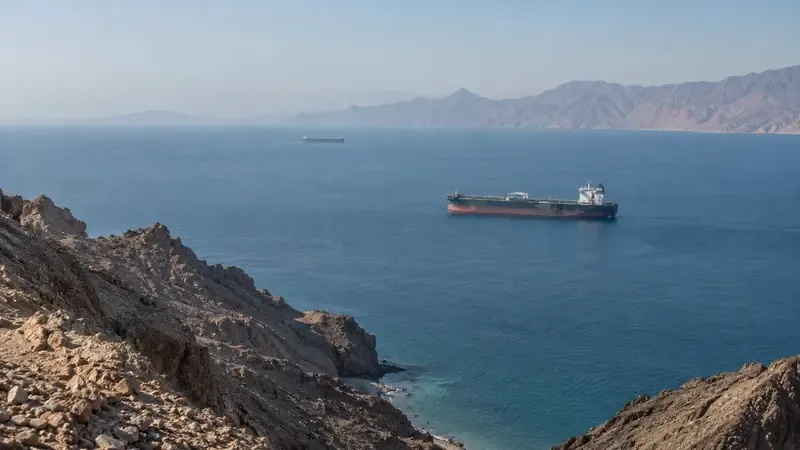
The most important confirmed military development before this update is a new round of U.S. strikes on Iranian oil shipping. On September 8, U.S. Central Command said American forces destroyed five Iranian crude-oil carriers after Iran’s Islamic Revolutionary Guard Corps, or IRGC, targeted a U.S. Navy warship with ballistic missiles twice over the previous two days. CENTCOM said the warship evaded the attacks, continued patrolling regional waters and suffered no American casualties.
CENTCOM identified four of the tankers as M/T Kaviz, M/T Charminar, M/T Horizon 1 and M/T Riesco in the Gulf of Oman, plus M/T Derya near Kharg Island. It also said U.S. forces directed the crews to abandon the vessels before striking them. The primary U.S. military account is available in the U.S. Central Command public-affairs release on DVIDS.
The September 8 operation followed an earlier September 5 exchange in which CENTCOM said it destroyed three other Iranian crude carriers after ballistic-missile attacks were launched toward a U.S. aircraft carrier and a guided-missile destroyer. That earlier event is documented in a CENTCOM release dated September 5, 2026.
The “U.S. submarine” headline needs an important correction
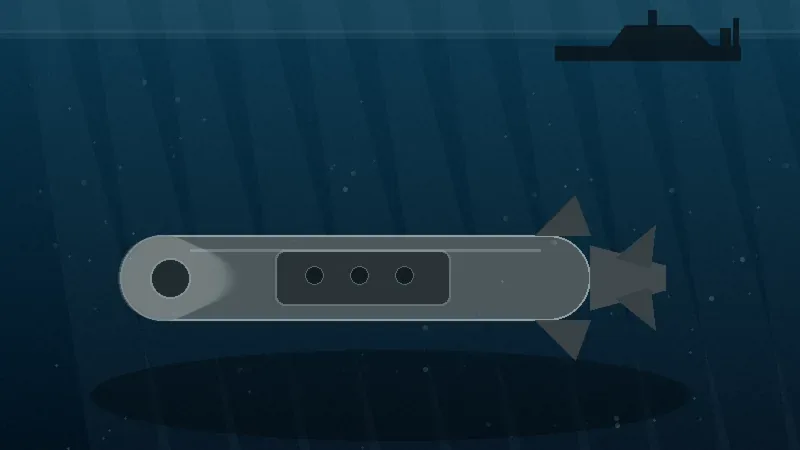
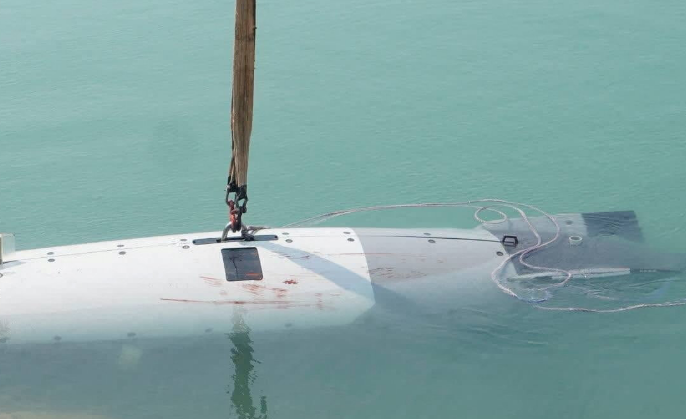
Iran did not announce the capture of a crewed American attack submarine or ballistic-missile submarine. The object at the center of the latest submarine-related news is an uncrewed autonomous underwater vehicle. Iranian state media identified it as a Dive-LD, a large-diameter autonomous undersea vehicle made by U.S. defense company Anduril.
Iran’s Revolutionary Guards said on September 8 that its naval forces captured the vehicle at the entrance to the Strait of Hormuz. A Pentagon spokesperson, quoted in live international reporting, acknowledged that an underwater drone had malfunctioned more than a day earlier while surveying regional waters. The U.S. description said it was an older model and that it had not collected sensitive data or carried classified sonar or radar equipment. The public statements do not establish every detail of how the vehicle came into Iranian possession, and independent verification of Iran’s claimed interception sequence remains limited.
The manufacturer’s published specifications help clarify what this vehicle is. According to Anduril’s official Dive-LD page, the platform is about 5.8 meters, or 19 feet, long, has a maximum endurance of about 10 days and is designed for depths down to about 6,000 meters. The company lists defense missions including intelligence preparation, intelligence-surveillance-reconnaissance and mine warfare, along with commercial uses such as hydrographic surveys and pipeline or cable inspection.
That distinction is essential for readers searching for “U.S. submarines.” In this live search, the new, verified submarine-related story concerns one unmanned submersible. I did not find a newly confirmed September 9 incident involving the capture, sinking or damaging of a crewed U.S. Navy submarine. Claims that convert the Dive-LD story into the loss of a manned American submarine would therefore go beyond the evidence available at this time.
Iran’s retaliation reached Jordan in the early hours of September 9
After the U.S. tanker strikes, Iran said it fired ballistic missiles at a base in Jordan used by U.S. forces. Jordan’s armed forces then issued a direct public statement saying 20 ballistic missiles were fired toward Jordanian territory, 18 were intercepted and destroyed, and two fell in unpopulated areas. Jordan reported no casualties.
The Jordan News Agency posted the military statement on September 9 at 02:57:58 on its Amman-based site. The page itself does not print an explicit time-zone label beside that timestamp, so this article treats it as the source’s local publication timestamp rather than silently converting it to UTC. The official text can be read at the Jordan News Agency page carrying the Jordan Armed Forces statement.
Iran also claimed on September 9 that it attacked 10 ships near the Strait of Hormuz, including two U.S. vessels and eight oil tankers. That is a serious claim, but the critical distinction is that the claimed damage was not independently established in the material checked for this update. The U.S. account of the preceding attacks says its warship evaded the Iranian missiles, while Iran’s later statements described successful strikes. Readers should therefore treat ship-damage claims as disputed unless and until visual evidence, official damage assessments or multiple independent sources confirm them.
A concise timeline of the current sequence
- September 5: CENTCOM says Iran targeted a U.S. aircraft carrier and guided-missile destroyer; U.S. forces then destroyed three Iranian crude carriers.
- September 8: CENTCOM says another U.S. Navy warship had been targeted twice over two days; American forces destroy five more Iranian crude carriers after ordering crews off the ships.
- September 8: Iran says it captured a U.S. unmanned underwater vehicle at the entrance to the Strait of Hormuz. The U.S. says an underwater drone malfunctioned while supporting operations.
- Early September 9: Iran launches ballistic missiles toward Jordan. Jordan says 18 of 20 are intercepted and reports no casualties.
- September 9: Iran claims attacks on two U.S. vessels and eight tankers near Hormuz. At the time of this check, the extent of any resulting damage remains unconfirmed.
Why the underwater-drone incident matters even if no secrets were lost
The Dive-LD episode is strategically relevant because the Strait of Hormuz is not only a shipping chokepoint; it is also an increasingly contested surveillance environment. Autonomous underwater systems can map the seabed, inspect infrastructure, support mine-countermeasure work and gather information without exposing a crew. Their use gives militaries persistent access to dangerous waters at lower human risk, but it also creates a new class of incidents in which a vehicle can be lost, recovered or exploited by an adversary.
The American claim that the lost system lacked sensitive data reduces the immediate intelligence concern if accurate, but it does not make the event meaningless. Physical access to an unmanned platform can still reveal construction choices, materials, propulsion arrangements, modular interfaces and operating concepts. How much Iran can actually learn from this particular unit is not publicly known, and it would be speculation to claim a major intelligence breakthrough without technical evidence.
What remains unclear as of this update
Several questions are still open. Public reporting does not yet establish the exact location and sequence by which the Dive-LD came under Iranian control. It is also unclear whether Iran’s reported attacks on two U.S. vessels and eight tankers caused the damage Tehran claims. The identity of the U.S. Navy warship targeted in the latest missile exchanges has not been publicly disclosed in the primary U.S. release. Finally, there is no newly verified evidence in this live check of a crewed U.S. submarine being captured or lost in the Iran war on September 9.
For readers following the story hour by hour, the best signal of a meaningful change would be a new CENTCOM or Pentagon damage assessment, a verified release identifying the U.S. ships involved, an independently geolocated image or video from the maritime incidents, or an official update on the recovered underwater vehicle. Until then, the most accurate summary is narrower than many headlines: the war has sharply escalated around Hormuz, a U.S. unmanned undersea vehicle is in Iranian hands according to Iran and acknowledged as lost by the U.S., five Iranian tankers were struck by American forces on September 8, and Jordan says it intercepted most of a 20-missile Iranian barrage without casualties.