Home
» Today
»
Pound at a Post-Brexit High: What UK Travelers and Households Could Gain — Nov. 5, 2026
Pound at a Post-Brexit High: What UK Travelers and Households Could Gain — Nov. 5, 2026
Information checked November 5, 2026, at 1:13 p.m. in London, Greenwich Mean Time (GMT, UTC+00:00; 13:13 UTC). The British pound has climbed to its strongest level on a trade-weighted measure since the 2016 Brexit referendum, giving UK vacationers a potentially better deal on foreign-currency spending. The gain does not mean that every sterling exchange rate has reached a record, or that UK supermarket and energy bills are about to fall.
The move comes alongside the Bank of England's November 5 decision to raise Bank Rate from 3.75% to 4%. A stronger currency can make imported products and overseas trips more affordable in pounds, but the higher interest rates supporting sterling can also raise borrowing costs for some households. The most immediate benefit is likely to be visible in the cost of foreign-currency purchases, subject to a card provider's fees and exchange-rate spread.
Destaques
Market move: Sterling's trade-weighted index reached its highest level since the June 2016 referendum, rather than an all-time high.
Travel: More euros or dollars per pound can reduce the sterling cost of hotels, meals and attractions priced in those currencies.
Household budgets: Cheaper imports may ease some future price pressures, but retailers do not have to pass currency gains on immediately or in full.
Borrowing: The Bank of England raised its policy rate to 4% on November 5; mortgage and savings effects depend on individual products.
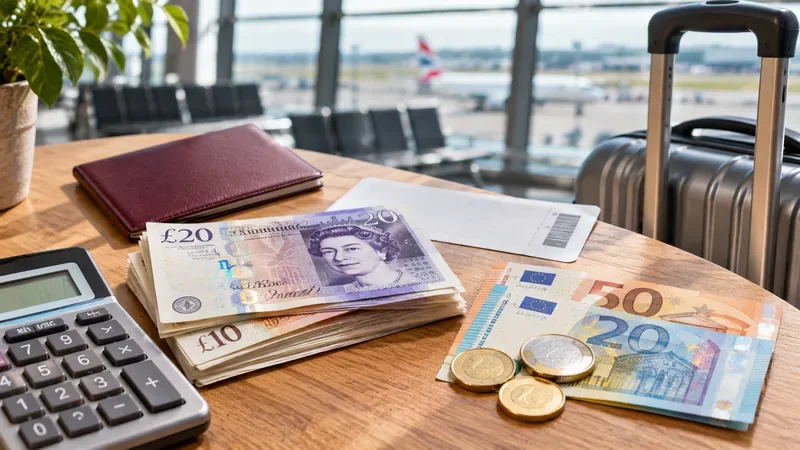
Illustration of travel budgeting with pound and euro notes; this is a staged scene, not a photograph of an exchange-rate event.
Why is the pound stronger on November 5, 2026?
The measure behind the 'strongest since Brexit' headline is a trade-weighted, or effective, exchange rate index. It compares sterling with a basket of currencies, weighted by their importance in UK trade. It is not the same as the pound's value against the euro alone or the US dollar alone. Reporting on November 5 put the index at about 86.4, near its highest reading since the Brexit vote. That describes the index's recent level, not a guarantee that the rally will continue.
In foreign-exchange trading on November 5, reports placed sterling around $1.35 per pound and close to €1.20 per pound, with prices changing through the session. These are market indications, not quotes that a traveler is guaranteed at a bank, airport counter or card terminal. The Bank of England's exchange-rate tables provide reference data, while Reuters' November 5 market report describes the day's currency move and its comparison with 2016.
Interest-rate expectations are one influence. Higher UK yields can make sterling-denominated assets more attractive relative to alternatives, although politics, global risk appetite, energy prices and movements in other currencies also matter. On November 5, the Bank of England confirmed Bank Rate at 4%. A stronger pound should not be attributed to one policy decision alone.
Does a post-Brexit high mean the pound is at an all-time high?
No. The headline compares today's trade-weighted reading with values since the 2016 referendum. Different comparisons produce different conclusions: GBP/USD, GBP/EUR and the effective exchange-rate index measure different things. The pound can strengthen against the dollar while weakening against the euro, for example. For a family visiting Spain, the euro exchange rate matters far more directly than an index containing several currencies.
How could a stronger pound make holidays cheaper for UK travelers?
For expenses priced in the destination's currency, an appreciating pound means fewer pounds are needed to buy the same amount of foreign currency. Consider a hypothetical trip budget of £1,000: at £1 = €1.15, that would buy €1,150 before charges; at £1 = €1.20, it would buy €1,200. That is an extra €50 for the same sterling budget. These two rates are illustrative comparison points, not a claim about today's exchange counter offers.
Alternatively, a hotel charge of €600 costs about £521.74 at €1.15 per pound but £500 at €1.20 per pound, before any fees. The saving is about £21.74 on that bill. A stronger pound does not automatically make package vacations, airline tickets or pre-paid bookings cheaper, because those products may have been priced or hedged months ahead. Local hotel prices may also rise independently of the exchange rate.
Will every destination offer the same benefit?
No. Currency strength is relative. Travelers to the eurozone should watch GBP/EUR; visitors to the United States should track GBP/USD. A destination whose currency has strengthened faster than sterling may become more expensive despite the pound's broader rally. For travelers paying in pounds for a fixed-price vacation package, the rate at which the travel operator purchased foreign currency can be more important than today's market quote.
What should UK travelers check before exchanging money?
Compare the total amount received, not just the advertised rate. Include delivery fees, commissions and any markup above the market exchange rate.
Review your debit or credit card's overseas charges.MoneyHelper notes that banks may add foreign-exchange fees, sometimes around 3%, and cash-withdrawal charges.
Check the currency shown at the payment terminal. A merchant or ATM may offer to convert a charge into pounds through dynamic currency conversion. That option can include a separate exchange-rate markup; Visa's guidance explains the choice and the disclosures required.
Avoid assuming today's gain will last. When timing permits, compare rates and consider spreading currency purchases instead of betting the entire vacation budget on a future move.
Will a stronger pound lower UK food, fuel and shopping bills?
It may reduce the sterling cost of some imported goods and ingredients, particularly where foreign-currency prices do not change. That could eventually ease pressure on food, clothing, electronics and other imported products. The Bank of England explains the exchange-rate channel in its research on how monetary policy reaches the economy: currency movements can change the price of imports and influence inflation.
The effect is neither immediate nor one-for-one. Importers may have fixed purchase contracts or hedged their currency exposures. A retailer's bill includes distribution, rent, wages, taxes and profit margins, not just the wholesale cost of imports. Firms may use a favorable exchange rate to absorb earlier cost increases rather than cut prices on shelves.
Energy is an especially important qualification. Oil is widely traded in US dollars, so a stronger pound against the dollar can reduce the sterling equivalent of a given dollar price. But international oil and gas prices can rise much faster than a currency moves, and household bills also reflect domestic tariffs, network costs, supplier contracts and regulatory decisions. There is no basis for assuming an immediate reduction in a particular gas, electricity or gasoline bill from this currency rally alone.
What does the latest UK inflation data show?
Currency appreciation is only one ingredient in the inflation outlook. The Office for National Statistics' September 2026 release, published October 21, showed UK Consumer Prices Index inflation at 3.5% year over year, up from 3.1% in August. That is a measure of broad price changes before the latest sterling move, not evidence that shoppers have already received exchange-rate savings. The next scheduled ONS CPI release is November 18, 2026.
Even if currency strength helps dampen inflation later, slower inflation does not mean prices have returned to earlier levels. It usually means the overall price level is rising at a slower pace. A more valuable pound may make a subset of imports cheaper while services, housing or other costs continue increasing.
Could the Bank of England's rate increase outweigh the benefit?
For some borrowers, yes. On November 5 the Bank of England increased Bank Rate to 4%, a quarter-point rise. People with mortgages linked to Bank Rate or other variable borrowing rates could face higher payments if lenders pass through the change. Fixed-rate mortgage payments generally remain unchanged until the fixed period ends, while savers may see better deposit offers if banks pass on higher rates. These effects arise from borrowing and savings rates, not directly from the foreign-exchange value of sterling.
Households should therefore look at the whole budget. A £20 saving on a hotel booking and a potentially lower future import bill are useful, but they cannot automatically offset higher monthly repayments. The outcome depends on debt balances, the type of mortgage, spending on imported items and plans for travel.
What could happen to the pound next?
The near-term outlook is conditional. Sterling could remain supported if the gap between expected UK interest rates and overseas rates stays favorable. It could weaken if investors revise their expectations, if UK economic data disappoint or if global currency markets move in another direction. Rising energy prices could also squeeze household budgets even while the pound is firm.
For UK consumers, the most useful indicators to follow are the GBP/EUR and GBP/USD reference rates, the next Bank of England decision scheduled for December 17, 2026, and new ONS inflation figures. None of those releases can guarantee what a retailer will charge or how much a currency will be worth on a future travel date.
FAQ: The stronger pound and UK household budgets
Does a stronger pound make travel abroad cheaper?
It can lower the pound cost of foreign-currency spending such as meals and hotels, provided local prices and fees do not offset the improvement. Pre-booked packages may not change price.
Will UK supermarket prices fall because sterling is stronger?
Not necessarily. Cheaper imported inputs may eventually ease price pressures, but retailers' contracts and other business costs determine whether savings reach shoppers.
Is the pound at a record high against the dollar?
No such claim follows from this week's headline. The post-Brexit comparison refers to a trade-weighted basket of currencies since the 2016 referendum, not a historical record for the GBP/USD exchange rate.