Home
» Today
»
Product Recall Check: How to See Whether an Item You Own Is Affected
Product Recall Check: How to See Whether an Item You Own Is Affected
To check whether an item you own is part of a product recall in Australia, identify its exact model or batch details, search the official register for that type of product, and compare your item with the full recall notice. A product name or photo alone may not be enough: some recalls cover only certain serial numbers, production dates, or batches. A search with no match is not a safety test, so check the correct regulator before deciding that your item is unaffected.
Four steps to check a product recall
1. Record the exact product identifiers
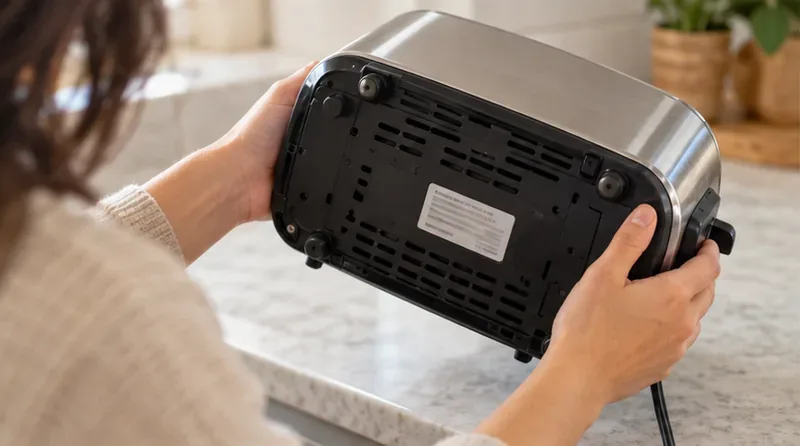
Write down the brand, product name, model or variant, and any serial number, batch or lot code, barcode, or date code. These details may appear on a label underneath or behind an appliance, on packaging, on a sewn-in tag, or in the product's settings. For food, note the package size, batch or lot, and best-before or use-by date. For a vehicle, record the Vehicle Identification Number (VIN). Keep a clear photo of the label and the receipt if you have it; a receipt can help identify where you bought the item, but it does not replace the model or batch number.
A consumer checks the underside of a countertop toaster for its product identification label.
2. Search the register for that product category
Start with the Australian regulator that handles your item. The ACCC Product Safety recall search covers many household and consumer products, including appliances, toys, batteries, and furniture. Other types have their own registers:
Cars and approved road vehicle components: Search the Australian Government's Vehicle Recalls website; the manufacturer's VIN lookup can help confirm whether a specific vehicle is affected.
These lists do not all cover the same products. The ACCC directs consumers to other agencies for food, therapeutic goods, and motor vehicle recalls. The TGA also says its DRAC database may show a market action two days after the decision to begin it. If you are checking a recent medicine or device concern, check the TGA alerts as well and ask a pharmacist or treating health professional for advice; do not treat an empty search as confirmation that there is no issue.
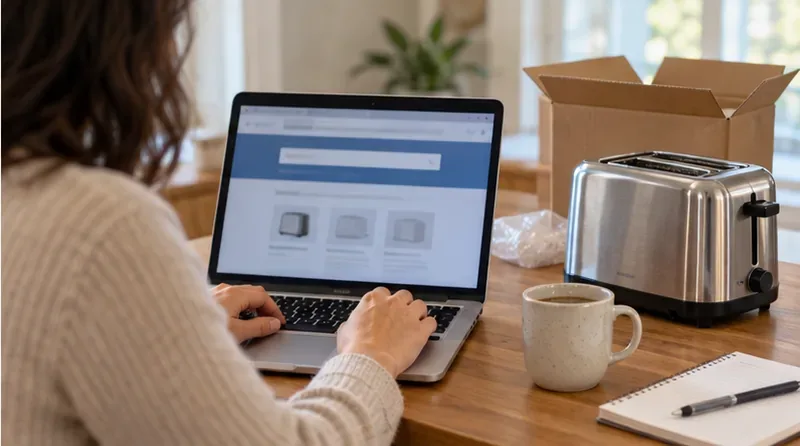
A consumer searches for recall information online with the product nearby for reference.
3. Compare your item with every detail in the notice
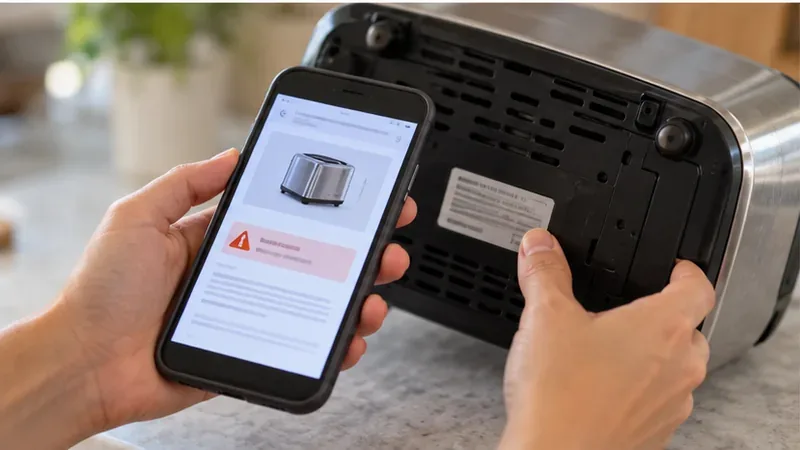
Open the full notice and compare the exact model, variant, serial-number range, batch or lot, package size, and production or sale dates. Check the listed retailers or locations too: an item may be affected only if it matches a stated range or was sold through certain channels. Read the hazard description and the notice's instructions, not just the headline. Two products can look almost identical while only one is included.
If a label is missing or you cannot tell which version you have, contact the supplier using contact details from the regulator's notice or the company's verified website. Share the model or batch information privately with the supplier. If your item matches the notice, treat it as affected even if it still appears to work; the hazard may not be visible during ordinary use.
The product label is compared with a recall notice before deciding whether the item matches.
4. Follow the instructions for that specific recall
For a recalled consumer product, ACCC guidance is to stop using it, keep it away from children, and contact the supplier promptly about the stated repair, replacement, or refund. Australian consumer guarantees may also apply; ACCC guidance says the seller is responsible for providing a refund or replacement when a product has a safety issue, rather than sending the consumer only to the manufacturer. Keep the product and proof of purchase if the notice says to return it, but follow any different disposal or collection instructions in the notice.
Food and health products need category-specific care. If a food recall says not to eat the item, do not consume it and follow the notice's return or disposal steps. For medicines and medical devices, the TGA distinguishes a recall from a product alert, correction, or quarantine, and says to seek health-professional advice if you have concerns. Do not start, stop, or change prescribed treatment based only on a search result. For a vehicle, follow the VIN-specific notice and contact the dealer; if the notice says not to drive, do not drive it until you receive instructions.
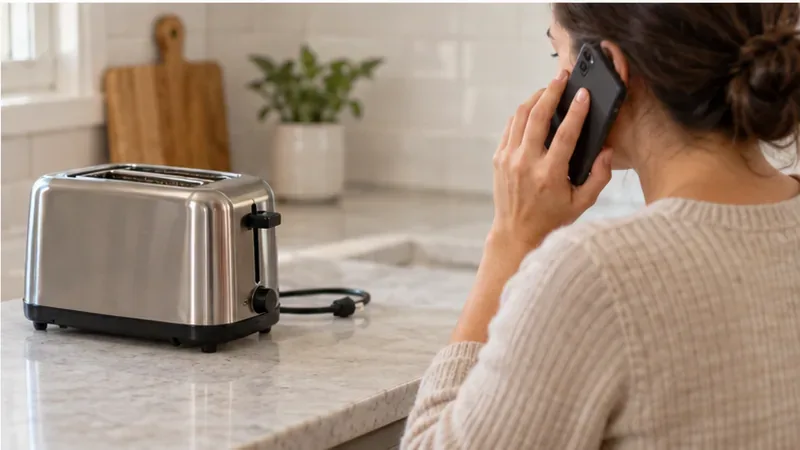
A toaster is set aside while its owner contacts the retailer about what to do next.
If no recall result matches your item
Try the brand and model separately, check common alternate product names, and search the register for the product category rather than relying on a general web search. Then check the relevant regulator, the manufacturer, and the retailer. The ACCC notes that consumer guarantees can be difficult to enforce when buying from an overseas supplier, so if the item came from an overseas marketplace, also check the manufacturer's recall information and the regulator in the country where it was made or sold.
You can sign up for ACCC product-safety email alerts to hear about future notices. If the item is overheating, damaged, leaking, or otherwise behaving unsafely, stop using it if you can do so safely and contact the supplier even when no recall appears. A recall database helps identify published actions; it cannot inspect or certify an individual item in your home.
For a confirmed match, save the official notice and record whom you contacted, when you contacted them, and the remedy arranged. If a supplier is still selling a recalled item or will not follow the stated remedy, use the ACCC guidance on recalled products to find the next step.