A new algorithm called 'Estimate, Extrapolate, and Situate' (EES) by researchers at the Massachusetts Institute of Technology (MIT) allows robots to train themselves and improve their skills without human intervention.
With the EES algorithm, the robot can use its vision system to observe its surroundings and the assigned task. Then, based on the robot's performance, the algorithm will automatically generate training exercises to improve weak skills.
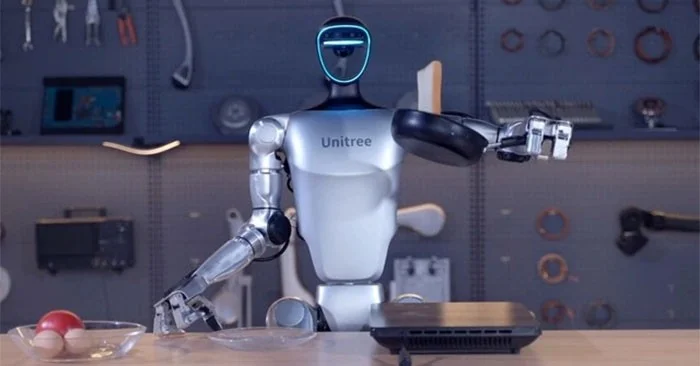
EES was tested by researchers on Boston Dynamics' robot dog Spot. As a result, after being equipped with this algorithm, Spot was able to learn how to perform more complex tasks on its own.
Robots that can train themselves using AI are a significant step forward in the field of artificial intelligence and robotics. This achievement promises to open up wide potential applications in many fields, from industry to services.
However, it also raises the question of whether this is a potential threat to control and the dangers of robots becoming too intelligent. Some experts are concerned that robots could become a threat to humans if they can learn and develop on their own. This is especially dangerous if they are used for military purposes.
According to the MIT researchers, EES is designed to help robots perform simple tasks more efficiently. However, it cannot be ruled out that this algorithm could be exploited for malicious purposes.
Is this a giant leap forward for humanity or the beginning of a new era fraught with risk? The answer remains open and will need to be closely monitored in the coming time.