Home
» Today
»
Smart Motorway Speed Enforcement: What the Camera Approval Change Means for UK Drivers | Nov. 24, 2026
Smart Motorway Speed Enforcement: What the Camera Approval Change Means for UK Drivers | Nov. 24, 2026
Information checked: November 24, 2026, at 3:37 p.m. GMT (UTC+00:00), London. The latest confirmed change is that the Home Office revoked type approval for a variable speed camera system used on some motorways and A roads in England after testing identified a potential additional activation issue. National Highways says it is ending its enforcement contract for those cameras, while police enforcement continues through other methods, including mobile and average-speed cameras and officer patrols. Drivers should still obey every mandatory variable speed limit and Red X: the camera decision did not suspend the limits or create a general amnesty.
For motorists, the practical change is in how some locations are monitored and which camera evidence can be used, not in the speed limit shown above the road. National Highways says additional traffic officer patrols and existing CCTV monitoring are being used at relevant sites. The November 17 announcement and independent review apply to the strategic road network in England; they should not be described as a blanket change to every road or camera across the United Kingdom.
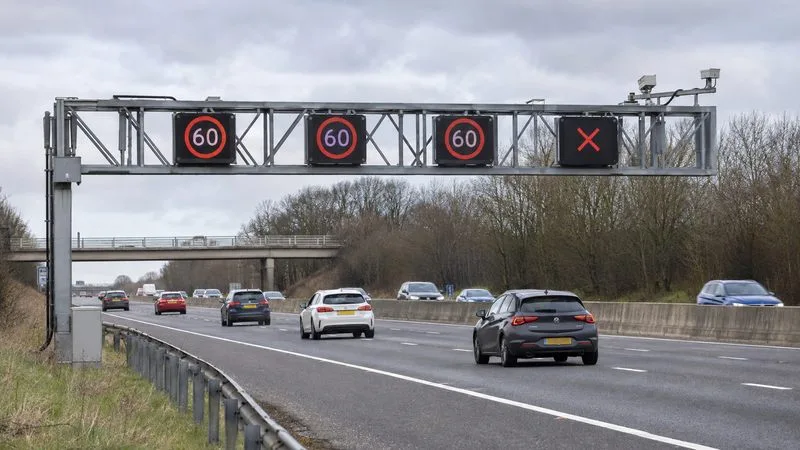
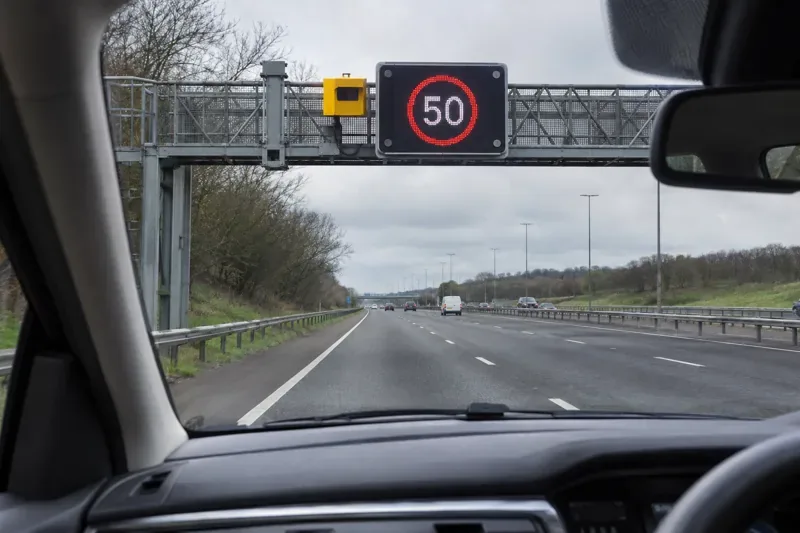
Illustrative image of motorway variable speed signs; it does not show a confirmed camera location or a current enforcement operation.
Destaques
Type approval revoked: The Home Office withdrew approval for the affected variable speed camera system after further testing.
Speed limits still apply: Red-circled limits and Red X lane closures remain mandatory, whether or not a particular camera is operating.
Other enforcement continues: National Highways lists mobile camera sites, average-speed cameras and marked and unmarked police patrols, plus extra officer patrols and CCTV monitoring at relevant locations.
Not a UK-wide ticket cancellation: The 2026 announcement concerns some roads in England; eligible affected motorists are being offered redress where identified.
What changed in the latest smart motorway enforcement update?
On November 17, 2026, the Department for Transport and National Highways announced that the Home Office had revoked the type approval status of the variable speed camera system. Type approval matters because it allows camera data to be more readily admitted as evidence in certain legal proceedings. The government said it was not willing to accept even a hypothetical risk of incorrect prosecution after additional technical and operational testing identified a possible further issue in rare circumstances. National Highways said its modeling found the circumstances extremely rare and that it had no evidence the newly identified issue had affected enforcement.
This followed an earlier anomaly in which, on rare occasions, camera and sign changes were not synchronized closely enough. Drivers could be detected as speeding shortly after a displayed variable limit had changed. The Department for Transport said this earlier issue affected cameras on roads representing around 0.2% of all roads in England. It reported that steps had been taken to prevent incorrect enforcement and that people identified as affected had been offered redress. National Highways says it will continue to provide redress to eligible people it identifies. The separate possible issue found in later testing should not be reported as a confirmed wave of invalid tickets: the government said there was no real-world evidence that it had affected enforcement.
The same day, the government published the independent Westall Review into how the original issue arose and how it was handled. The review identified lessons and recommendations concerning data and technology, critical systems, crisis response, legal support, stakeholder communications, governance, and procurement. National Highways accepted the recommendations, and the Department for Transport said it would monitor implementation. This is a governance and assurance change as well as an equipment decision; it does not by itself tell drivers that a particular notice is wrong.
Can drivers still be fined for a variable speed limit?
Yes. The red-circled speed shown on an electronic motorway sign remains a mandatory limit. National Highways says a lower limit can be used for congestion, roadworks, incidents, bad weather, or work taking place on the network. A driver should follow it even if traffic appears clear or the reason is not obvious. A blank or unlit display does not cancel the last instruction; the lower limit remains in force until the national speed limit symbol or another applicable instruction is displayed. A Red X means the lane is closed and must not be used.
National Highways is not the law enforcement authority. Police handle speeding prosecutions and assess evidence. National Highways says enforcement continues on motorways and A roads through methods it describes as unaffected, including mobile camera sites, average-speed cameras and police patrols. Its November update also says it has added traffic officer patrols and is using existing CCTV to help monitor compliance at relevant locations. Existing stopped-vehicle detection radar and ANPR are part of the broader monitoring and safety arrangements; their presence should not be mistaken for proof that every location uses the same speed-enforcement equipment.
What should you do if a speeding notice arrives?
Do not ignore a notice because of the camera announcement. Read it carefully, note the issuing police force and deadlines, and respond to any Section 172 request identifying the driver within the time stated. GOV.UK says a Notice of Intended Prosecution and Section 172 notice are normally sent within 14 days of the alleged speeding incident, and the Section 172 notice must be returned within 28 days. The general minimum speeding penalty listed by GOV.UK is £100 and three penalty points, although a speed awareness course may be offered at police discretion in eligible cases. Court penalties can be higher, including a maximum fine of £2,500 for motorway speeding.
If the speed shown on a notice appears inconsistent with what you saw, preserve any dashcam footage and other contemporaneous records, and contact the police force named on the paperwork promptly. Explain the discrepancy and ask how to review the evidence. A driver who wants to dispute an allegation should follow the stated process and consider qualified legal advice; the National Highways announcement alone does not automatically cancel an individual prosecution or extend a response deadline. People who were incorrectly proceeded against in the earlier anomaly are being contacted where identified, and the authorities say redress remains available to eligible motorists.
Does the update apply throughout the United Kingdom?
The camera issue and the November 17 government announcement are specifically described as affecting some parts of England’s strategic road network. The official independent review page says it applies to England. That is not the same as saying every smart motorway in England is affected, or that Scotland, Wales and Northern Ireland have identical enforcement equipment or case-handling arrangements. Drivers should use the instructions on the notice and seek information from the relevant police force and road authority for the jurisdiction where the alleged offense occurred.
For everyday driving, the safest response is straightforward: watch each gantry, comply with the lowest applicable mandatory sign, leave a closed lane when instructed, and keep a safe following distance as limits change. If a sign appears faulty or contradictory, do not guess based on an earlier gantry; follow the displayed instruction that applies to your lane and use official live traffic channels when it is safe to check. The enforcement review is ongoing, so future technical or operational changes are possible, but no further rollout timetable was confirmed in the official material checked for this update.
Frequently Asked Questions
Have speed limits been suspended at affected smart motorways?
No. National Highways says variable speed limits and Red X signs remain in operation and drivers must continue to obey them.
Does the camera approval decision cancel existing tickets?
No blanket cancellation was announced. Drivers should follow the instructions and deadlines on their own notice and raise any specific evidence concern with the police force handling the case.
Where does the latest camera update apply?
The government describes the issue as involving some motorways and A roads in England. It is not a declaration that all UK speed cameras or all smart motorway sites are affected.