Home
» Today
»
Smart Motorway Speed Limits and HADECS Cameras: How They Work — Checked November 24, 2026
Smart Motorway Speed Limits and HADECS Cameras: How They Work — Checked November 24, 2026
Information checked: November 24, 2026, 6:35 a.m. Pacific Standard Time (UTC−08:00); 2:35 p.m. Greenwich Mean Time (UTC+00:00).
Smart motorway speed limits remain legally binding when displayed in a red circle, even after the UK Home Office revoked type approval for the affected camera system on November 17, 2026. National Highways says variable signs will continue managing traffic and safety, while police enforcement remains in place through other methods. The approval change concerns the evidential status of the camera system; it does not cancel a displayed limit or give drivers permission to speed.
Understanding the distinction helps drivers make sense of the technology: signs respond to traffic and hazards, while HADECS equipment measures vehicle speed and records evidence. A recent technical review also showed why communication between those systems matters.
Destaques
A red-ring speed displayed overhead or roadside is a mandatory limit; keep following it until a national speed limit symbol appears.
Smart motorway signs can lower limits for congestion, incidents, roadworks, severe weather, or work taking place near traffic.
HADECS systems combine speed measurement with images and sign information; exact configurations vary by site and camera generation.
On November 17, 2026, the Home Office revoked type approval for the affected camera system after testing identified a further potential issue; other enforcement methods continue.
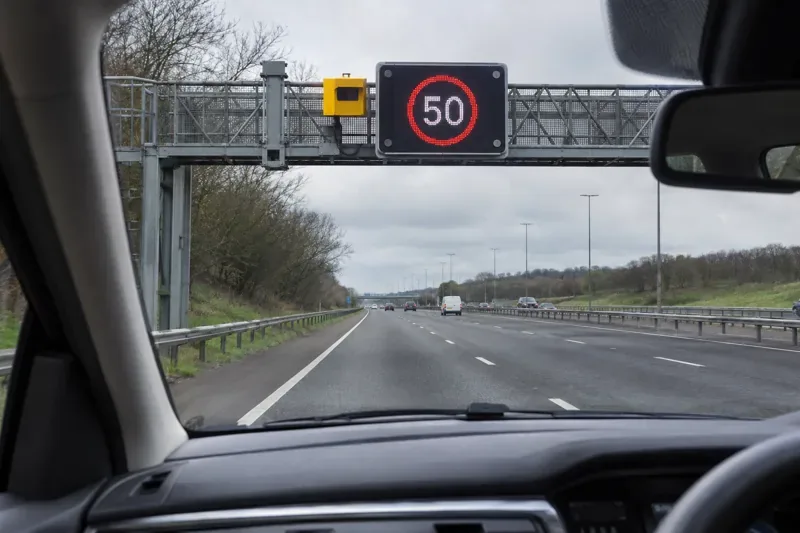
A variable speed sign and camera above a UK motorway. This is an illustrative image, not a photograph of a specific enforcement site.
How do smart motorway variable speed limits work?
Variable speed limits, or VSLs, appear on illuminated signs at the roadside or on gantries above the lanes. National Highways says they are used to manage traffic flow and improve journey reliability, as well as to reduce risk around congestion, incidents, roadworks, extreme weather, or traffic officers working in vulnerable locations. Operators and traffic-management systems can use signs to warn of conditions ahead and smooth traffic as it approaches a queue.
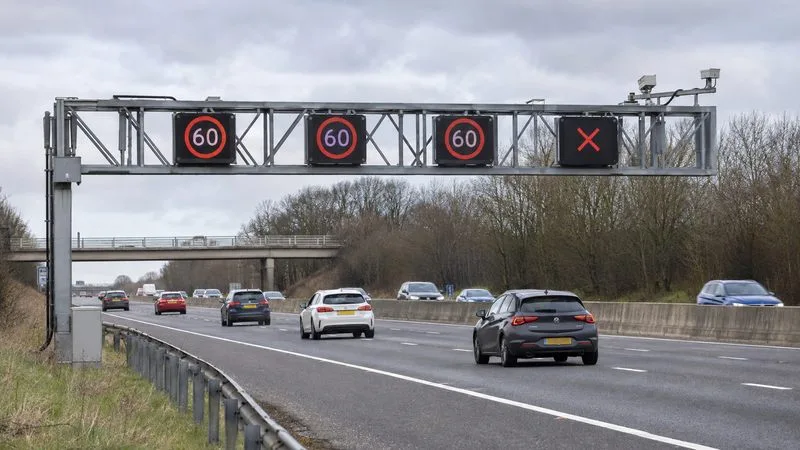
A number inside a red circle is mandatory. A lower limit remains in force until drivers pass a sign showing the national speed limit symbol. A blank or unlit display does not cancel the last instruction: drivers should continue following the previous displayed limit. If signs show different limits on consecutive gantries, the limit directly above a lane applies as the driver approaches it. Where roadside signs and electronic messages around roadworks could be confusing, National Highways advises following the lower indicated limit.
These rules matter regardless of whether a camera is visible. National Highways sets and operates the signs, but police are responsible for enforcement. The official guidance says the reason for a lower limit does not have to be obvious for that limit to be enforceable.
What is HADECS, and how does a motorway camera measure speed?
HADECS stands for Highways Agency Digital Enforcement and Compliance System. It is a family of roadside enforcement equipment used on parts of England’s strategic road network. In a common fixed installation, radar aimed along a designated lane measures a vehicle’s speed. The system associates a potential offence with images and records needed to identify the vehicle, its lane, time, location, and the applicable speed setting. The exact camera model and supporting components differ by site; not every yellow camera housing is necessarily a HADECS unit.
Home Office technical guidance for variable-limit speedmeters describes safeguards intended to connect the measurement to the correct sign state. The device must select an enforcement threshold for the displayed limit, check the relevant signs, and record sign changes. The guidance says enforcement should not occur until a limit has been displayed for at least one minute, and requires accurate time synchronization. Some systems use external aspect verification images to record what the signs displayed. These are general approval requirements and do not establish that every installation uses identical hardware or configuration.
If a potential offence is recorded, National Highways sends the evidence securely to the relevant police force. The police examine it and decide whether to take action. The camera operator is not itself the prosecuting authority.
What changed in November 2026?
A Department for Transport statement published November 17 says an earlier anomaly involved delays between some variable speed signs and camera systems, which could, on rare occasions, mean a driver was recorded before having enough time to react or after the limit had changed. The government previously reported about 2,650 erroneous camera activations on impacted roads since 2021, out of more than six million activations; those figures refer to camera activations, not an equal number of drivers prosecuted.
After further technical and operational testing, officials identified a potential additional activation issue in specific circumstances. The government said National Highways’ modelling put the probability of those circumstances at no more than 0.1%, with no real-world evidence that this further issue had affected enforcement. Because ministers were not prepared to accept even a hypothetical risk of incorrect prosecution, the Home Office revoked the affected system’s type approval, which had allowed its camera data to be admitted more readily as evidence in certain proceedings. National Highways said it would end its enforcement contract with the supplier.
This is a specific camera-system decision, not a declaration that all smart motorway equipment is faulty. The separate independent review of how the original problem arose made recommendations across data and technology, critical systems, crisis response, legal support, governance, communications, and procurement. Its recommendations remained unchanged after the later testing.
What should drivers do now?
Follow every mandatory speed sign and red X, and do not rely on the presence or absence of a camera. The November 17 statement says traffic-officer patrols and other enforcement tactics remain in place on motorways and A roads, and that variable speed signage will continue to be used for safety and traffic management. A revoked camera approval does not suspend speed limits.
If you receive a Notice of Intended Prosecution and believe it concerns the historic anomaly, follow the instructions and deadlines on the police notice. The government’s guidance says people identified as affected will be contacted by the relevant police force and does not ask them to take action at this stage. For an individual case, contact the police force named on the notice; National Highways does not administer prosecutions.
What happens next?
The immediate verified changes are the loss of type approval for the affected camera system and the ending of National Highways’ enforcement contract with its supplier. The government says other enforcement remains active. The November 17 statement does not set out a replacement-camera timetable, so drivers should not assume when or where an alternative fixed system will be introduced. The practical rule is simpler: obey the signs, including lower limits and lane closures, and allow enough space to slow smoothly when traffic conditions change.
FAQ
Are smart motorway variable limits still enforceable?
Yes. A speed shown inside a red circle is mandatory. The November 2026 camera approval decision did not cancel the displayed limits.
Does a blank gantry sign mean the limit has ended?
No. Continue following the last displayed limit until you pass a national speed limit symbol.
Does revoking type approval mean every HADECS camera has been switched off?
The statement concerns the affected camera system and its approval status. It does not say every HADECS camera on every road is affected; police enforcement by other methods continues.