Information checked November 15, 2026, at 12:01 p.m. UTC (7:01 a.m. Eastern Standard Time, UTC−05:00). Travelers using the Canada–United States land border face a confirmed change in crossing schedules this month: the Canada Border Services Agency (CBSA) adjusted service hours at 26 smaller crossings in British Columbia, Manitoba, and Alberta effective November 1. The adjustments align Canadian inspection availability with neighboring U.S. ports as the countries follow different seasonal clock arrangements. They are not, by themselves, a new blanket U.S. Border Patrol screening rule.
For Canadian motorists and businesses, the immediate implication is practical: a crossing used last month may now open or close at a different clock time. Meanwhile, U.S. Border Patrol continues to prioritize surveillance and enforcement between official ports of entry. Routine inspection of travelers arriving at a staffed U.S. crossing is primarily handled by U.S. Customs and Border Protection (CBP) officers at that port.
Destaques
- 26 revised Canadian port schedules: Nine in British Columbia, 13 in Manitoba and four in Alberta, under CBSA announcements dated October 9.
- Effective period: Changes began November 1, 2026; CBSA lists spring 2027 transition dates that vary by province.
- U.S. enforcement focus: Border Patrol’s published strategy emphasizes remote terrain, cross-border smuggling, surveillance and coordination with Canadian counterparts.
- Before traveling: Confirm the operating hours on both sides, then check live traffic and wait-time services; port hours and delays are different measures.
What changed at Canada–U.S. northern border crossings in November 2026?
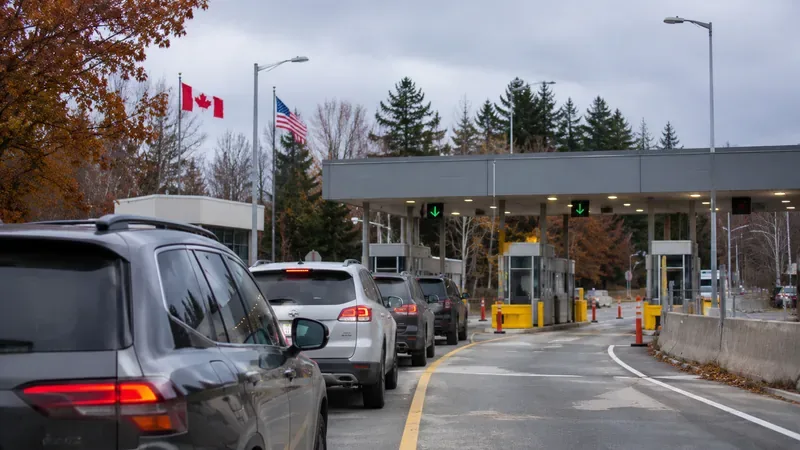
In three official announcements issued October 9, the CBSA said it would adjust service hours at nine British Columbia ports, 13 Manitoba ports and four Alberta ports. The agency linked these changes to provincial decisions on year-round daylight saving time and the continued seasonal clock changes in the United States. Its stated goal is to keep corresponding ports on both sides available at compatible times, including when a traveler must return to the country from which they arrived.
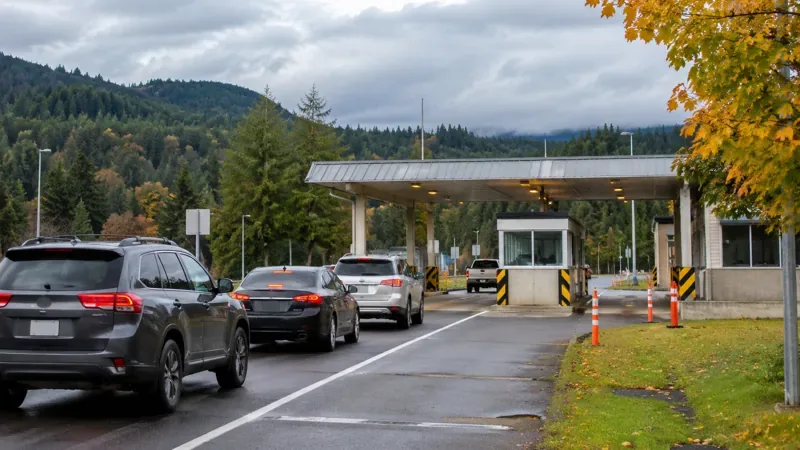
These are changes to scheduled hours, not a confirmation that every crossing has longer lines or that all 26 locations have shut down. A traveler who arrives outside staffed operating hours should use another authorized, open crossing rather than assume the road remains available for legal entry. CBP explicitly says travelers entering the United States generally must use an open, staffed port of entry, subject to limited program-specific exceptions.
Which crossings have revised hours?
| Province and example | Published traveler hours | Time reference |
|---|---|---|
| British Columbia — Aldergrove | 9:00 a.m.–1:00 a.m., daily | British Columbia Pacific Daylight Time (UTC−07:00) |
| British Columbia — Carson | 9:00 a.m.–9:00 p.m., daily | British Columbia Pacific Daylight Time (UTC−07:00) |
| Manitoba — Cartwright | 9:00 a.m.–5:00 p.m., daily | Manitoba Central Daylight Time (UTC−05:00) |
| Alberta — Carway | 8:00 a.m.–midnight, daily | Alberta Mountain Daylight Time (UTC−06:00) |
| Alberta — Wild Horse | 9:00 a.m.–6:00 p.m., daily | Alberta Mountain Daylight Time (UTC−06:00) |
These are representative examples, not the full list. The published schedules distinguish passenger and commercial traffic at several locations; truck drivers should not assume that passenger hours apply to freight processing. Consult the CBSA British Columbia schedule, Manitoba schedule and Alberta schedule for all affected locations and traffic categories.
CBSA says the revised British Columbia and Manitoba schedules remain in place until the March 14, 2027 clock transition, while the Alberta notice specifies its applicable schedule through March 13, 2027. Check the precise crossing rather than treating those dates as a single border-wide deadline.
Has U.S. Border Patrol announced new rules for Canadian travelers?
The reviewed official materials do not establish a new universal U.S. screening procedure or a border-wide closure on November 15. They show a narrower set of confirmed developments: updated CBSA port schedules and the continuing U.S. Border Patrol enforcement priorities described in its 2025–2029 strategy. Border Patrol secures territory between ports, whereas CBP's Office of Field Operations manages entry inspections at authorized ports. Confusing these roles can turn an enforcement policy statement into a misleading claim about what every driver will experience at the booth.
The Border Patrol strategy identifies the northern border's expansive remote geography, smuggling of people and contraband, and the need for cross-border partnerships as operational challenges. Its stated responses include greater binational coordination, surveillance and readiness to respond to unauthorized crossings. Those priorities may affect enforcement activity away from the booths, but the strategy does not provide a dependable forecast of wait times for individual lawful travelers.
For travelers entering the United States, CBP's public guidance remains clear that entry should be through an open, staffed port. An automated map route, a visible roadway or a former operating schedule does not establish that a crossing is legally open when you arrive. See CBP guidance on official ports of entry.
Why might northern border wait times change?
Staffed hours, available inspection lanes, traffic volumes, infrastructure work and enforcement events can all influence a trip, but they are not interchangeable. For example, the CBSA's official wait-time page warns that redevelopment at Saint-Bernard-de-Lacolle in Quebec could cause higher-than-normal delays through winter 2027. That is a specific infrastructure notice, not evidence of a continent-wide change in Border Patrol inspections.
Wait-time dashboards are also directional. CBP publishes estimates for vehicles heading into the United States, while CBSA publishes estimates for travelers entering Canada. A low Canadian-bound delay at a bridge does not guarantee the same wait in the opposite direction. Nor does a displayed wait of only a few minutes guarantee that an inspection will be completed within that period.
What should Canadians check before their next crossing?
- Confirm both sides are staffed. Use the appropriate CBSA port listing and the corresponding U.S. port's official operating information, particularly at smaller prairie and British Columbia crossings.
- Review the correct direction of traffic. For U.S.-bound trips, consult CBP's border wait-time service. For Canada-bound trips, use CBSA's border wait-time page.
- Distinguish traveler and commercial schedules. A port may accept private vehicles on days or at times when commercial processing is unavailable.
- Keep an alternate crossing in mind. A longer but fully staffed route may be preferable to reaching a closed port; allow for traffic before the inspection area, which official booth estimates may not capture.
What happens next at the northern border?
The verified schedule adjustments are in effect for the winter season, with further time-alignment changes expected around the dates listed in CBSA's provincial notices in March 2027. Any additional enforcement initiative or new travel requirement should be treated as confirmed only when CBP, the U.S. Department of Homeland Security or an appropriate Canadian authority publishes its scope and effective date. There is no basis in the sources reviewed to predict a specific additional shutdown, universal extended screening period or increase in wait time.
For now, the most useful distinction is between what has changed—operating hours at named Canadian ports—and what remains an ongoing enforcement objective—U.S. Border Patrol surveillance and coordination along the northern border. Checking the correct port and travel direction is more actionable than interpreting a broad strategy document as a new requirement for all cross-border commuters.
FAQ
Are all Canada–U.S. land crossings reducing their hours?
No. The November 1 announcements concern 26 specified CBSA ports in British Columbia, Manitoba and Alberta, not every crossing.
Does U.S. Border Patrol inspect every car entering at an official crossing?
Routine inspections at official U.S. ports of entry are handled by CBP officers assigned there. Border Patrol primarily focuses on security between ports.
Where can travelers find current northern border delays?
Use CBP's official border wait-time service for U.S.-bound traffic and CBSA's official service for Canada-bound traffic. Verify operating hours separately.