Leftover Halloween Candy and Pumpkins: What to Do Next

Sort leftover Halloween candy safely, share or repurpose sealed treats, and choose food use or compost for pumpkins based on their condition.
Everyone knows there is water in the universe, but you might be surprised to learn that it appeared much earlier than expected, especially near the Big Bang.
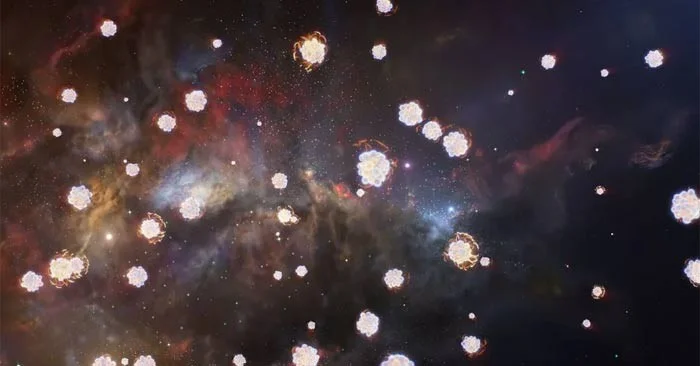
When did life as we know it first appear in the universe?
We don't know for sure, but the answer is closely tied to when water first appeared in the universe—and new simulations suggest that the first generation of stars that helped form such life-giving water occurred just 100 million to 200 million years after the Big Bang. That pushes back previous estimates by more than 500 million years.
The findings suggest that if some of this early water survived the “hot” chaos of early galaxy formation, it could have been absorbed into newborn planets, potentially leading to habitable worlds with abundant water just a few hundred million years after the Big Bang. It all has implications for the story of how early life may have begun in the universe.
Previous observations from the Atacama Large Millimeter/submillimeter Array (ALMA) in Chile showed that water existed about 780 million years after the Big Bang, when the young universe was filled with light hydrogen and helium, along with small amounts of lithium. These elements formed the first generation of stars, known to astronomers as Population III stars, which were very massive—tens or even hundreds of times the mass of our sun—and had considerable lifespans before dying as supernovae. Many of the universe’s heavier elements, including oxygen, were formed inside these stars through nuclear reactions and were distributed into space when they died, where they were then incorporated into the next generation of stars.
To determine when the first water formed in the universe, the team used numerical models to track the lives of two early-generation stars: one 13 times more massive than our Sun and the other 200 times more massive. The smaller simulated star lasted 12.2 million years before dying in a supernova explosion, releasing about 0.051 solar masses of oxygen (nearly 17,000 Earth masses) into the surrounding space. The larger simulated star burned through its fuel for just 2.6 million years before meeting its explosive end, releasing 55 solar masses of oxygen (more than 18 million Earth masses) into space.
Simulations show that as the shock waves from each supernova radiate outward, turbulent density fluctuations create ripples that cause some of the gas to condense into dense clumps. These leftover clumps, enriched in metals including oxygen ejected by the supernova, were likely prime sites for water to form throughout the early universe.
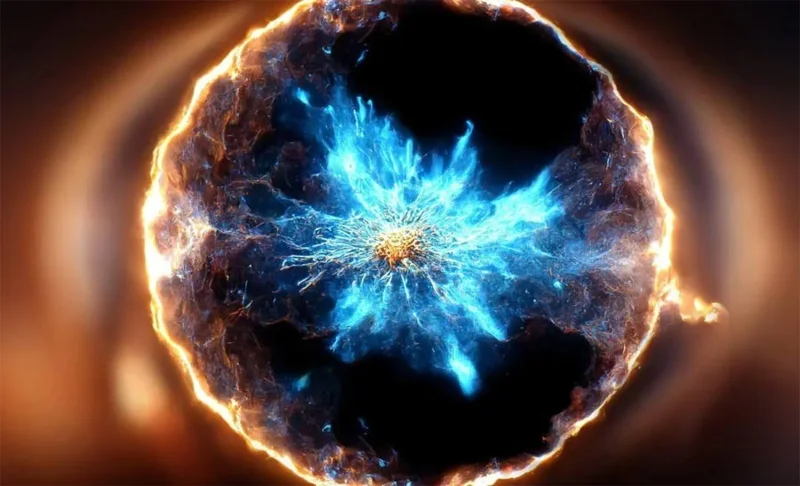
Located in the denser parts of the cloud, the water would be protected from being destroyed by the harsh radiation from nearby stars. However, the team considered the simplest case, with only one star forming in each cluster, while theoretical simulations show that multiple star systems are the norm; more than half of the stars in the sky have one or more sibling stars. More nearby stars would mean denser, more water-rich clusters, but also more radiation.
These are the first questions that space scientists are trying to answer, but they need more people to dig deeper into this topic and explore it in more detail.
Sort leftover Halloween candy safely, share or repurpose sealed treats, and choose food use or compost for pumpkins based on their condition.
Compare workplace Halloween costume choices by respect, dress code, mobility, and safety—and learn when a subtle accessory or a policy check is the better option.
Find a couples costume that fits your style, budget, and comfort level, from Addams Family classics to original inside-joke duos.
Need a last-minute high school Halloween costume? Compare 10 easy closet-based ideas by prep time, comfort, school-day practicality, and simple safety checks.
Use a simple 2026 Halloween decorating timeline for indoor décor, outdoor displays, and fresh pumpkins, with practical adjustments for weather and events.
Mix five vivid, approachable Halloween cocktails with measured recipes, simple prep tips, and an alcohol-free option for your party guests.
Find 15 office-friendly Halloween costume ideas for 2026, with practical checks for dress codes, respectful themes, comfort, and workplace safety.
Plan a fun elementary school Halloween party with easy crafts, games, inclusive treats, costume tips, and a sample 75-minute classroom schedule.
Compare realistic side hustles for 2026 by startup cost, fees, flexibility, and income control, with current tax and scam guidance from official sources.
Upgrade your home office ergonomics with current OSHA and NIOSH guidance on chair fit, monitor height, laptop setup, lighting, and movement.








