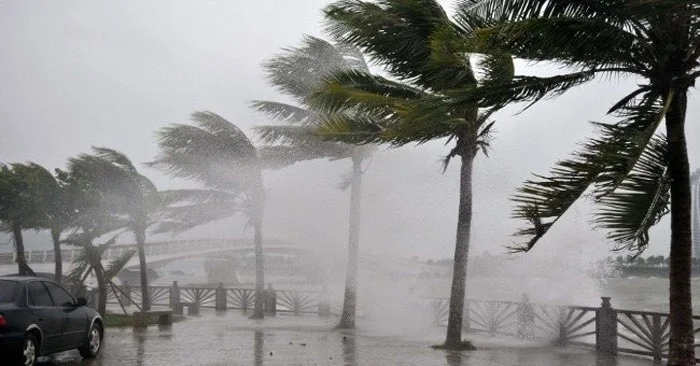
A storm is a disturbance in the atmosphere that usually involves strong winds, heavy rain, and may include thunder, lightning, hail, tornadoes, snowstorms, sandstorms, and dust storms. This is a type of extreme weather.
Storms (and tropical depressions) are strong cyclonic systems characterized by low pressure at the center, strong winds and cloud formations arranged in a spiral pattern, accompanied by thunderstorms and heavy rain.
Structure of the storm
The structure of a storm includes:
The eye of a storm is the center of the storm, usually clear skies and light winds. Strong storms will usually have a more pronounced eye than weak storms. The eye can last for quite a long time (more than 1 hour) but it can also last only a few minutes. If you encounter the eye of a storm, you should seek safe shelter.
The eyewall surrounds the eye of the storm, where clouds form a high wall (miles high) and where winds are strongest.
The storm circulation outside the eyewall, where the rain-bearing cloud bands are located. These cloud bands play an important role in the evaporation-condensation cycle that provides the energy to sustain the storm.
Wind speed is the wind speed maintained over a long period of time, which is the basis for assessing the strength of a storm.
Storms also have gusts of wind, lasting only a few seconds to less than 1 minute but with very high speed and are the main cause of storm damage. Therefore, information about gusts and wind strength always appears in storm forecasts.
Causes of storm formation
Hurricanes form when all three conditions are present: temperature, humidity, and momentum to create a vortex.
The main time of year for storms and tropical depressions in the Northern Hemisphere is from June to November, and in the Southern Hemisphere from December to March of the following year. During this time, the sea water temperature is high (at least 26 degrees or higher), the atmosphere is favorable for the development of convection and large-scale vortex movements. These are favorable conditions for storms to form and develop.
To form a storm, there must be a very hot water current, at least 26 degrees at a depth of at least 50m. Therefore, this natural phenomenon often forms near the equator and tends to move towards the two poles of the Earth, so the area near the equator is often less affected by storms. Storms often follow the edge of high pressure, are subject to the suction of low pressure areas and the further they go, the greater the speed of the storm.
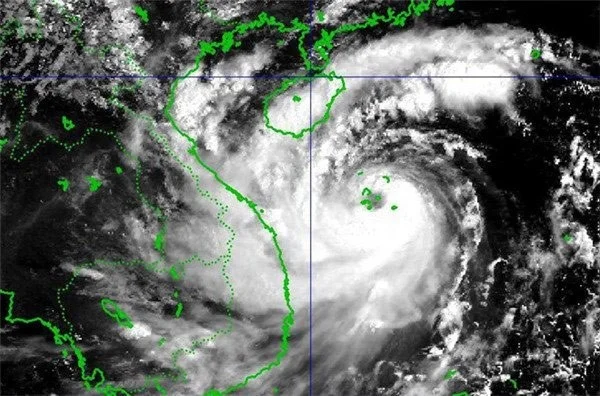
Satellite image of a hurricane.
Why do storms often hit the central region of our country?
In our country, the Central region is exposed to the southwest monsoon, a type of wind that carries a lot of moisture and often causes rain. When a storm forms in the East Sea, it will be pushed north due to the influence of the southwest monsoon. When the wind weakens, the storm tends to gradually move towards the Central region.
Every year, the Central region of our country often has to endure heavy rains caused by storms and the Northeast monsoon. And due to climate change, storms and heavy rains occur more severely.
The stormy season in the Central region usually lasts from July to November. There are an average of 5-8 storms each year.
The Central Coast is 1,200 km long, from Thanh Hoa to Binh Thuan, with a dense system of rivers and canals. The plains in the Central region are very narrow because the Truong Son mountain range runs along the coast. Most of the rivers here are short, have steep slopes, and the basins are often mountainous, so rainwater flows down very quickly. In addition, the river mouths are often silted up, hindering flood drainage for the plains.
Rivers in the Central region do not have a flood control dyke system and there are no large reservoirs in the upstream areas to reduce flooding in the delta areas, so heavy rains often cause flooding in densely populated areas on both sides of the river.
Frequently Asked Questions About Hurricanes
What causes storms?
Hurricanes occur when warm, moist air rises due to solar radiation and meets cold air above. During this process, condensation and precipitation occur, leading to the formation of huge clouds and strong whirlwinds.
What is the definition of storm?
A storm is a weather phenomenon that brings strong winds, large cloud formations, and precipitation such as snow, hail, or rain. Precipitation such as hail, rain, and snow collide with each other, creating lightning and thunder.
Are hurricanes and tornadoes the same thing?
Tornadoes are not like hurricanes; they are the result of a storm caused by a strong rotating wind. These winds extend, growing in length like a strong column of wind and destroying everything in its path.
What is a thunderstorm?
A thunderstorm is a rain shower in which you hear thunder. Since thunder comes from lightning, all thunderstorms have lightning.
Why do meteorologists sometimes use the word "convection" when talking about thunderstorms?
Usually caused by surface heating, convection is the upward movement of air, transporting whatever is in the air with it—especially any moisture that is in the air. Thunderstorms are the result of convection.
What is a severe thunderstorm?
A thunderstorm is classified as "severe" when it contains one or more of the following elements: hail one inch or larger, wind gusts greater than 50 knots (57.5 mph), or tornadoes.
How many thunderstorms are there?
Worldwide, there are an estimated 16 million thunderstorms each year, and at any given time, about 2,000 are occurring. In the United States alone, there are about 100,000 thunderstorms each year. About 10% of these reach severe levels.
In short, a storm is an extreme and destructive natural phenomenon. Hopefully this article helps you understand more about storms.